

Let's get one thing straight: a great budget e-bike isn't about finding the cheapest ride possible. It's about that perfect sweet spot where cost and performance meet—giving you a reliable motor, a battery that won’t quit on you mid-commute, and a frame that’s built to last, all without that shocking price tag.
The best affordable options today prove that "budget" no longer means "low quality."
Your Guide to Affordable Electric Bikes
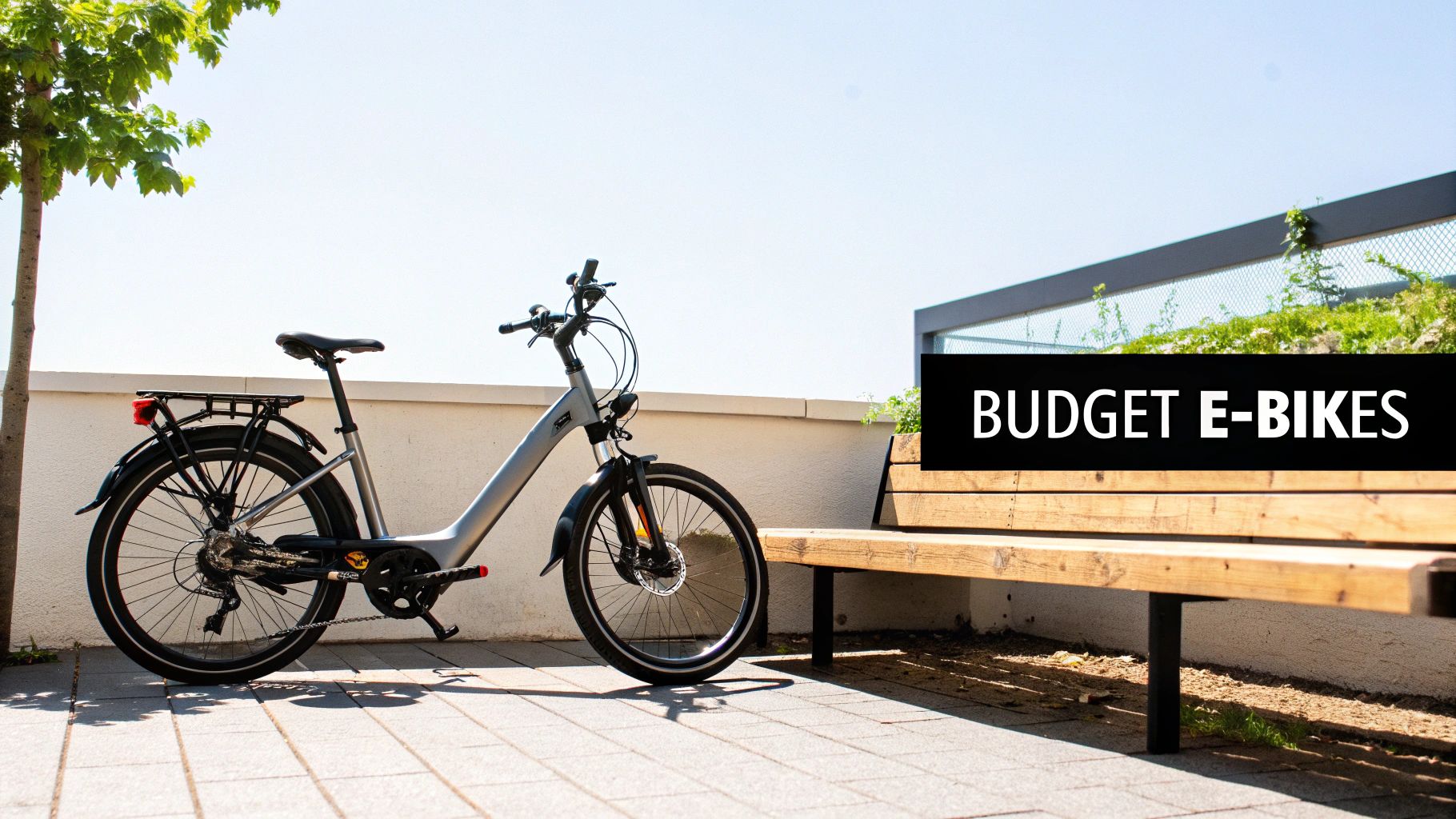
When you hear "electric bike," it's easy to picture those slick, high-end models with price tags that look more like a down payment on a car. But things have changed, and a lot for the better. Finding a fantastic, wallet-friendly electric bike is easier now than ever, completely changing the game for commuting, weekend adventures, and just getting around town.
It's a lot like how budget smartphones evolved. Remember ten years ago? An affordable phone meant you were making some serious sacrifices on speed and features. Now, you can get an incredible device that does everything most of us need. The e-bike world has followed the exact same path.
What to Expect at Different Price Points
The whole idea of "budget" e-bikes has exploded, making electric-powered rides a real option for almost everyone. With fuel costs what they are and city traffic getting worse, people are actively looking for smarter, cheaper ways to get around. It's no surprise that e-bikes under $1,500 are getting all the attention, offering practical ranges of 20 to 50 miles on a single charge. If you dig into the data on the growing e-bike market, you'll see this isn't just a hunch—it's a massive trend.
Knowing what your money gets you is the first step. To make it simple, I’ve broken down the budget e-bike world into a few tiers. This table will give you a quick snapshot of what you can realistically expect at each level.
Quick Guide to Budget E-Bike Tiers
| Price Range | Best For | Typical Motor Power | Average Range | Key Trade-off |
|---|---|---|---|---|
| Under $800 | Casual, short trips on flat terrain | 250W–350W | 15–25 miles | Basic components and battery life |
| $800–$1,200 | Daily commuting and light hills | 350W–500W | 25–40 miles | Heavier frames and mechanical brakes |
| $1,200–$1,500 | Versatile use, including moderate hills | 500W–750W | 30–50+ miles | Lacks premium features like torque sensors |
Think of these numbers as a starting point. As you can see, even a small jump in budget can mean a big upgrade in power and versatility.
This guide is all about building your confidence and showing you that an awesome, affordable e-bike is totally within reach. We'll walk through everything you need to know, from decoding the tech specs to figuring out the true cost of ownership. The goal is simple: to help you find a bike that delivers freedom and fun every time you ride, proving that a smart purchase is always about value, not just the price.
Understanding What E-Bike Specs Actually Mean
Looking at an e-bike's spec sheet can feel like you’re trying to read a different language. It’s a mess of numbers and jargon. So, let's skip the textbook definitions and talk about what these numbers actually mean for how your bike will feel and perform on the road. Getting a handle on these key parts is the first real step to finding a budget e-bike you’ll actually love to ride.
Think of an e-bike's motor as its engine. In the world of affordable e-bikes, you’re almost always going to run into two main types, and the difference between them is a big deal.
Motors: The Push vs. The Power-Assist
Most e-bikes you'll find at a good price point come with a rear hub motor. The easiest way to picture this is as a powerful hand on your back, giving you a solid push. It's a simple, proven system that works great for getting around on flat ground or rolling hills. The power is direct and easy to understand—you pedal, it pushes.
A mid-drive motor, on the other hand, feels completely different. You won’t see them as often on bikes under $1,500, but they're out there. Instead of pushing the wheel, this motor adds power right where you pedal. It’s like getting a set of bionic legs that multiply your own effort. This creates a much more natural-feeling ride and is fantastic for tackling steep hills.
Budget Tip: Honestly, for most commuters and weekend riders sticking to fairly level ground, a 500W hub motor has all the kick you need and keeps the price down. A mid-drive is a serious upgrade, but it almost always pushes a bike into a higher price bracket.
Batteries: Your E-Bike’s Fuel Tank
The battery is, without a doubt, the most expensive single part of an e-bike. It's what determines how far you can go on a single charge. You’ll see two numbers on a spec sheet: Volts (V) and Amp-hours (Ah). Don't let the tech talk trip you up. Just multiply them to get the Watt-hours (Wh), which is the real measure of your "gas tank."
- Volts (V): Think of this as the electrical pressure. Higher voltage often translates to a zippier, more "punchy" feeling when you accelerate.
- Amp-hours (Ah): This is just the size of the tank. The higher the Ah, the longer the battery can supply power.
- Watt-hours (Wh): This is the total energy you have to work with. For example, a bike with a 48V, 10Ah battery has 480Wh of juice—a respectable capacity for a budget-friendly model.
A bigger Wh number means more potential range. Simple as that. For a more detailed breakdown of how it all works, our comprehensive electric bike buying guide goes even deeper. One last tip: always check if the battery uses cells from a known brand like Samsung or LG. It’s a good sign of quality, safety, and a longer lifespan.
Brakes: Your Most Important Safety Feature
An e-bike is heavier and faster than a regular bike, so stopping power is non-negotiable. Not all brakes are created equal, and on budget models, you'll mainly see two kinds.
Mechanical Disc Brakes: These are the old-school reliable option. They work with a steel cable that physically pulls the brake pads against the rotor, just like on a standard bike. They get the job done but require a stronger squeeze on the lever and need occasional cable adjustments to stay tight.
Hydraulic Disc Brakes: This is a big step up. Instead of a cable, they use brake fluid in a sealed hose. This system gives you way more stopping power with much less effort. The feel is smoother and more consistent, which is a huge confidence booster, especially when you need to stop fast in traffic or on a steep hill.
Budget Tip: Mechanical brakes will stop you, and they’re fine for entry-level bikes. But if you can stretch your budget for a model with hydraulic brakes, do it. It’s probably the single most important safety upgrade you can make.
Frames and Materials: The Skeleton of Your Ride
The bike's frame dictates its weight, how it handles, and how long it will last. You might see some very cheap bikes with steel frames. They’re tough and inexpensive, but they are also incredibly heavy. That makes the bike a chore to pedal without power or to lug up a flight of stairs.
The vast majority of good budget e-bikes use aluminum alloy frames. This material hits the sweet spot—it’s strong, it won’t rust, and it's reasonably lightweight. At the end of the day, a lighter bike is just more fun and easier to manage, whether you’re riding it or just moving it around.
Choosing the Right E-Bike for Your Lifestyle
The best e-bike for you isn't always the one with the most impressive spec sheet. It's the one that just fits into your life. To find that perfect ride, it helps to stop thinking about watts and amp-hours for a minute and start thinking about where you’re actually going to go.
When you match a bike’s strengths to your daily routine, you end up with more than just a bike; you get a reliable partner for your adventures. Let's break down a few common rider types to see which one sounds most like you.
The Daily Commuter
If you're riding to work every day, you need a dependable workhorse. Reliability is everything. Your bike has to be ready to roll every single morning, whether it's bright and sunny or a dreary, drizzly Tuesday.
This means focusing on practical, must-have features. Fenders are a lifesaver for keeping road spray off your clothes, and a sturdy rear rack is non-negotiable for hauling your laptop, lunch, or a quick grocery stop on the way home. Good integrated lights and puncture-resistant tires are also crucial—the last thing you want is a flat tire when you’re already running late. Our guide on picking an electric bike for commuting goes into even more detail on what to look for.
A big part of this decision comes down to the kind of terrain you'll be tackling.
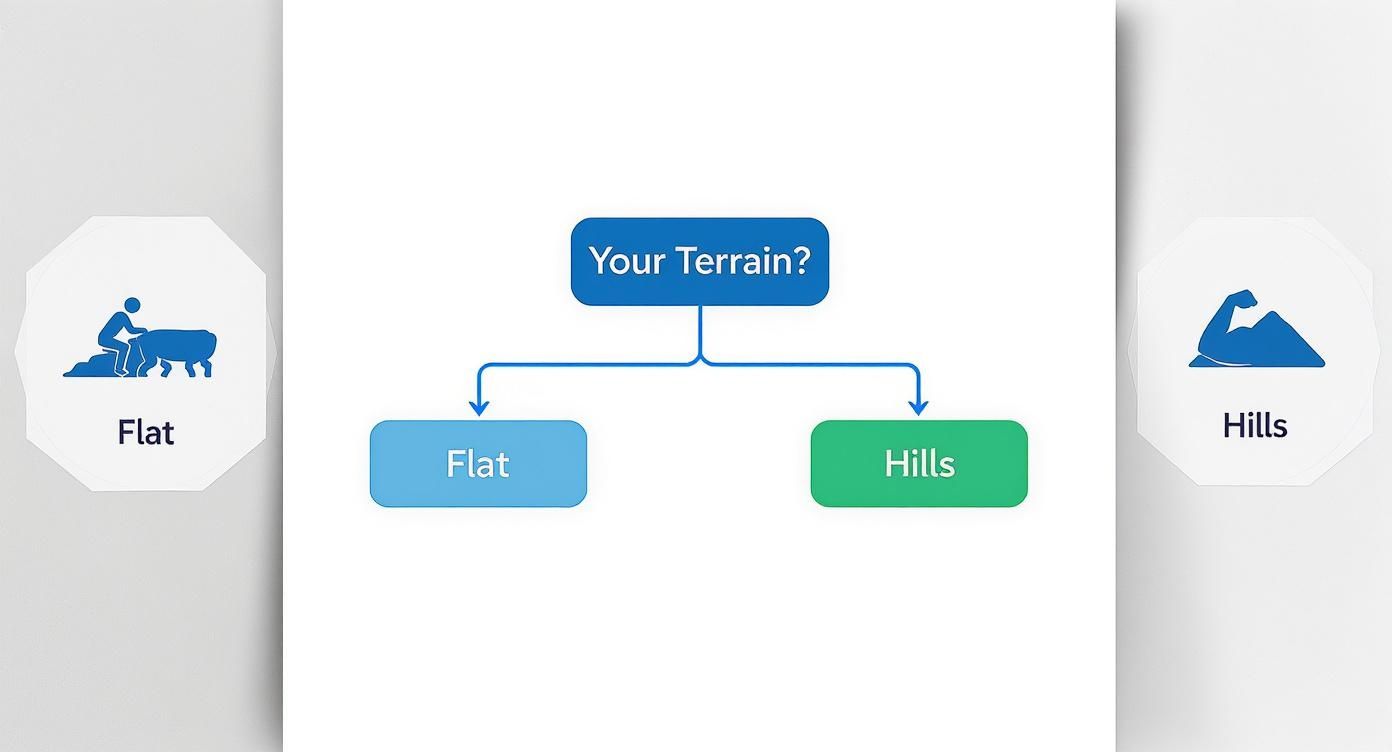
As you can see, a straightforward hub motor is usually plenty for flat city routes. But if your commute involves some serious hills, you'll be glad you have the extra climbing power of a mid-drive motor.
The Weekend Explorer
Are you all about scenic trails, winding country roads, and seeing how far you can go on a Saturday? If so, you’re a weekend explorer. Your focus shifts from everyday utility to all-out range and the versatility to handle different surfaces.
A long-range battery is your top priority. You should be looking for something with 500Wh of capacity or more. This gives you the freedom to explore without constantly worrying about finding the next outlet. Wider, grippier tires will give you more confidence on gravel paths or dirt roads, and even a basic front suspension fork will make a world of difference in soaking up bumps and keeping you comfortable on those longer journeys.
The Casual Cruiser
For the casual cruiser, it's all about comfort and ease of use. You’re not trying to break any land speed records or climb a mountain. You just want a fun, relaxing way to cruise the neighborhood, ride to the park, or meet friends at a local cafe.
Look for features that make riding a pleasure. An upright riding position is key, as it takes the strain off your back and gives you a great view of your surroundings. A wide, padded saddle is an absolute must. You'll also want simple, intuitive controls—no need for a complicated dashboard with a dozen different modes. And don't overlook a step-through frame; they make getting on and off the bike completely effortless.
Calculating the True Cost of Your E-Bike
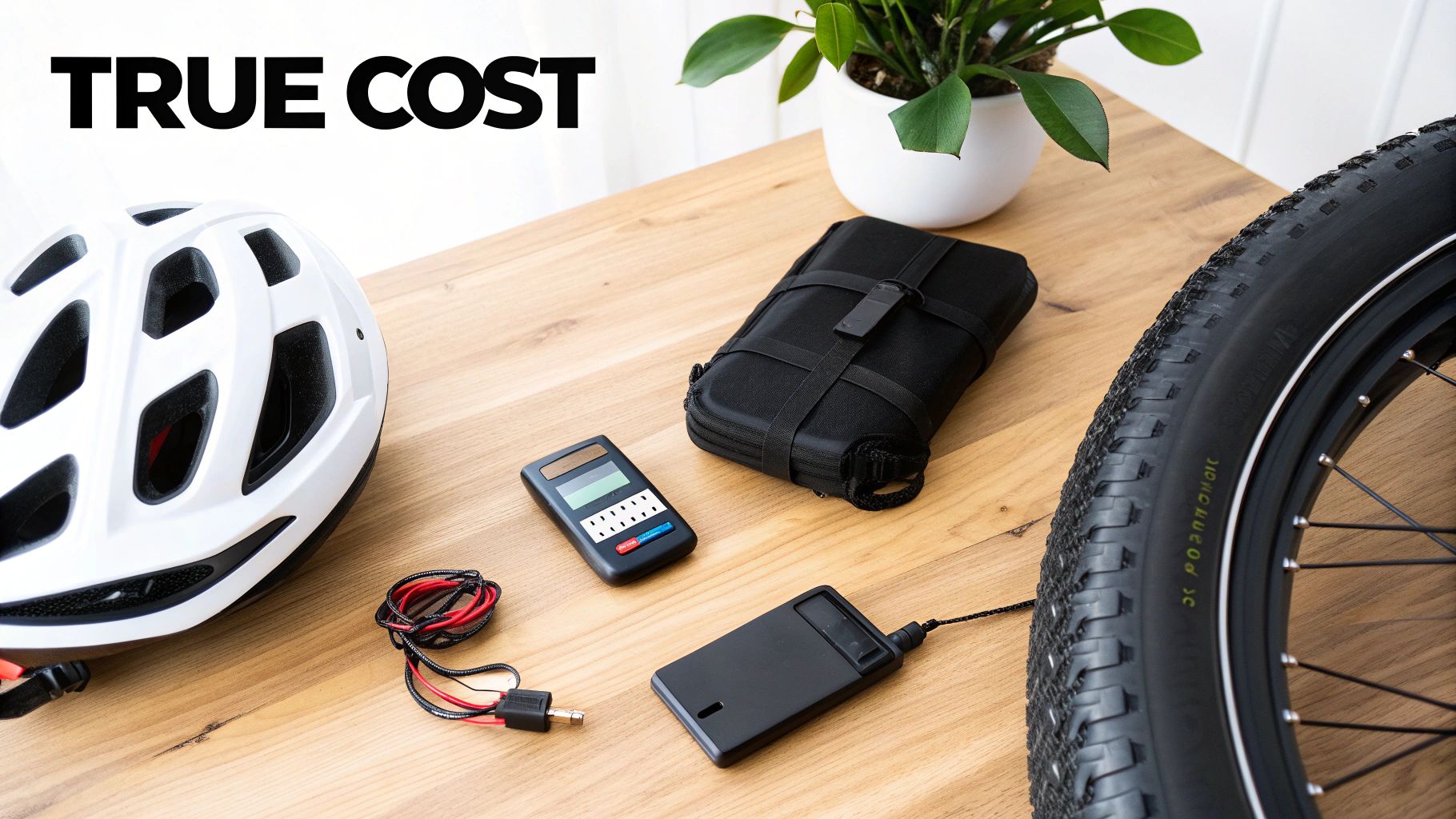
The sticker price on that shiny new e-bike is exciting, but it’s really just the starting line. To get a real sense of what you'll spend, you have to look past the initial purchase. The total cost of ownership is a much bigger picture that includes essential gear, future maintenance, and maybe even a few fees you hadn't considered.
Thinking about these costs now saves you from frustrating surprises later. It’s what keeps your budget-friendly bike actually budget-friendly in the long run. Let's break down what you should really be planning for.
Factoring in Essential Day-One Gear
Before you even think about your first ride, you’ll need some non-negotiable accessories for safety and security. These aren't optional extras; they're as critical as the bike itself.
- A High-Quality Helmet: This is your most important piece of gear, period. Don’t skimp here—a certified helmet is an absolute must-have.
- A Reliable Lock: E-bikes are a hot item for thieves. You need a serious deterrent, like a heavy-duty U-lock or a thick chain, to protect your investment.
- Lights (If Not Included): Many e-bikes have built-in lights, but some budget models skip them to keep the price down. Bright front and rear lights are crucial for being seen.
Right off the bat, these necessities can add another $100 to $200 to your startup cost, but they’re essential for riding safely and with peace of mind.
Planning for Long-Term Maintenance Costs
Just like a car, an e-bike has parts that wear out and eventually need to be replaced. The single biggest expense you'll face down the road is the battery. On a budget model, it’s realistic to expect the battery to lose a noticeable amount of its charge capacity within two to three years of regular riding.
A replacement battery for a budget e-bike typically costs between $300 and $600. That can be almost half the original price of the bike itself, so it’s something you need to be prepared for.
Of course, the battery isn't the only thing. You'll also need to budget for other common wear-and-tear items to keep your bike running smoothly.
Common Maintenance Expenses:
- New Tires: Expect to swap these out every 1,000 to 2,000 miles, depending on their quality and where you're riding.
- Brake Pads: These wear down with use, especially in hilly areas. They’re a relatively cheap but vital replacement for your safety.
- Chain and Cassette: Over time, your drivetrain will wear out. Replacing it is necessary to keep your shifting crisp and efficient.
Online Purchase vs. Local Bike Shop
Where you buy your e-bike plays a big role in the total cost. Snagging one of the best budget electric bikes online usually gets you a lower initial price, but it often comes with a hidden cost: assembly. Most e-bikes shipped to your door arrive 85% assembled.
That last 15% involves some of the most critical adjustments. If you're not comfortable dialing in brakes and derailleurs, you'll need a local bike shop to finish the job and do a safety check. This service can run you anywhere from $75 to $150, tacking a significant amount onto your "online" price.
On the other hand, buying from a local shop might seem more expensive at first, but that price almost always includes professional assembly, a tune-up, and the beginning of a good relationship with mechanics who can help you later.
Understanding Your Warranty
Think of a good warranty as your financial safety net. It protects you from manufacturing defects and is a huge part of an e-bike's overall value. Don't just glance to see if there is a warranty; read the fine print. See what’s covered and for how long. A typical warranty from a solid brand like eBike Gang will offer 12 months of coverage on the important stuff.
Pay close attention to coverage for the most expensive parts:
- The Frame: This should have the longest warranty, often several years or even a lifetime guarantee.
- The Motor and Electronics: Look for at least a one-year warranty on the motor, controller, and display. These are the brains of the operation.
- The Battery: A one-year warranty is standard here. It should protect you against major degradation or outright failure.
A clear, comprehensive warranty isn't just a piece of paper; it's a sign that the company is confident in its product. It gives you peace of mind and is a vital factor in the true cost of your e-bike.
You’ve done the heavy lifting. You’ve waded through the specs, figured out what matters, and now you have a shortlist of a few top contenders. This is the moment of truth—making that final call with total confidence.
Think of this as your pre-flight checklist. It's that last look-over to make sure the e-bike you're about to buy isn't just a good deal, but the right bike for you. We're moving beyond the numbers on a spec sheet and into the real-world experience of owning and riding one of these machines.
https://www.youtube.com/embed/5H3QtZenjJc
Read Customer Reviews Like You’ve Been Doing It for Years
Don't just skim the star ratings. To get the real story, you have to dig deeper. I always tell people to ignore the "just got it out of the box, looks awesome!" reviews. They're useless. Hunt for the reviews from people who have put some serious miles on the bike—six months or more. That’s where you uncover the truth about how it holds up over time.
You're looking for patterns. Are five different people saying the battery life tanked after a few months? Or are riders consistently talking about how comfortable the bike is on their long commute? These trends tell you way more than one person's glowing (or scathing) opinion.
Pro tip: Pay close attention to any mention of customer service. A brand that steps up to fix a shipping problem or a warranty claim is a brand you can trust. On the flip side, poor support can turn a tiny issue into a massive headache.
Nailing the Sizing and Fit Without a Test Ride
Buying an e-bike online usually means you can’t take it for a spin first, but you can still get the fit right. Don't ever trust generic "medium" or "large" labels. Instead, find the bike’s geometry chart and look for two crucial numbers:
- Standover Height: This is simply the distance from the ground to the top bar of the frame. You should be able to stand over the bike with your feet flat on the ground and have at least an inch or two of clearance. No exceptions.
- Rider Height Range: Good brands will give you a specific height range for each frame size. If you find yourself right on the edge between two sizes, my advice is usually to go with the smaller one. It'll feel more agile and easier to handle.
A bike that fits you correctly is a bike you'll actually love to ride. Spending five minutes checking these numbers will save you from a whole season of aches and pains.
Compare Brands on What Really Matters: Support and Parts
In the world of budget e-bikes, the real difference between brands often comes down to what happens after you buy. Before you hit that purchase button, do a little recon. Does the company have a support team you can actually talk to? And here’s the big one: can you buy replacement parts directly from their website?
If you can easily find and buy a new battery, a replacement controller, or even just a new kickstand, that’s a huge green flag. It tells you the company is in it for the long haul. A brand with zero spare parts available is a massive risk—one broken component could turn your new e-bike into a very heavy sculpture.
And don't forget, the bike is just the beginning. Having the right equipment is crucial for safety and enjoyment. Our guide to the best electric bike accessories can help you plan and budget for those essential extras.
Final Decision-Making Matrix
To make this final step as clear as possible, I recommend using a simple comparison chart. It's a straightforward way to see how your top choices stack up against each other on the factors that are most important to you.
| Feature/Factor | Bike Option 1 | Bike Option 2 | Bike Option 3 |
|---|---|---|---|
| Price ($) | |||
| Motor Power (W) | |||
| Battery Range (Miles) | |||
| Brake Type (Mech/Hyd) | |||
| Warranty (Years) | |||
| Customer Support Reviews | |||
| Spare Parts Available? | |||
| My #1 Use Case Fit |
By laying everything out like this, the best choice often becomes incredibly obvious. It takes the guesswork out of the equation and lets you buy with the confidence that you’ve made a well-researched, smart decision.
Why E-Bikes Are the Future of Mobility
Thinking about grabbing one of the best budget electric bikes? You're doing more than just making a smart buy for yourself. You're casting a vote for a cleaner, healthier, and frankly, more fun way to get around town. It’s not just you, either—you’re joining a huge global movement that’s completely rethinking what transportation looks like.
This isn't some flash-in-the-pan trend. It’s a real shift, and it’s happening because a few big things are coming together. More of us want to live sustainably, and our cities are finally starting to get smarter about how people move. We're all tired of sitting in traffic and watching gas prices climb, and e-bikes are a brilliant answer. They give you all the good stuff from cycling, plus a little boost when you need it, which opens them up to pretty much everyone.
The Market is Exploding
The numbers behind the e-bike boom are pretty staggering. The global market is already valued somewhere between USD 54 and 68 billion. And it's not slowing down; experts think it will rocket past USD 120 billion within the next ten years. This growth is being driven by more people living in cities, a bigger focus on the environment, and some major leaps in tech. If you want to dive deeper, these e-bike market trends paint a really clear picture.
This explosion is great news for you. With so many companies jumping in, the competition is fierce. That means manufacturers are pushing each other to pack better technology into their bikes while keeping prices down.
The e-bike you can afford today is a direct result of all this innovation. Thanks to constant improvements in batteries and motors, a budget e-bike in 2024 often rides better than a top-of-the-line model from just a few years back.
You're Part of a Bigger Change
Every time you hop on your e-bike instead of getting in the car, you're making a difference. You’re cutting down your carbon footprint, helping to clear up traffic jams, and encouraging a more active way of life right where you live. This isn't just about buying a new set of wheels.
It’s a real step toward a future with cleaner air and cities designed for people, not just cars. You’re not just a rider; you’re an early adopter in a community that’s leading the way to a smarter, more sustainable world.
Your Budget E-Bike Questions, Answered
Even after digging through all the specs, a few questions always pop up. Let's tackle the most common ones we hear so you can feel 100% confident in your choice.
What’s a Realistic Budget for a Good, Affordable E-Bike?
You’ll see e-bikes advertised for under $600, but honestly, that’s where you start running into major compromises on safety and quality. The real sweet spot for a reliable, safe, and genuinely enjoyable budget e-bike is somewhere between $800 and $1,500.
In this range, you're getting a bike that’s built to last. We're talking about a decent motor (think 500W), a battery that uses reputable cells (a huge deal for safety and lifespan), and solid brakes—usually mechanical disc, but sometimes even hydraulic. This isn't just a toy; it's a real vehicle.
How Long Will a Budget E-Bike Battery Last?
The battery is the heart of your bike and its single most expensive part. On most budget-friendly models, you can expect the battery to handle 500 to 800 full charge cycles. For the average rider, that shakes out to about two to four years of regular use.
It's important to know the battery doesn't just die one day. Instead, you'll start noticing it holds less and less charge, which means your range gets shorter. It's smart to plan ahead for a replacement; expect to spend $300 to $600 for a new one down the road.
Is It Okay to Ride an Electric Bike in the Rain?
Yes, but with a good dose of common sense. Most e-bikes you'll find have an IP (Ingress Protection) rating, which tells you how water-resistant they are. A rating like IPX4 is pretty standard and means the bike can handle splashes from any direction—perfectly fine for getting caught in a light shower.
That said, you should definitely avoid torrential downpours or submerging any part of the bike. After any wet ride, give your bike a quick wipe-down. Pay special attention to the battery contacts and motor casing to keep corrosion at bay.
How Much Work Is It to Assemble an E-Bike from a Box?
Most direct-to-consumer e-bikes show up at your door about 85% assembled. This usually means you’re responsible for putting on the handlebars, the front wheel, the pedals, and the seat. If you're reasonably handy, you can probably knock it out in 30 to 90 minutes.
You’ll need a few basic tools, like a set of Allen wrenches and a pedal wrench. While the instructions are usually pretty clear, if you're not totally comfortable with bike mechanics, we always recommend taking it to a local bike shop. For a small fee, they'll give it a professional look-over and make sure everything is tight, tuned, and safe to ride.
Ready to find a budget e-bike that truly delivers? Check out the full lineup at eBike Gang, where every model comes with a 12-month warranty and our dedicated support. Find your perfect ride at eBike Gang today!