

Picture this: you're gliding through your neighborhood, effortlessly conquering hills that once seemed impossible, and rediscovering a sense of pure, unadulterated freedom. That’s the magic of an e-bike. For first-timers, the best electric bikes are all about ease of use, predictable power, and solid safety features. Models like the eBike Gang UGBEST MB750 are fantastic starting points, hitting that sweet spot between performance and accessibility to get you rolling.
Your First E-Bike Adventure Starts Here
That vision of effortless riding is exactly what an electric bike delivers. This guide is here to cut through the confusing technical specs and point you toward the perfect ride for you. Picking out your first e-bike shouldn't feel like cramming for an engineering final. It’s simply about matching the right bike to your life, whether you're looking for a new way to get to work, explore some local trails, or just cruise around on the weekend.
For someone new to the scene, the sheer number of options can feel a bit much. But don't worry. Finding the best electric bike for a beginner really just comes down to a few key ideas that will ensure you feel confident and have a blast from day one.
What Makes an E-Bike Beginner-Friendly
The perfect starter e-bike isn't just a regular bicycle with a motor slapped on it; it's a machine designed from the ground up to be approachable. Think of it like learning to drive a car with an automatic transmission instead of a stick shift. A beginner-friendly e-bike takes care of the tricky parts so you can focus on the pure joy of the ride.
When you're shopping around, a few key things really make a difference for newcomers. Before we get into the nitty-gritty, let's look at the big picture of what transforms an e-bike from intimidating to inviting.
Here’s a quick summary of what you should be looking for:
| Feature | Why It Matters for Beginners | What to Look For |
|---|---|---|
| Intuitive Controls | You want to focus on the road, not a complicated dashboard. Simple controls mean less distraction and more confidence. | A clear, easy-to-read display and straightforward buttons for changing pedal-assist levels. No manual required! |
| Predictable Power | A sudden jolt of power can be unnerving. Smooth, gradual acceleration helps you stay in control and feel secure. | A hub or mid-drive motor known for smooth power delivery. Look for multiple assist levels to find your comfort zone. |
| Stable & Comfortable Frame | Feeling balanced and comfortable is key. A bike that forces you into an awkward position is harder to handle. | "Step-thru" or "low-step" frames are easy to get on and off. An upright riding posture is less strenuous on your back. |
| Reliable Brakes | E-bikes are heavier and faster than regular bikes. You need brakes that can stop you safely and consistently. | Hydraulic disc brakes are the gold standard. They offer superior stopping power in all weather conditions. |
Ultimately, a good beginner e-bike makes you feel empowered, not overwhelmed.
The global e-bike market has absolutely exploded, which is great news for new riders. As more bikes are made, entry-level models have become both more affordable and packed with better features. Battery costs have plummeted over the last decade while their performance has shot up, meaning you get a lot more range for your money these days.
An electric bike flattens hills, shortens distances, and transforms a challenging ride into a manageable adventure. For a beginner, this means building confidence and discovering a passion for cycling without the initial struggle.
As you get comfortable, you might find your e-bike opens up a whole new world of possibilities, like taking longer trips or even trying some light touring. If you get bitten by the adventure bug, great resources like these bikepacking tips for beginners can offer fantastic advice on planning and gear, no matter what kind of bike you're on.
Understanding the Heart of Your E-Bike
Stepping into the world of electric bikes can feel like a crash course in new tech lingo. You'll hear words like "motor," "battery," and "range" thrown around, but don't let that intimidate you. These are the core components that make an e-bike tick, and they're much simpler than they sound.
Let's demystify them so you can feel confident picking out your first ride.
Your E-Bike's Engine: The Motor
Think of the motor as the powerhouse of your e-bike. It’s what gives you that awesome "electric" boost and makes cycling feel almost effortless. Just like cars, e-bikes have different motors for different jobs. For a beginner, the most common—and frankly, the best place to start—is with a hub motor.
A hub motor is built right into the center of the rear wheel (and sometimes the front). It's the trusty workhorse of the e-bike world. It provides a smooth, direct push to the wheel, which feels incredibly natural and easy to control. It's the perfect setup for everyday commutes and weekend cruises on bike paths.
The other main type is a mid-drive motor, which you'll find in the middle of the bike's frame near the pedals. These are a bit more powerful and are fantastic for tackling seriously steep hills, but for most new riders, a hub motor gives you the perfect mix of performance, reliability, and value.
An e-bike's motor is your secret weapon. For beginners, a good one delivers a smooth, predictable boost that turns intimidating hills into gentle slopes and builds your confidence from the very first ride.
This infographic really nails the key things that make an e-bike a great choice for newcomers.
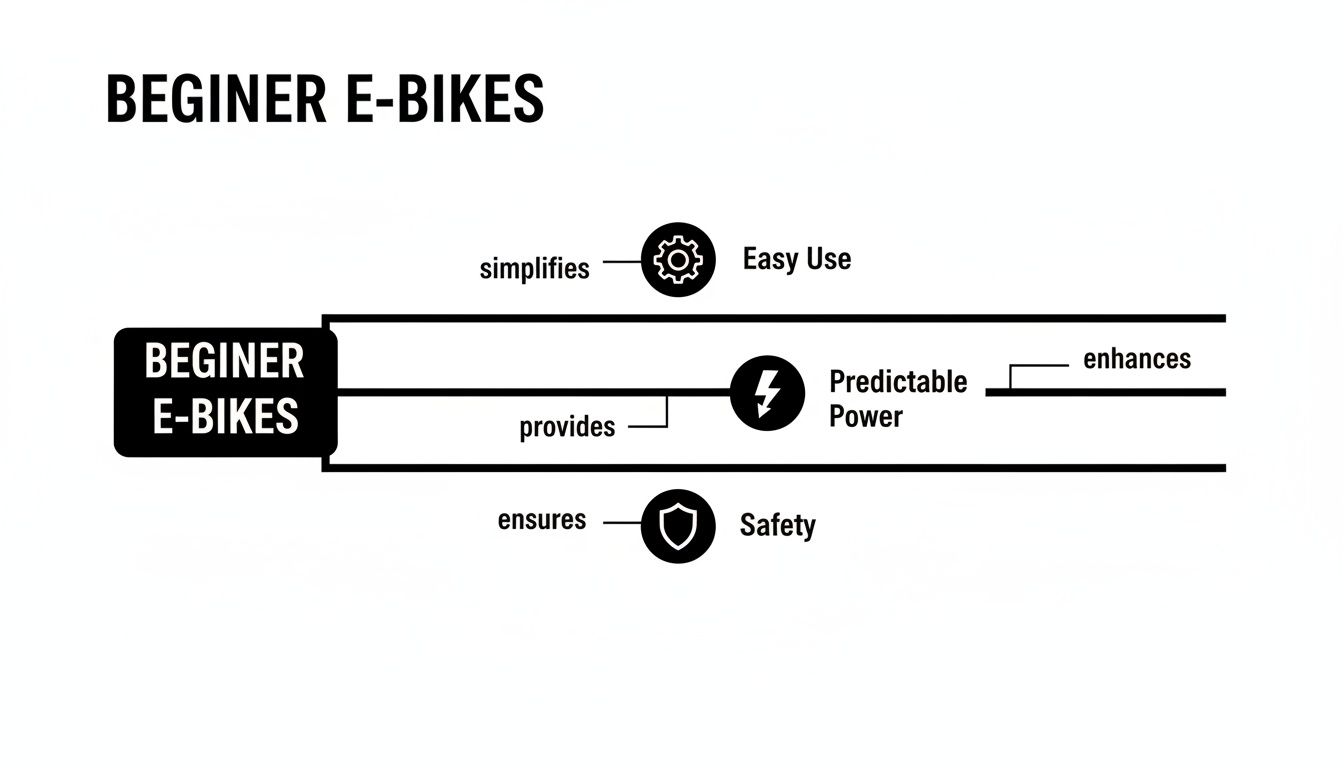
It all comes down to keeping things simple, safe, and reliable so you can just focus on the fun of the ride.
Your Fuel Tank: The Battery
If the motor is the engine, the battery is its fuel tank. Simple as that. The size of this "tank" is measured in Watt-hours (Wh). The bigger the Wh number, the more juice you have, and the farther you can go on a single charge.
For example, an e-bike with a 500Wh battery will almost always take you farther than one with a 350Wh battery. For your first e-bike, a bigger battery is a huge plus. It gives you the freedom to explore without constantly worrying about your battery level—a feeling we call "range anxiety."
To help you see how these two key parts work together, here’s a quick comparison.
E-Bike Motor and Battery Comparison
This table breaks down the common motor and battery specs to help you understand what's best for a beginner's needs.
| Component | Common Types | Best For Beginners | Key Takeaway |
|---|---|---|---|
| Motor | Hub Motors, Mid-Drive Motors | Hub Motors | Reliable, cost-effective, and provides a smooth, intuitive push. |
| Battery | Measured in Watt-hours (Wh) (e.g., 350Wh, 500Wh) | 400Wh or higher | More Watt-hours means more "fuel" in the tank and less "range anxiety." |
Choosing a bike with a reliable hub motor and a decent-sized battery is the perfect recipe for a fantastic first e-bike experience.
How Far Can You Really Go? The Deal with Range
Now let's talk about range. You'll see manufacturers advertise a maximum range, like "up to 50 miles." Treat this number like the MPG sticker on a new car—it’s what’s possible under perfect conditions. Your actual mileage will depend on a few things:
- Terrain: Hills are a battery killer! The more you climb, the more power you use, and the shorter your range will be.
- Your Weight: The motor has to work harder to carry more weight (that includes you and any cargo), which uses up the battery faster.
- Assist Level: E-bikes have different levels of power boost. Riding on the highest setting is a blast, but it drains the battery much quicker. Curious about how this works? Check out our deep dive on what pedal assist is and how it works.
- Wind & Tires: Battling a strong headwind or riding on under-inflated tires creates resistance, making the motor work harder and reducing your range.
Getting a handle on these three things—motor, battery, and range—pulls back the curtain on e-bike tech. A solid hub motor, a battery with plenty of Watt-hours, and a realistic idea of your range will set you up for success and a whole lot of fun.
Essential Features for a Safe and Comfortable Ride
Once you’ve got a handle on the motor and battery, a few other key parts of the bike make all the difference. These are the components that directly affect how safe and comfortable you feel on every ride. Nailing these details means you’ll feel in control and confident right from day one.
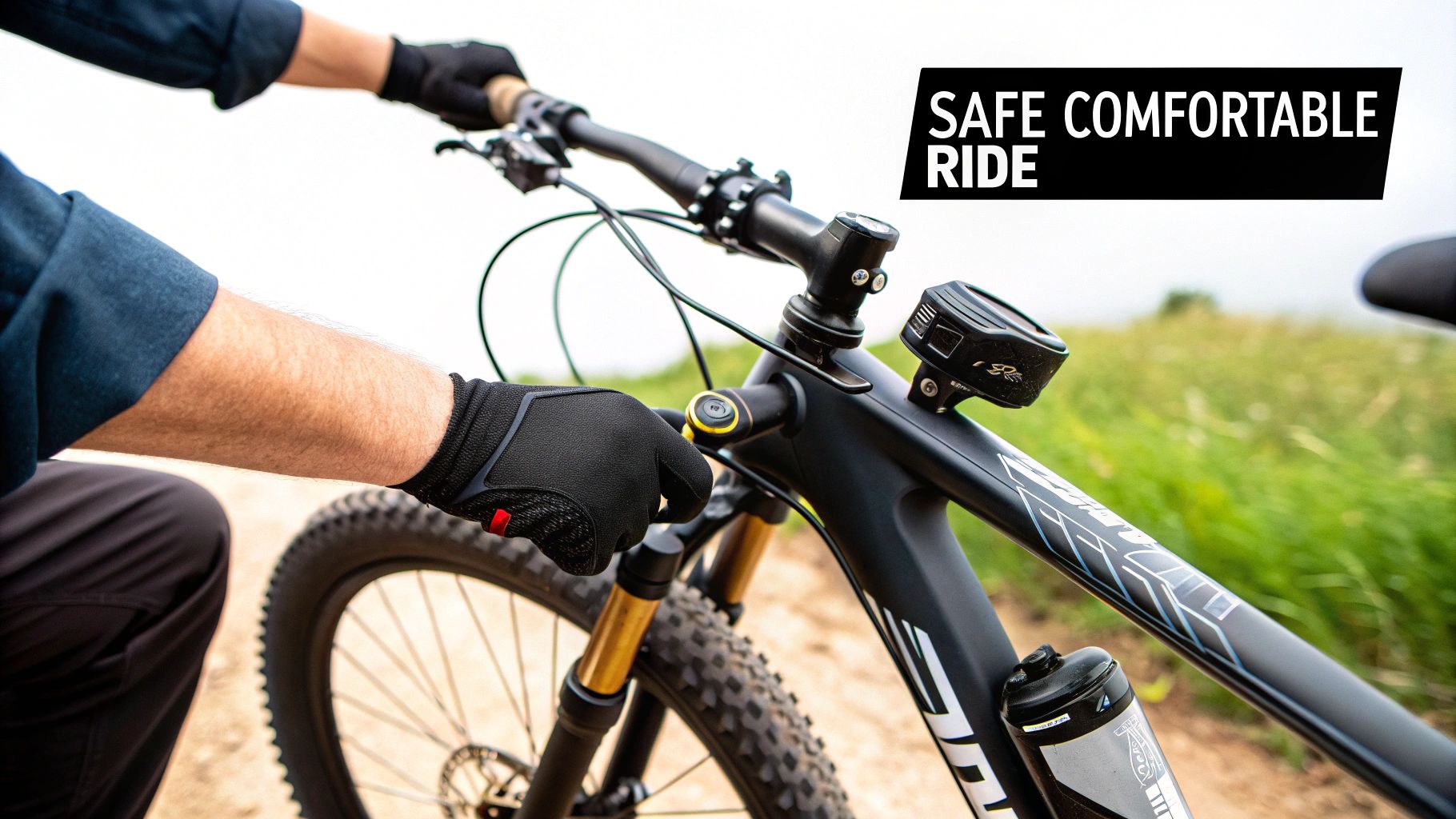
We're going to break down the parts that help you stop, smooth out the bumps, and get up hills—all in simple terms so you know exactly what to look for.
The Power of Great Brakes
Here’s the thing about e-bikes: they’re heavier and faster than regular bikes. That simple fact makes your braking system one of the most critical safety features on the entire bike. For a beginner, having dependable stopping power isn’t just a perk; it’s an absolute must.
You'll generally run into two types of brakes: mechanical and hydraulic disc brakes. While both get the job done, hydraulic brakes give you way more stopping power with a lot less effort.
- Mechanical Disc Brakes: These work with a steel cable that physically squeezes the brake pads. They’re functional but require a pretty firm grip and need regular adjustments to keep them working well.
- Hydraulic Disc Brakes: These use fluid in a sealed line, just like the brakes in your car. A gentle squeeze on the lever delivers incredibly powerful and consistent stopping, whether it's a sunny day or a rainy commute.
For a newcomer, hydraulic disc brakes are a game-changer. They give you the confidence to manage the extra speed and weight of an e-bike, ensuring you can stop on a dime when it really counts.
Think of it like this: hydraulic brakes put total control at your fingertips. They're considered the gold standard on any quality e-bike for a reason—they give you an unmatched sense of security.
Understanding Torque: Your Hill-Climbing Ally
You’ll see a spec called torque all the time, measured in Newton-meters (Nm). Don't let the technical term intimidate you. Torque is just the "pulling power" of the motor. It’s the oomph that gets you going from a complete stop and hauls you up hills.
Imagine trying to push a heavy cart up a ramp. Torque is that initial grunt you need to get it moving. A bike with higher torque feels peppier and more responsive, especially when the road starts to tilt upward.
For beginners, a bike with at least 60 Nm of torque is a fantastic sweet spot. It's more than enough power to make most city hills feel flat, all without being so powerful that it feels jerky or hard to control. This pulling power is your best friend when you’re facing down a steep street.
To Suspend or Not to Suspend?
Suspension is another feature that has a huge impact on your ride’s comfort. It's basically a system of springs and shocks, usually on the front fork, that’s built to absorb bumps and cracks in the road.
A bike with front suspension will soak up the vibrations from potholes, uneven pavement, and gravel paths. The result is a much smoother and less jarring experience. It can feel like you're floating over rough spots instead of rattling your teeth through them.
But, suspension also adds extra weight and cost. So, do you really need it?
- Riding mainly on smooth city streets and paved paths? You might be perfectly happy without it, especially if the bike has nice, wide tires that provide some natural cushion.
- Planning to ride on bumpy roads, light trails, or gravel? Front suspension is a very, very good idea. The added comfort makes riding far more enjoyable and keeps you from feeling worn out.
Ultimately, it all comes down to where you plan to ride. For the most versatility and comfort, an e-bike with front suspension is an excellent choice for a newcomer who wants to explore a bit of everything. It turns a potentially rough ride into a pleasant cruise, which will make you want to get out and ride that much more.
7. Safety Essentials and Rules of the Road
Getting your new e-bike is exciting, but let's talk about something that will keep you riding happily for years to come: safety. This isn't about being restrictive; it's about being smart so you can ride with confidence. Once you have the right gear and know the local rules, all that's left is to enjoy the ride.
Think of it as a small, one-time investment that pays dividends on every single trip. It’s what turns a nervous first-timer into a self-assured rider.
Gear Up for a Confident Ride
Before you even think about hitting the pavement, a few key pieces of gear will make a world of difference. These aren't just "nice-to-haves"—they're your core kit for every ride.
The single most important thing you can wear is a good helmet. It's not optional. Today's helmets are incredibly lightweight and comfortable, and they are proven to dramatically reduce the risk of head injuries in a fall. Make sure you get one with a certified safety rating (like CPSC in the US) that fits you snugly and correctly.
Beyond the helmet, here are a few other must-haves:
- Bright Lights: A white front light and a red rear one are non-negotiable for being seen. They’re absolutely critical if you’re riding at dawn, dusk, or at night. Many great e-bikes for beginners even come with lights already built-in.
- A Sturdy Lock: Your e-bike is a big investment, so you need to protect it. A high-quality U-lock or a heavy-duty chain lock is your best defense against theft when you have to park it.
- A Bell or Horn: A simple "ding-ding!" is the friendliest way to let pedestrians and other cyclists know you're coming up behind them on a shared path.
Want to dive deeper into getting the right gear? Our guide to essential electric bike safety tips has even more practical advice.
Understanding E-Bike Classes
Okay, this is one of the most confusing things for newcomers, but it’s super important. E-bike "classes" are just legal categories that define how the motor works and, crucially, where you're allowed to ride.
It’s not a measure of quality or performance, just rules. Getting this right from the start means you'll stay on the right side of the law and avoid any headaches.
Here’s the breakdown of the three main classes:
- Class 1: The motor only kicks in to help you while you are actively pedaling, and it stops assisting once you hit 20 mph. These are the most widely accepted e-bikes and are usually allowed anywhere a regular bicycle can go.
- Class 2: This class also tops out at 20 mph, but it has a throttle. That little button or twist-grip means the motor can propel you even if you aren't pedaling. It's great for getting started from a dead stop.
- Class 3: These are the speedsters of the e-bike world. The motor provides pedal assistance all the way up to 28 mph. Because of their higher speed, they often face more restrictions on bike paths and trails.
For anyone just starting out, a Class 1 or Class 2 e-bike is almost always the best choice. They provide all the speed you need and are welcome on the vast majority of bike lanes, paths, and trails, giving you the freedom to explore. Just remember to always double-check the specific rules for your city, county, or local parks, as they can differ from place to place.
Finding Your Perfect Fit and Getting Started
A bike that doesn't fit you is a bike you'll never ride. Think of it like a pair of shoes—if they pinch or rub, you'll leave them in the closet. The right frame size is the absolute foundation for comfort and control, making the difference between a painful chore and a joyful ride.
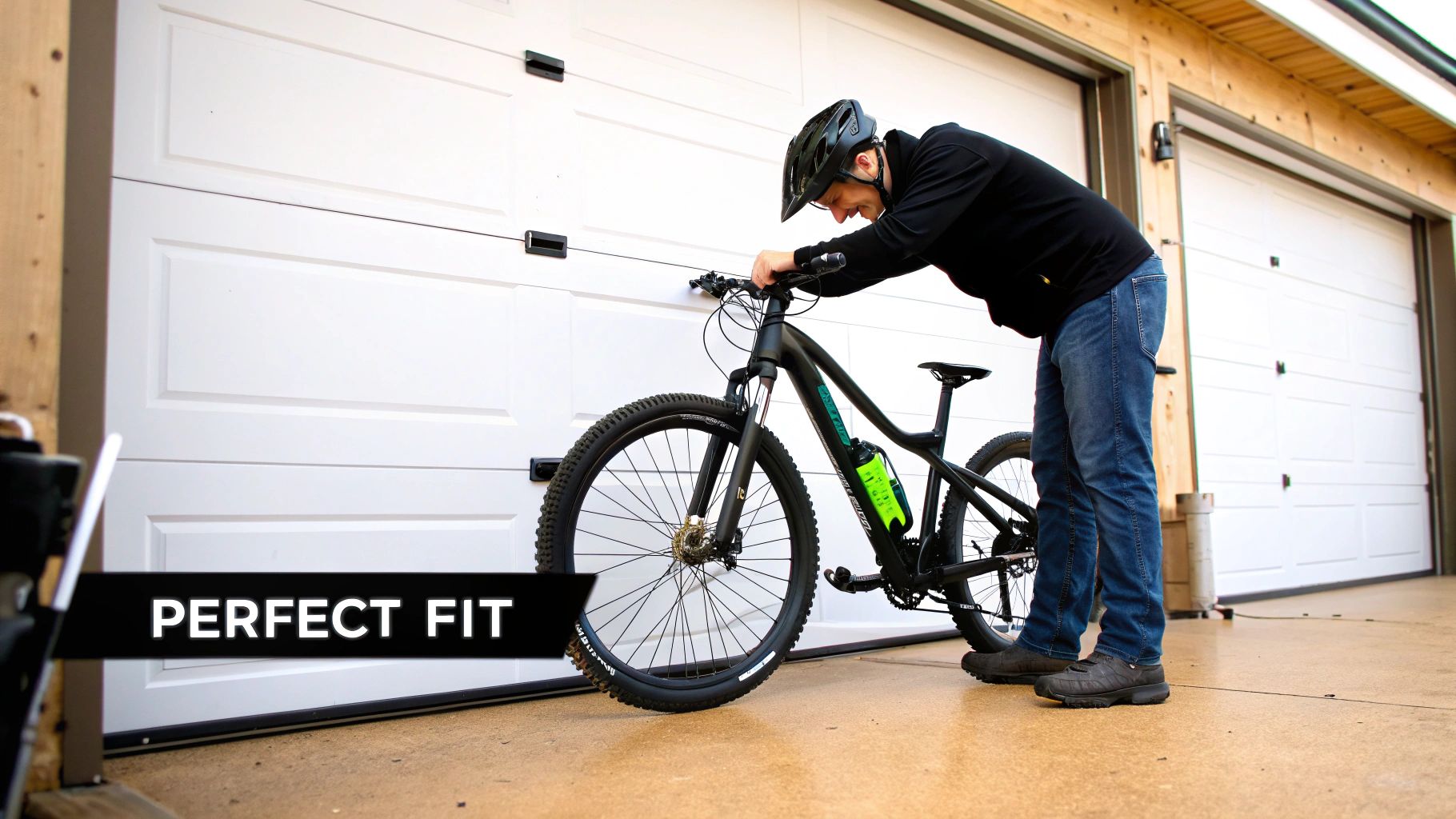
The good news? You don't need to be a professional bike fitter to get this right. Most manufacturers have straightforward sizing charts based on your height. Once you've got the correct frame, you can easily fine-tune the fit by adjusting the seat and handlebar height until it feels just right.
Demystifying E-Bike Assembly
Let's address one of the biggest worries for any first-time buyer: assembly. The last thing you want is a giant box of mysterious parts and an instruction manual that looks like it's written in another language. Fortunately, reputable brands like eBike Gang have made this process surprisingly simple.
Most of the time, your new e-bike will show up 85-90% pre-assembled. That means all the tricky stuff—the motor, gears, and brakes—is already installed and ready to go. You’ll just need to handle the final, easy steps.
- Handlebar Attachment: This usually just means tightening a few bolts to secure it in place.
- Front Wheel Installation: Simply slide the wheel into the forks and secure it. It's often a quick-release lever, which is tool-free.
- Pedal Installation: Pedals screw on easily. Just remember that the left and right pedals are threaded differently to prevent them from loosening as you ride!
- Seat Adjustment: Slide the seat post to a comfortable height and tighten the clamp. That's it.
Honestly, the whole thing usually takes less than 30 minutes with a few basic tools. You’ll get clear, step-by-step instructions that turn what seems like a daunting task into a quick, satisfying project. No special mechanical skills are needed.
First-Day Essentials for Your New Ride
Okay, your bike is built. Before you rush out the door, there's one last crucial step: charging the battery. To really maximize its lifespan and performance, you should fully charge it before your first ride. Think of it as waking up the battery cells and getting them ready for years of service.
A proper fit and a smooth setup are the cornerstones of a great e-bike experience. When your bike feels like an extension of your body from day one, it transforms from a purchase into a passion.
The explosion in e-bike popularity is a huge plus for you. Here in the United States, the market is booming, with an estimated 1.7 million e-bikes imported in 2024 by nearly 900 different companies. For a beginner, all this competition means more choices, better quality, and tons of local shops that can offer hands-on help. You can learn more about the thriving North American e-bike market on grandviewresearch.com.
Making a Smart Investment in Your First E-Bike
So, we've talked motors, batteries, safety gear, and getting the right fit. Now let's tie it all together. The key is to see your first e-bike not just as a purchase, but as a genuine investment in your transportation, your health, and frankly, your happiness. When you think of it that way, the price tag starts to make a lot more sense.
Think about it: an e-bike can easily replace those pricey car trips for errands, saving you a small fortune on gas and parking fees over time. It's also a fantastic way to sneak some low-impact exercise into your day. Once you frame it as a tool for a healthier, more fun lifestyle, the true value really clicks.
The Importance of Post-Purchase Support
While all the specs and features are exciting, what happens after you swipe your card is just as important. A truly great first e-bike experience hinges on the support you get down the road. This is where a solid warranty and a real, responsive customer service team become your best friend.
Imagine you hit a snag with a technical issue or just have a simple question about maintenance. A company that actually stands behind its product with a clear warranty gives you incredible peace of mind. It’s their promise to be there if something goes wrong, turning a potential disaster into a minor hiccup.
For any first-time buyer, a strong warranty is non-negotiable. It’s the ultimate confidence booster, assuring you that your investment is protected and you have a reliable partner for the journey ahead.
This is exactly why we at eBike Gang back every single bike with a 12-month limited warranty. Knowing you have that safety net lets you focus on the sheer joy of riding, confident that you’ve made a solid choice. For a deeper dive on this, our comprehensive electric bike buying guide covers what to look for in warranty and support.
Why the UGBEST MB750 is a Top Beginner Choice
When you put all these pieces together, the UGBEST MB750 really shines as a fantastic pick for anyone looking for the best electric bike for beginners. It just hits all the right notes, giving new riders a perfect mix of easy-to-use features, a painless setup, and the reliable support they need to get started.
Here’s a quick look at why it’s such a great fit:
- Effortless Assembly: The bike shows up almost completely put together. You can be out on the road in under 30 minutes, no advanced mechanical skills required.
- Balanced Performance: It has enough power to make hills feel flat and dependable brakes to keep you in complete control, building your confidence from day one.
- Reliable Support: It’s backed by the eBike Gang warranty and our customer service team, so you're never riding solo.
Picking out your first e-bike is the start of an amazing new chapter. It's about so much more than getting from A to B—it's about finding new trails, feeling healthier, and just having a blast. We hope you'll join the growing community of riders and experience that freedom for yourself.
Common Questions from New E-Bike Riders
As you get closer to pulling the trigger, a few practical questions almost always bubble up. It's totally normal to wonder about the day-to-day realities of owning an e-bike, and getting these answers will help you feel a lot more confident about your choice.
Let's dig into the top three things that most first-time buyers ask. Getting a handle on these basics will make your transition into e-bike life smooth from day one.
How Much Maintenance Does an E-Bike Need?
This is a big one, but the answer might surprise you: an e-bike needs about the same amount of care as a regular, non-electric bicycle. The motor and battery systems are sealed units, designed to be pretty much maintenance-free. So, your job is to focus on the familiar bike parts.
Think of it as simple, routine upkeep—the kind of stuff that takes just a few minutes every so often.
- Tire Pressure: Honestly, this is the most important thing. Keeping your tires properly inflated not only prevents flats but also makes a huge difference in how much range you get out of your battery.
- Chain Care: Give the chain a quick wipe-down with a rag and apply a little bicycle chain lube every few rides. This keeps everything shifting smoothly and quietly. A happy chain is a happy ride.
- Brake Check: Before you head out, just give your brake levers a quick squeeze. You want them to feel firm and responsive, not mushy. It’s a simple two-second safety habit to get into.
Don't let the "electric" part intimidate you. If you can handle basic bike care, you can handle an e-bike. A little attention goes a very long way.
Can I Ride My E-Bike in the Rain?
Absolutely! A quality e-bike is built to be water-resistant. This means it can handle puddles, wet roads, and a good old-fashioned rain shower without any problem. The important electrical bits, like the motor and battery, are sealed up tight to keep water out.
Now, water-resistant isn't the same as waterproof. You'll want to avoid completely submerging your bike in a river or blasting it with a pressure washer. When you're riding in the wet, just use common sense like you would on any bike: slow down a bit, give yourself more room to brake, and be sure to turn on your lights so you're visible.
How Long Does an E-Bike Battery Take to Charge?
This depends on the size of the battery and the charger you’re using, but a good rule of thumb is three to six hours for a full charge if the battery is completely dead. But here's the thing—most people rarely run their battery all the way down to zero.
It’s more like charging your phone. You’ll probably just top it off after a couple of rides, which might only take an hour or two. The process couldn't be easier. On most bikes, the battery pops right off, so you can bring it inside and plug it into any standard wall outlet. It's super convenient and ensures your bike is always ready to go when you are.
Ready to stop asking questions and start riding? The eBike Gang lineup is designed with beginners in mind, offering straightforward maintenance, reliable all-weather performance, and user-friendly features. Find your perfect first e-bike today at https://ebikegang.com and begin your adventure.