

Finding a great electric bike for under $2000 isn’t a pipe dream anymore. It’s actually one of the smartest buys you can make if you're looking for a better way to get around. The best electric bikes under 2000 manage to hit that sweet spot, balancing a punchy motor, a battery that won’t quit on you, and must-have features like solid brakes and suspension. This guide will walk you through exactly what to look for to get a fantastic bike without breaking the bank.
Your Guide to High-Performance E-Bikes Under 2000
The e-bike world is exploding right now, completely changing how we commute, get some exercise, and explore our cities. It wasn't long ago that a decent e-bike would set you back $3,000 or more. But thanks to huge leaps in motor and battery tech, truly high-performance models are now within reach for a lot more people. This has kicked the door wide open for a new generation of riders who want both power and value.
This incredible growth is fantastic news for you. More competition means better bikes and more choices. In fact, the global e-bike market is expected to more than double, jumping from USD 54.7 billion in 2025 to a staggering USD 124.6 billion by 2035. This boom is all about the demand for greener, smarter ways to get around town, which is pushing manufacturers to pack more innovation into the sub-$2000 category. You can dig into the full analysis over on Future Market Insights.
What to Expect from This Guide
Trying to navigate this crowded market can make your head spin. With so many brands, models, and specs to compare, how do you tell a genuine deal from a bike that’s just plain cheap? This guide is here to cut through all that noise. I'll give you the practical knowledge you need to shop with confidence, breaking down the tech talk so you can make a smart choice.
Instead of just throwing a list of bikes at you, we’ll get into the why behind the specs. Here’s what you’ll learn:
- Core Components: How to figure out the right motor power, battery size, and brake type for the kind of riding you actually do.
- Real-World Trade-Offs: What you get at this price point—and what you might have to compromise on. It's all about making informed decisions.
- Use-Case Recommendations: We’ll help you pinpoint the perfect style of e-bike, whether it’s for zipping to work, hitting the trails on the weekend, or just cruising around town.
- Long-Term Value: What to look for in a warranty, what to expect for maintenance, and why good brand support is a must-have for an investment that lasts.
The real goal here is to look past the price and find a bike that slots perfectly into your life. A great e-bike under $2000 should feel like a natural part of your routine—delivering freedom, fun, and reliability every single ride.
By the time you finish this guide, you won't just know what's popular; you'll understand what makes an e-bike a truly great value. You'll have the confidence to size up any model and choose a high-performance ride that fits your budget and your needs, so you can feel good about your new bike for years to come.
Getting to Know the Tech: What Really Matters on a Sub-$2,000 E-Bike
Diving into the world of electric bikes can feel like you're trying to learn a new language overnight. Suddenly you're faced with terms like "wattage," "amp-hours," and "hub drives." It's easy to get overwhelmed, but here’s the secret: you only need to understand a few key specs to find one of the best electric bikes under 2000 that will actually make you want to ride every day.
Let’s cut through the noise and talk about what these components do for you on the road. The heart and soul of any e-bike are its motor and battery. One gives you the muscle, the other gives you the stamina. Getting this combo right is everything.
The Engine Room: Motor Power and Placement
An e-bike motor's oomph is measured in watts (W). In the under-$2000 bracket, you'll mostly be looking at motors between 350W and 750W, with a few pushing up to 1000W at the top end.
Think of wattage as raw horsepower. A 350W or 500W motor is your trusty sidekick for city cruising and rolling hills—it gives you a noticeable, smooth push that makes cycling feel almost effortless. But if you live in a hilly area or want that satisfying kick of acceleration at a green light, stepping up to a 750W motor is a complete game-changer.
At this price point, you’re almost always going to find a hub-drive motor—the kind located in the center of the rear wheel. And that's a good thing! These motors are proven workhorses: they're incredibly reliable, virtually maintenance-free, and their cost-effectiveness is what makes these great e-bikes so accessible.
The most common setup is a rear hub motor, which pushes the bike from behind. This creates a really stable, planted feeling that inspires confidence, especially for new riders. It’s the perfect, no-fuss system for daily commuting and weekend adventures.
The Fuel Tank: Battery Capacity and Range
So, the motor is the engine, which makes the battery your fuel tank. How far you can go on a single charge all comes down to its capacity. You’ll see two numbers here: Volts (V) and Amp-Hours (Ah). Just multiply them together to get Watt-Hours (Wh)—that’s the true measure of your "tank size." More watt-hours means more miles of fun.
For less than $2,000, a great benchmark to aim for is a battery around 48V and 10Ah, which gives you 480Wh. That’s enough juice for a real-world range of 25-50 miles, though it can vary based on your weight, the terrain, and how much you ask of the motor. The lithium-ion batteries standard in this category easily power the paddle-assist modes that most riders use, often stretching range up to 60 miles with 350-1000W motors, making them a fantastic fit for almost anyone.
Below is a quick reference table to help you manage expectations when comparing models.
Key E-Bike Specs Under 2000: What to Expect
This table breaks down what you can typically find at different price points within the sub-$2,000 category, helping you see where the value lies.
| Component | Good (Entry-Level) | Better (Mid-Range) | Best (Top of Budget) |
|---|---|---|---|
| Motor Power | 350W - 500W Hub Motor | 500W - 750W Hub Motor | 750W+ Hub Motor |
| Battery Capacity | 36V/10Ah (360Wh) | 48V/10-13Ah (480-624Wh) | 48V/14Ah+ (672Wh+) |
| Brakes | Mechanical Disc Brakes | Mechanical or Hydraulic | Hydraulic Disc Brakes |
| Suspension | Front Suspension Fork | Upgraded Front Fork | Quality Front Fork, sometimes seat post suspension |
| Frame | 6061 Aluminum Alloy | 6061 Aluminum Alloy | 6061 Aluminum with refined welds/design |
As you can see, spending a bit more toward the top of the budget often gets you significant upgrades in the components that matter most for performance and safety, like the battery and brakes.
Stopping Power: Mechanical vs. Hydraulic Brakes
All that "go" is useless if you can't "whoa." E-bikes are heavier and faster than their traditional cousins, making great brakes an absolute must-have. You'll run into two main types:
- Mechanical Disc Brakes: These work like classic bike brakes, using a steel cable to pull the brake pads. They get the job done reliably and are simple and cheap to adjust or repair at home.
- Hydraulic Disc Brakes: Instead of a cable, these use fluid in a sealed line. The difference is night and day. You get way more stopping power with just a light squeeze of the lever, plus they give you finer control and work much better in the rain.
While mechanical brakes are perfectly fine for many riders, finding a bike under $2000 with hydraulic brakes is a serious win. That extra control gives you a huge boost in confidence, especially on steep descents or in unpredictable traffic.
The Foundation: Frame and Suspension
The frame and suspension are the foundation of your ride, determining both comfort and long-term durability. The vast majority of bikes in this price range are built with 6061 aluminum alloy frames. It’s the industry standard for a reason—it hits the sweet spot of being strong, relatively lightweight, and resistant to rust.
What really separates a good ride from a harsh one is the suspension. A front suspension fork is non-negotiable if you plan on riding anywhere besides a perfectly smooth bike path. It soaks up the jolts from potholes and cracks in the pavement, saving your hands, wrists, and shoulders from a beating. While a true full-suspension setup is rare at this price, a good front fork makes all the difference.
Of course, a bike is a system of many parts working together. Even details like the correct ebike chain length play a role in how smoothly everything runs. If you want to dive even deeper, be sure to check out our comprehensive electric bike buying guide.
Matching Your Ride Style to the Right E-Bike Type
Finding a great electric bike under $2,000 isn't just about comparing stats on a spreadsheet. It’s about finding a bike that feels like it was built just for you. Think of it as an investment in how you get around—and how much fun you have doing it.
The perfect bike for zipping through city traffic will feel completely out of its element on a bumpy trail, and a rugged off-roader might be overkill for a simple commute. Let's figure out what kind of rider you are. I’ll break down three common profiles so you can see which one fits you best and what features you should be looking for.
The Urban Commuter
If your e-bike is your ticket to skipping traffic and getting around town, you’re an urban commuter. This bike is your daily workhorse, getting you to the office, the grocery store, and everywhere in between. You need something reliable, practical, and comfortable for navigating bike lanes and stop-and-go city streets.
Your main focus should be on features that make city riding a breeze:
- Extended Battery Range: Look for a battery with at least 500Wh. This gives you enough juice for a full day of errands without constantly worrying about your next charge.
- Responsive Brakes: Hydraulic disc brakes are a game-changer in the city. They give you the confidence and control to stop on a dime when a car pulls out unexpectedly.
- Integrated Lights and Fenders: These aren't just nice-to-haves; they're essentials. Good lights keep you visible, and fenders keep road grime off your work clothes when the weather turns.
- Comfortable Riding Position: An upright posture is your friend on long commutes. It takes the strain off your back and wrists, making the ride much more enjoyable.
The Weekend Trail Explorer
Does your perfect weekend involve trading pavement for dirt paths and gravel roads? Then you're a weekend trail explorer. You’re after adventure and need a bike that’s tough enough to handle unpredictable terrain with confidence. For you, it's all about durability and control.
While there are some incredibly specialized electric bikes like the Kalk AP trail bike out there, you can still find fantastic, capable options under the $2,000 mark to get you started.
Here’s what you should be looking for:
- Powerful Motor: A 750W motor with plenty of torque is a must. It's what will get you up and over those steep, unpaved hills without killing your legs.
- Front Suspension: Don't even consider a trail bike without it. A suspension fork with at least 80mm of travel soaks up bumps, giving you a smoother, more controlled ride.
- Durable Fat Tires: Wide, knobby tires—around 4 inches is a great place to start—are key. They give you the grip and stability you need on loose stuff like dirt and gravel.
This graphic gives you a quick visual breakdown of how a bike's motor, battery, and brakes all work together to shape its performance, no matter what kind of riding you do.
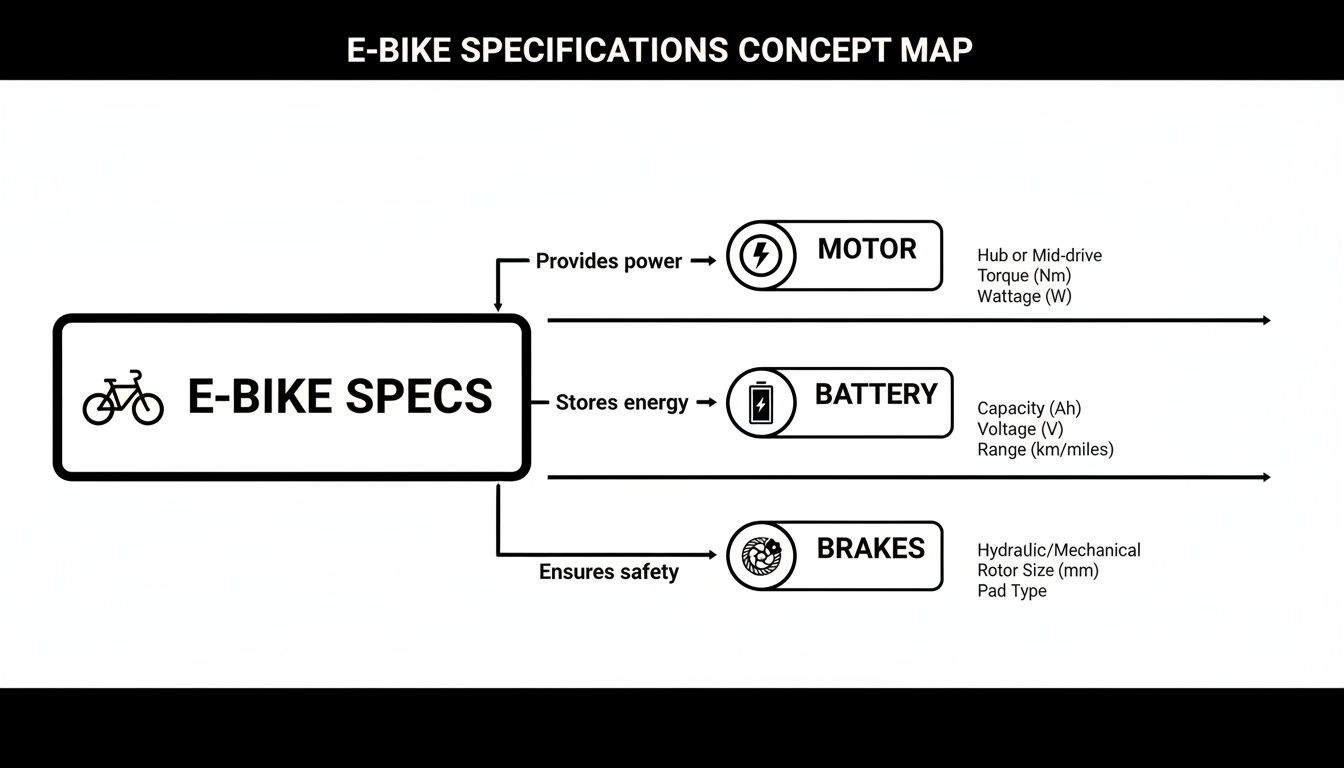
As you can see, these core components are what deliver the power, range, and safety every rider needs.
The First-Time E-Moto Enthusiast
You're drawn to the power and the aggressive styling of an e-bike that looks and feels more like a mini motorcycle. You want a ride that turns heads and delivers a serious thrill. Performance matters, but so does that rugged, substantial design. For you, this isn't just about getting from A to B; it's about having an exhilarating new hobby.
If you want to dive deeper into the different e-bike categories, our guide to the main types of e-bikes is a great resource.
For this rider, the experience is just as important as the utility. Look for a bike that delivers a rush of acceleration and has a commanding presence on the road.
Your checklist should put power and design front and center:
- High-Torque Motor: Prioritize a motor with at least 80 Nm of torque. This is what gives you that grin-inducing, snappy acceleration right from a dead stop.
- Robust Frame: A sturdy, moped-style frame isn't just for looks. It provides a stable, planted feel, especially when you're cruising at higher speeds.
- Dual Suspension: It's a rare find under $2,000, but if you can get a bike with both front and rear suspension, you'll get the smoothest ride possible and really lean into that moto feel.
- Large, Bright Display: A big, clear screen that shows your speed, power output, and battery life in a glance really adds to the high-tech experience.
Understanding the Real Cost of E-Bike Ownership
That initial price tag is what gets your attention, but the true cost of an e-bike reveals itself over months and years of riding. The best electric bikes under 2000 aren't just about scoring a great deal upfront; they're about finding a reliable ride with manageable upkeep. The real cost is a mix of that purchase price, routine maintenance, and the peace of mind that comes with a solid warranty.
Think of it like owning a car, only way simpler and a whole lot cheaper. Just like a car needs its oil changed and tires rotated, your e-bike needs a little TLC to keep it running smoothly and safely. The good news is, you can handle most of it right in your garage, no professional mechanic required.
Simple DIY Maintenance Saves You Money
You don't need a full set of tools or an engineering degree to keep your e-bike in top shape. A few minutes of basic care here and there can massively extend the life of your bike and prevent bigger, more expensive problems down the road. It's a small time investment that pays off big time.
Here are a few essential habits that are easy to pick up:
- Keep Your Chain Clean and Lubed: A gritty, dry chain doesn't just sound bad; it's inefficient and wears out your whole drivetrain faster. Just wipe it down with an old rag and apply some bike-specific lube every hundred miles or so. It makes a world of difference.
- Check Your Tire Pressure Weekly: Properly inflated tires are your best defense against flats, and they give you better grip and battery range. Grab a floor pump with a gauge and keep them at the recommended PSI you see printed on the tire's sidewall.
- Inspect Your Brake Pads: E-bikes are heavier and faster, so your brake pads work harder. Give them a quick visual check every month to see how much life they have left. Swapping them out is a simple job that ensures you can always stop when you need to.
Mastering these simple checks doesn't just save you a trip to the bike shop. It helps you get to know your bike on a deeper level. You'll learn what feels right and be able to spot small issues before they become major headaches.
Demystifying Your E-Bike Warranty
A warranty is your safety net—it's there to protect your investment if something unexpected goes wrong. For e-bikes in this sub-$2000 price range, a 12-month limited warranty is pretty much the industry standard. It’s really important to know what this covers, and just as important, what it doesn't.
A limited warranty is all about covering manufacturing defects. This means if the frame cracks, the motor gives out, or the battery dies because of a flaw in how it was made, the company has your back. They’ll repair or replace the faulty part.
However, you need to know what's left out. Warranties don't cover "wear and tear" items—the parts that are expected to wear down with normal use. If you're weighing the pros and cons and asking if are electric bikes worth it for the long haul, understanding these ongoing costs is a huge piece of the puzzle.
Common items not covered by a standard warranty include:
- Tires and inner tubes
- Brake pads
- Chains and cassettes
- Hand grips and saddles
This isn't a red flag or a sign of a bad company; it's completely normal. Your car's warranty covers a faulty transmission, not the gas you put in it or the tires you wear out driving. The same logic applies here. A brand with a clear, easy-to-understand warranty policy is showing you they stand behind their product and want you to have a great experience.
Finding Brands That Deliver Performance and Value
When you're hunting for an electric bike under $2,000, the market can feel like a crowded party. Dozens of bikes look great online, and their price tags are nearly identical. But here’s the thing I’ve learned after years in this industry: the real value isn't just in the specs, it's in the entire experience. The best brands at this price point aren't just shipping you a box; they're delivering a well-thought-out machine backed by real-world support.
Separating the solid performers from the flashy-but-flimsy models is the key. You have to look past the marketing and focus on what really matters on the road and in your garage.
It’s the little things that often signal a brand's commitment to quality. These are the details that show they understand riders—from the moment you unbox your new e-bike to your thousandth mile.
Look for Customer-First Conveniences
A frustrating setup can sour the excitement of a new e-bike before you even get to ride it. The top brands get this, and they engineer the entire process to be as painless as possible.
Here's what to keep an eye out for:
- Near-Complete Pre-Assembly: Smart companies ship their bikes 85-90% assembled. This means all the intimidating stuff—the motor, the wiring, the drivetrain—is already handled by professionals. All you need to do is attach the easy parts like the handlebars, pedals, and front wheel. It turns a potential weekend-long headache into a simple, sub-one-hour task.
- Free and Fast Shipping: Nothing stings like finding a great deal, only to get hit with a massive shipping fee at checkout. The most reputable brands are upfront about this, often rolling free shipping into the price for the lower 48 states. It's more than just a nice perk; it’s a sign of a professional operation that isn’t trying to nickel-and-dime you.
- Responsive U.S.-Based Support: Sooner or later, you'll have a question. When you do, you want to talk to a knowledgeable human who actually understands the product. Brands with accessible, U.S.-based support teams show they're invested in their riders for the long haul, not just until the credit card clears.
Performance Indicators from Real Riders
Spec sheets are a good starting point, but they don't tell you how a bike feels. For that, you need to dig into reviews from actual owners. This is where you'll discover if a bike is a true gem or just looks good on paper.
“The true measure of a great affordable e-bike is how it performs when you need it most. It’s the powerful surge of torque that flattens a steep hill, the smooth acceleration that gets you safely across an intersection, and the battery that still has juice left after a long, adventurous day.”
When you’re scanning reviews, look for consistent praise of these key characteristics:
- Smooth Acceleration: You'll see riders mention how the power feels "natural" or "intuitive," not jerky or sudden. That's the sign of a well-tuned controller working in harmony with the motor.
- Powerful Hill-Climbing Torque: Comments like "it ate up that hill" or "I didn't even break a sweat" are what you want to find. This tells you the motor has enough torque to make your rides enjoyable, even if you live in a hilly area.
- Long-Lasting Battery Life: Look for people who say they're getting close to the brand's advertised range. This means the company is using quality battery cells and giving you honest numbers, so you can ride with confidence and without range anxiety.
These are the elements that separate a bike you simply own from a bike you absolutely love to ride.
The eBike Gang Advantage
At eBike Gang, we’ve built our entire philosophy around hitting these exact marks. We sweat the details so you don't have to. Our bikes arrive nearly fully assembled and are backed by a 12-month limited warranty and a dedicated support team that's here to help.
We truly believe that finding one of the best electric bikes under 2000 shouldn't feel like a compromise. By focusing on what truly matters—solid performance, a hassle-free setup, and support you can count on—we make sure your investment pays off with miles and miles of fun.
Common Questions About E-Bikes Under $2,000
Stepping into the world of electric bikes is exciting, but it's natural to have a few questions, especially when you're trying to find a great deal. It’s a big purchase, after all. Let's tackle some of the most common things people ask when shopping for an e-bike under that $2,000 price point so you can feel totally confident in your choice.
How Fast Can an Electric Bike Under $2,000 Go?
This is usually the first question on everyone's mind! Most e-bikes in this price range fall into specific classes that govern their top speed with electric assistance.
- Class 1: Gives you a boost only when you're pedaling, topping out at 20 mph.
- Class 2: Features a throttle for power on demand and pedal assist, both cutting off at 20 mph.
- Class 3: Is pedal-assist only (no throttle) but helps you get up to a zippier 28 mph.
Honestly, for most day-to-day riding—like commuting or hitting a bike path—a top speed of 20 mph is plenty fast. What you'll often appreciate more is the bike's torque, which is the oomph that gets you going from a standstill or helps you power up a hill. Bikes under $2,000 are great at providing that instant acceleration. Just be sure to check your local rules, as e-bike laws can change from one place to the next.
What Is the Average Battery Range?
Right after speed, everyone wants to know, "How far can it take me?" The short answer is: it depends. A quality e-bike in this category will typically give you a real-world range of 25 to 60 miles on a single charge. But that number isn't set in stone.
Think of the battery like the gas tank in your car—your driving style has a huge impact on your mileage. The same principle applies here.
A battery's maximum stated range is almost always based on perfect conditions: a light rider on flat pavement using the lowest power setting. Your actual mileage will vary, but a good bike under $2,000 will still get you where you need to go and back again.
Here’s what really affects how far you can go:
- Battery Capacity: Look for a battery with at least 400-500Wh (Watt-hours). Think of watt-hours as the size of your "fuel tank."
- Rider & Cargo Weight: The more weight the motor has to move, the more energy it uses.
- Terrain: Climbing hills is the fastest way to drain your battery. Cruising on flat ground is far more efficient.
- Assist Level: The higher the assist level (or the more you use the throttle), the faster your battery will deplete.
For the average person, a 25 to 60-mile range is more than enough for several days of commuting or a long weekend adventure before needing a recharge.
Are E-Bikes Under $2,000 Heavy and Hard to Handle?
It's true, e-bikes are heavier than their non-electric cousins, usually weighing between 50 and 75 lbs. That extra weight comes from the two things that make them so fun: the motor and the battery.
While that number might sound like a lot, these bikes are cleverly engineered to handle beautifully. The weight is almost always positioned low and center on the frame, which gives the bike a low center of gravity. This makes it feel incredibly stable and planted, not top-heavy or wobbly. Once you start moving and the motor kicks in, the bike feels surprisingly nimble. The weight is really only a factor if you have to carry it up stairs daily or lift it onto a car rack by yourself.
Can I Assemble an E-Bike Myself if I Buy It Online?
Yes, you absolutely can! This is a huge worry for a lot of first-time online bike buyers, but good brands have made the whole process incredibly straightforward. Most e-bikes you buy online arrive 85-90% pre-assembled. All the tricky stuff is already done at the factory.
You're just left with the final, easy steps. Typically, all you have to do is:
- Attach the front wheel.
- Mount the handlebars.
- Screw on the pedals (they're marked left and right!).
- Pop in the seat post.
Brands provide all the tools you need and usually have fantastic instruction manuals and step-by-step video guides to walk you through it. It generally takes about 30 to 60 minutes and is a great way to get to know your new bike before your first ride.
At eBike Gang, we design our bikes for an amazing experience right out of the box, with near-complete assembly and U.S.-based support ready to help with any questions. Explore our collection and find the perfect ride for your next adventure.