

So, what exactly is a bicycle phone bag? It's a purpose-built carrier that mounts right onto your bike, giving your smartphone a secure, easy-to-see, and often weatherproof spot to live while you ride. Don't think of it as just a pouch—it's more like a mini dashboard for your handlebars.
Why a Bicycle Phone Bag Is a Game Changer for Your Ride
We've all been there: trying to pull a phone out of a pocket mid-ride to check the map. It’s awkward, clumsy, and honestly, pretty dangerous. Taking your eyes off the road for even a second is a risk you don't need to take.
A dedicated phone bag completely solves this problem. It turns your phone from a risky distraction into a helpful co-pilot, keeping navigation, fitness stats, or your music playlist right in your line of sight. It's one of the simplest and smartest upgrades you can make for a better, safer ride.
Evolving From Pouch to Protector
Today’s bike phone bags are a far cry from the flimsy fabric holders of the past. They're now engineered to handle the real-world demands of cycling. The benefits are huge:
- Impact Protection: A good bag adds a crucial layer of defense, protecting that expensive screen from a disastrous drop on the pavement or trail.
- Weather Resistance: Got caught in a sudden downpour? A weather-resistant bag keeps your phone dry and working.
- Secure Mounting: These mounts are designed to grip tight, so your phone won't vibrate loose and tumble off, even when the road gets bumpy.
This focus on blending safety with convenience is why the market is booming. The handlebar bag category alone, a major home for phone bags, is valued at 200 million units annually. As more people turn to cycling for commuting and fitness, accessories that can cut down on in-ride distractions by up to 40% are becoming must-haves.
Ultimately, the right phone bag lets you stop worrying about your device and focus on the road ahead. For more great advice on staying safe out there, be sure to read our essential electric bike safety tips.
So, What Kind of Bicycle Phone Bags Are Out There?
Choosing the right bicycle phone bag gets a lot simpler once you know the main styles. It's really like picking the right tool for a job—each one is designed to fit a specific spot on your bike and serve a particular need. Most bags you'll come across fit into one of three common categories.
First, let's look at the core job of any good phone bag. It’s about more than just holding your device; it's about making your ride safer, more convenient, and worry-free.
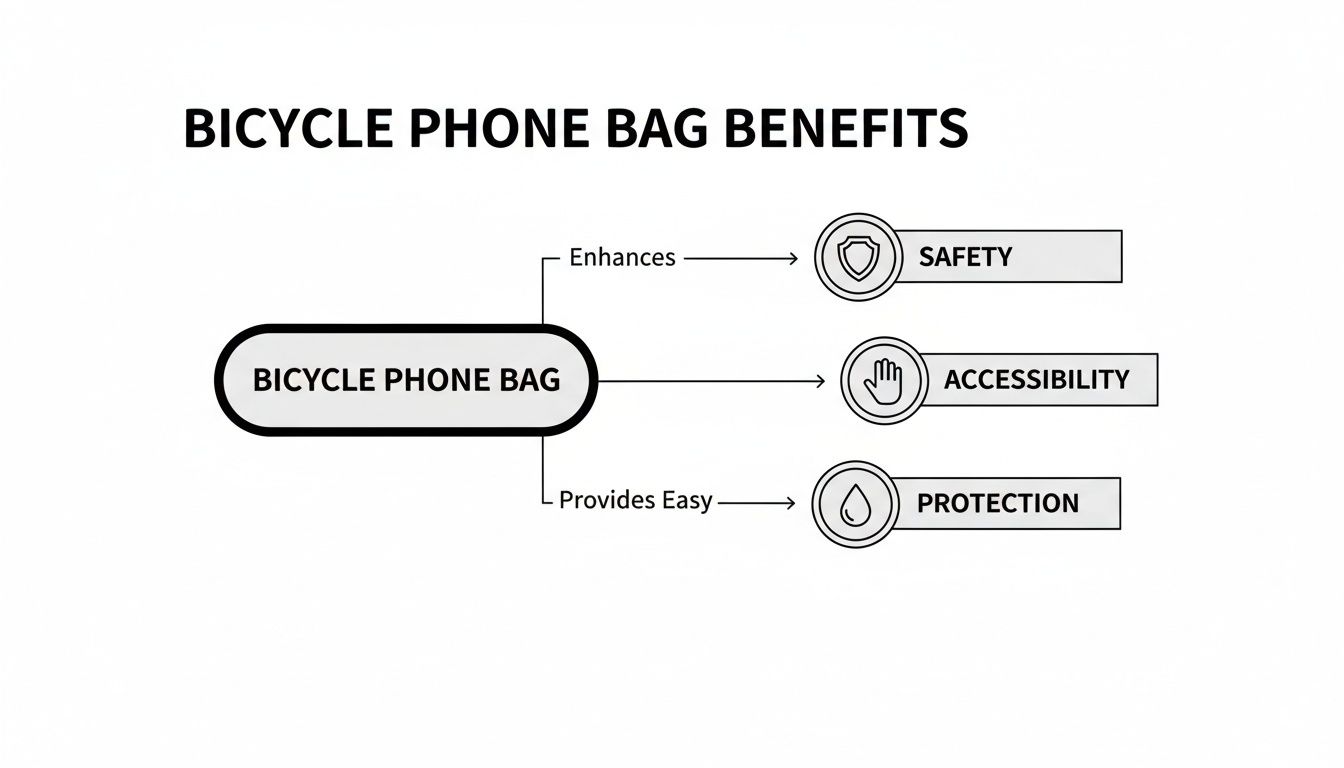
As you can see, a good bag turns your phone from a potential distraction into a genuinely useful cycling tool. Now, let’s see how the different styles stack up.
Handlebar Bags
Just like the name says, these bags mount right onto your handlebars. This style is all about top-notch visibility.
It puts your screen front and center, which is absolutely perfect if you rely on GPS for turn-by-turn directions. You barely have to glance down from the road to see your map, making it a huge win for navigation and safety.
Top Tube Bags
Often called frame bags, these mount snugly along your bike's top tube, right behind the handlebars. Their big advantage is a sleek, low-profile look that won't mess with your steering or create much wind resistance.
But there's more to them than just looks.
A major draw for top tube bags is their built-in storage. Many have a handy compartment right under the phone slot, giving you a perfect spot for keys, a wallet, or a couple of energy bars for those longer rides.
This two-in-one design makes them a hit with commuters and long-distance riders who need to carry a few essentials without loading up their pockets.
Stem Bags
You might hear these called "feed bags," and for good reason. These smaller, often cylindrical bags attach right next to your bike's stem. Their defining feature is easy access.
You can reach in and grab your phone, a snack, or even a small water bottle with one hand, often without even needing to look down. They're built for convenience on the move.
Phone Bag Styles At a Glance
Feeling a bit overwhelmed? Don't be. This table breaks down the key differences to help you find your perfect match.
| Bag Style | Mounting Location | Best For | Pros | Cons |
|---|---|---|---|---|
| Handlebar Bag | Handlebars | Navigation-heavy riders, city commuters | Unbeatable screen visibility, easy to see alerts | Can clutter handlebar space, may interfere with lights/bells |
| Top Tube Bag | Top Tube | Commuters, long-distance cyclists, road bikers | Aerodynamic, offers extra storage for essentials | Screen is lower, requires a further glance down |
| Stem Bag | Handlebar Stem | Bikepackers, tourers, anyone needing quick access | Super easy one-handed access to phone and snacks | Smaller capacity, may not fit larger phones |
Ultimately, the right bag depends entirely on how you ride. Think about your daily routine. Are you constantly exploring new city streets with a map, or are you a weekend warrior who needs quick access to fuel on a long tour?
Answering that simple question will point you directly to the perfect bicycle phone bag for your e-bike and your adventures.
What Makes a Great Bike Phone Bag? The Features That Really Matter
On the surface, most bike phone bags look pretty similar. But once you're out on the road, you'll quickly discover that the devil is in the details. The right features can make the difference between a bag that’s a trusted part of your kit and one that just gets in the way.
Let's break down what separates a good bag from a great one.
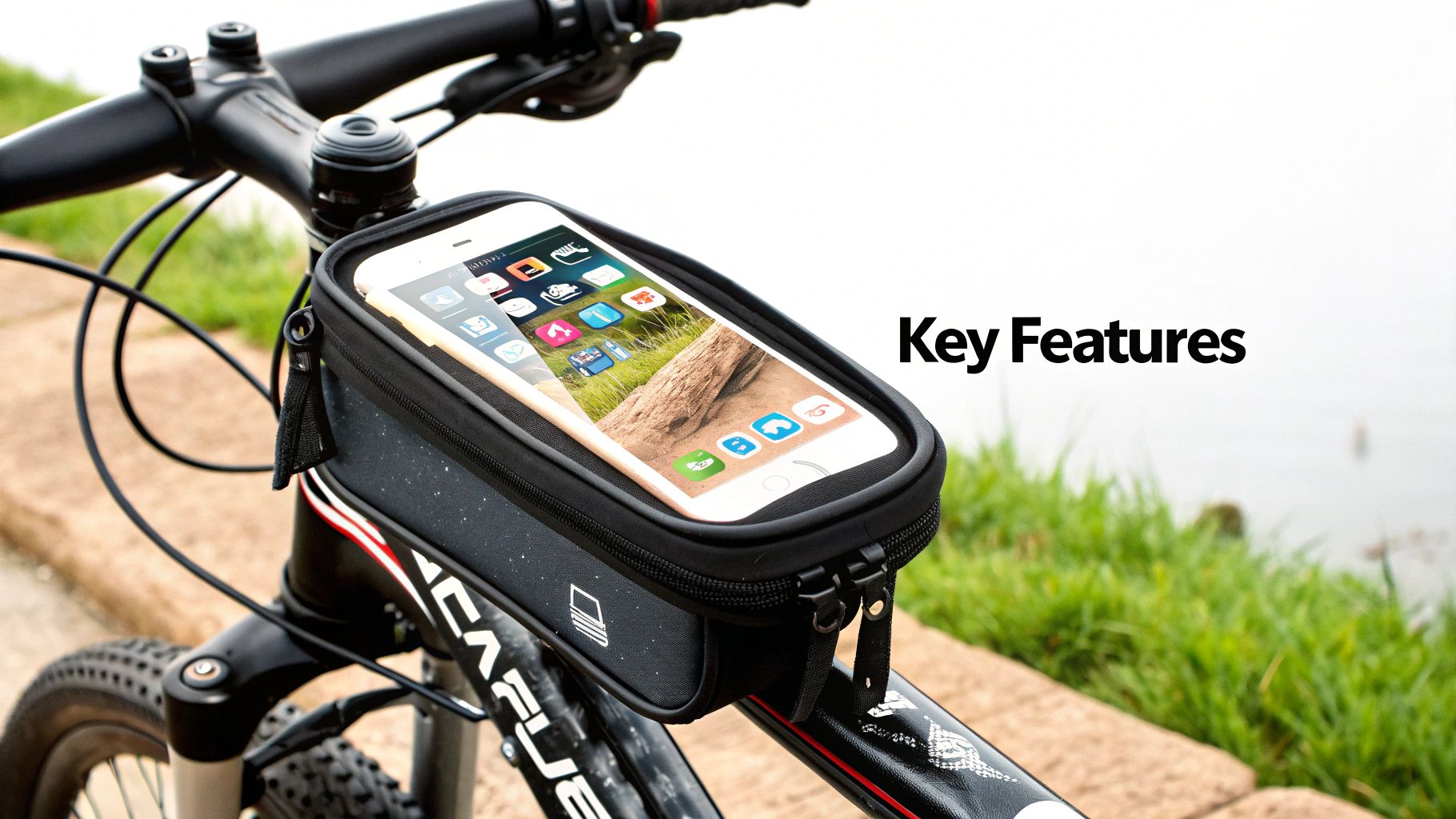
This focus on quality isn't just a niche concern; it's a huge deal. The bike bag market is expected to balloon to USD 3.9 billion by 2035. That growth is fueled by riders like us who demand better gear. In fact, since 2020, surveys have shown that 62% of riders now consider waterproofing and vibration resistance top priorities. The days of flimsy, basic bags are over.
Don't Get Caught in the Rain: True Water Resistance
There's a massive difference between "water-resistant" and genuinely waterproof. A bag that can shrug off a light drizzle might fail you completely in a real downpour. For genuine, all-weather protection, you need to look for an official IP (Ingress Protection) rating.
- IPX4: This will handle splashes from any direction. It’s fine for misty days or very light rain.
- IPX6: Now we're talking. This rating can withstand powerful water jets, meaning it’s ready for a proper rainstorm.
- IPX7: This is the gold standard. A bag with this rating can be fully submerged in a meter of water for 30 minutes without leaking.
Beyond the rating, look for details like welded seams and coated, waterproof zippers. These are the weak points where water loves to sneak in, so quality construction here is non-negotiable.
A Screen You Can Actually Use
A clear window is useless if you can't operate your phone through it. The best bicycle phone bags use a high-quality TPU (Thermoplastic Polyurethane) screen. It’s far more responsive to the touch than cheap PVC, so you won't be jabbing at your screen trying to switch songs or check your map.
Another deceptively simple feature to look for is a built-in sun visor. It’s that little hood that extends over the top of the screen, and it’s a game-changer. It blocks glare so you can actually see your navigation on a bright, sunny day without having to stop and find shade.
The goal is effortless interaction. Your phone bag should make using your device easier and safer, not add another layer of complexity to your ride.
Rock-Solid Mounting and Tough-as-Nails Durability
A bag that wobbles and bounces around isn't just annoying—it's a safety hazard. A secure mount is absolutely critical. Look for bags that use multiple, heavy-duty velcro straps or a solid clamp system to lock onto your frame or handlebars. A bounce-free ride is key to protecting your phone’s delicate internal electronics from constant vibration.
The bag’s fabric is just as important. You want something that can handle being out in the elements day after day, like tough ripstop nylon or polyester. Think about how the bag works with your other gear, too. A well-designed bag should complement other accessories, like sturdy MagSafe compatible phone cases, to create a complete protective system.
If you’re looking to build out your entire setup, our guide to the best electric bike accessories is a great place to get more ideas.
Matching a Phone Bag to Your Cycling Life
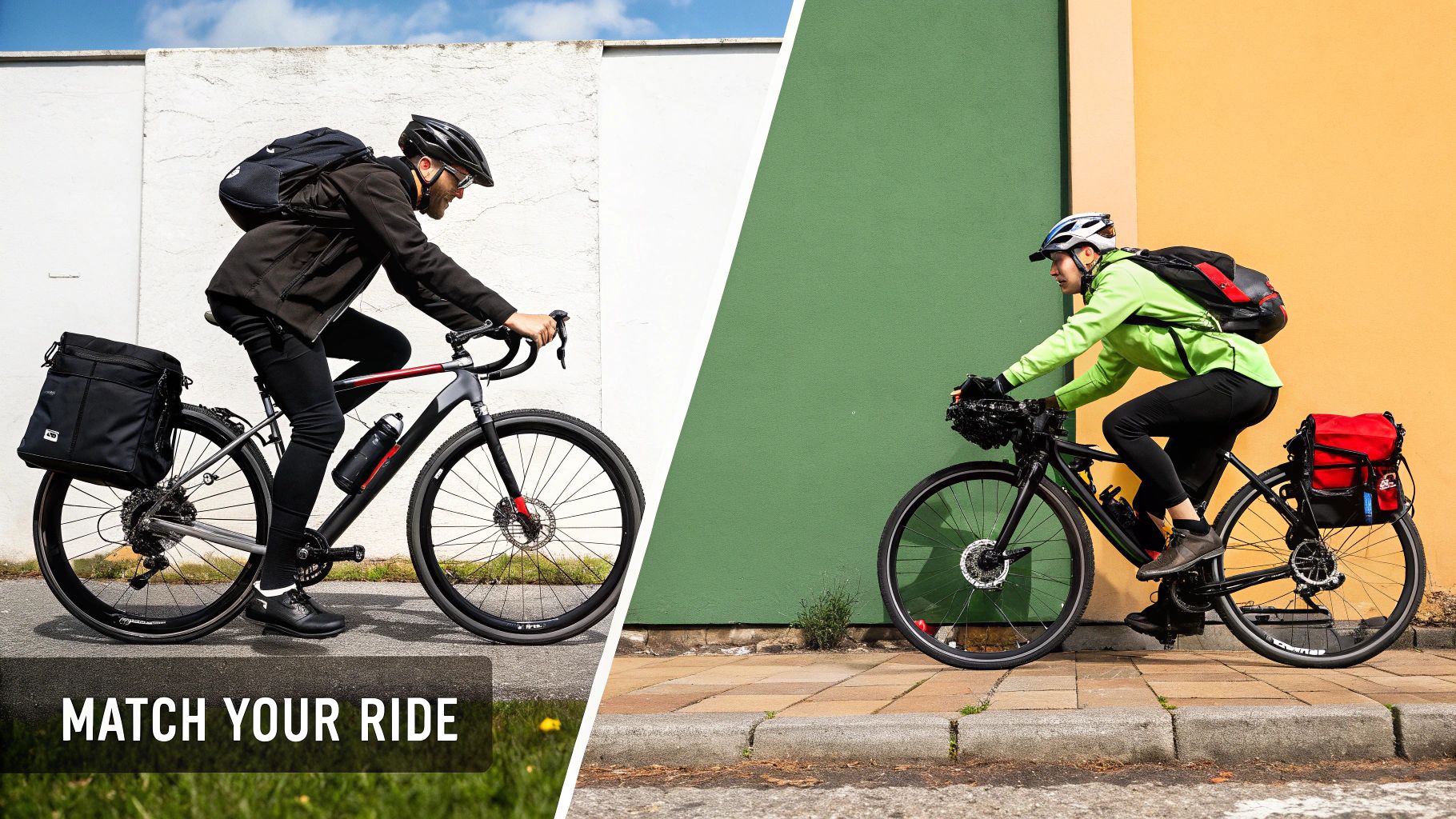
The perfect bicycle phone bag isn’t something you can just grab off the shelf. Think about it—your daily ride is unique, so your gear should be, too. The key is to find a bag that fits seamlessly into your cycling reality, whether you're dodging traffic downtown or kicking up dust on a gravel trail.
This approach makes sense when you see how much cyclists rely on practical accessories. The global bike bags market, which includes these handy phone holders, was valued at an estimated $150.7 million in 2025. A big part of that growth comes from riders in cities who need their devices safe, sound, and within easy reach.
The Daily Urban Commuter
If you're a city rider, your world revolves around convenience and security. You’re weaving through traffic, navigating with GPS, and making quick stops for coffee or errands. Your phone bag needs to keep up.
- Top Feature: A quick-release mount is a game-changer. It lets you pop the whole bag off in a second when you lock up your bike, so you can take your valuables with you.
- Ideal Style: A handlebar bag is your best bet. It puts your screen right in your line of sight, which is perfect for following directions without looking down and away from the road.
- Must-Have: Don't forget waterproofing. A high IP rating means your phone won't get fried in an unexpected downpour.
Your daily grind on two wheels requires gear that’s as tough as it is smart. If you're looking to really dial in your setup, our guide on choosing the best https://ebikegang.com/blogs/news/electric-bike-for-commuting is a great place to start.
The Weekend Trail Explorer
Mountain bikers and gravel grinders, you're playing a completely different game. Rough terrain, constant vibrations, and the occasional tumble are all part of the adventure. Your gear has to be built for it.
For off-road cyclists, a bag's ability to stay put is its most important job. Constant bouncing and jarring can dislodge a flimsy mount and send your phone flying.
Here's what you should be looking for:
- Top Feature: An ultra-secure, vibration-dampening mounting system is absolutely non-negotiable. Look for beefy straps that lock down tight or a solid clamping mechanism.
- Ideal Style: A top tube bag offers a stable, streamlined fit. It hugs the frame, staying out of your way when you're leaning into a turn or maneuvering over obstacles.
- Must-Have: Durability is everything. Choose a bag made from rugged, abrasion-resistant materials that can take a scrape from a branch and keep on going.
Of course, having the right gear is only half the battle. Making sure your body is ready for the ride is just as important. For those longer adventures, it's worth looking into fueling your endurance cycling performance.
Installation and Care to Make Your Bag Last
Getting a new bicycle phone bag is one thing, but getting it set up right is another. A sloppy installation is a recipe for a wobbly, annoying ride, and it won't do your phone any favors with all that bouncing around. Taking a few minutes to get it right from the start makes all the difference.
First, figure out the best spot for it. You want to make sure it doesn’t block your view of the road or get tangled up with your brake and gear cables. Once you've found the sweet spot, pull those straps tight—I mean, really tight. Any slack is going to turn into a wobble as soon as you hit a bump.
Simple Steps for a Wobble-Free Mount
A solid mount is your phone's best friend on rough roads. Most bags use simple but tough Velcro straps, and getting them right is the key.
- Clean the Frame: Before you do anything, wipe down your handlebars or top tube. A clean surface gives the straps something solid to grab onto, free of dust and grime.
- Thread and Tighten: Loop each strap through its buckle and yank it back on itself. You're looking for maximum tension here, so don't be shy.
- The Shake Test: Once it’s on, give the bag a good, firm shake. If it wiggles or shifts at all, you know what to do—go back and tighten those straps even more.
Proper maintenance isn't just about cleaning; it's about extending the life of your gear. A few minutes of care after a ride can prevent long-term damage from dirt and moisture.
Keeping Your Gear in Top Condition
A little bit of upkeep will keep your bag looking and working like new for years. If you get caught in the rain, always empty it out and let it air dry completely. This is the single best way to stop mildew from setting in.
When it comes to cleaning, a damp cloth and a little bit of mild soap are all you need for the fabric. Pay special attention to the zippers—an old toothbrush works wonders for clearing out the grit that causes them to stick. A few simple habits like these ensure your bicycle phone bag is always ready to roll when you are.
Got Questions About Bicycle Phone Bags? We’ve Got Answers.
Even after you’ve narrowed down the options, a few nagging questions can pop up. This is where we tackle the nitty-gritty details that riders actually ask. Let's make sure you've got all the facts before you commit.
Will My Giant Smartphone Actually Fit?
It's the most common question for a reason. Most new bags are built for the big phones we all carry now, like an iPhone Pro Max or a Samsung Galaxy Ultra. But you can't just assume it'll fit.
The only way to know for sure is to check the bag’s internal dimensions or its maximum screen size (which is usually listed in inches, like "up to 6.9 inches"). Here’s the pro tip: measure your phone while it's in its case. That little bit of extra bulk is what trips most people up. A snug fit is good; a strained zipper is not.
Can I Really Use My Touchscreen Through the Plastic?
Yep, for the most part. A good phone bag has a clear window made from TPU (Thermoplastic Polyurethane), which is specifically designed to let your finger taps and swipes register. This means you can easily navigate with your map app or skip a song without pulling your phone out.
One quick heads-up: Not all screens are created equal. Higher-end bags offer fantastic responsiveness, but some cheaper plastics can feel a bit sluggish. Also, fingerprint scanners won't work through the cover, so you’ll need to rely on your passcode.
Are These Things Actually Waterproof or Just Water-Resistant?
This is a huge one, and the difference matters when you're caught in a surprise downpour. Most bags are water-resistant, but very few are truly waterproof.
- Water-Resistant: This means it can shrug off light rain, road spray, and a bit of moisture. It's perfectly fine for most commuters who might get caught in a quick shower.
- Waterproof: These are the serious bags. They'll often have a formal IP rating (like IPX6) and sealed or welded seams. This is what you need if you're the type of rider who doesn't let a torrential downpour stop them.
If you ride in all weather, don't mess around. A certified waterproof bag is cheap insurance for your very expensive phone.
How Do I Keep the Bag from Bouncing Around?
A wobbly bag is more than just annoying—it’s a distraction. The fix almost always comes down to installation. You have to get every single strap or clamp as tight as humanly possible. Any slack at all will turn into a wobble once you start moving.
For bags with velcro straps, make sure you’re wrapping them around a clean part of your frame or handlebars for maximum grip. And try not to overstuff the storage compartment. A heavy, lopsided bag is far more likely to sag and shift around, especially when the road gets bumpy.
Ready to find the perfect gear for your ride? The team at eBike Gang is dedicated to providing top-quality accessories and e-bikes that enhance every journey. Explore our full collection and gear up for your next adventure at https://ebikegang.com.