

A dirt bike rim lock is a small, rugged clamp that sits inside your wheel, pinning the tire's bead directly to the rim. It’s the single most important part for preventing your tire from spinning on the wheel, especially when you're running low tire pressures. Without one, airing down for serious grip is a surefire way to rip the valve stem clean off your tube.
So, What Does a Dirt Bike Rim Lock Actually Do?
If you've ever felt that unnerving, squirrelly sensation from your rear tire or heard the sudden whoosh of an instant flat while on the gas, you've probably felt the effects of tire slip. This is precisely the problem a rim lock solves. It’s a simple but effective mechanical clamp that physically locks the tire bead to the rim.

When you drop your tire pressure way down for slick mud, deep sand, or gnarly rock gardens, there isn't enough air inside to hold everything in place. The massive torque from your engine can literally spin the entire tire around the rim. The problem? Your inner tube's valve stem is locked in place by the rim hole. That rotational force shears the valve stem right off, and your ride is over.
Why This Little Part Is a Huge Deal
Picture this: you're trying to conquer a steep, muddy hillclimb. For maximum grip, you've aired your rear tire down to a squishy 8 PSI. As you roll on the throttle, the knobs dig in hard, but that same force is trying to rotate the tire on the rim. The rim lock is the only thing holding it steady, making sure all that power actually drives you forward.
Without it, you’re not just risking a flat tire. You're risking a long walk back to the truck, often from the worst possible spot on the trail.
The real job of a rim lock isn't just to stop flats. It's to give you the confidence to run the super low pressures you need to unlock your bike's true potential in tough conditions.
The rim lock became a non-negotiable part as off-road racing got more serious. Back in the day, as motocross and enduro became more competitive, riders realized that fiddling with tire pressure was key to winning. This little device became essential as the sport grew from a niche hobby into a global phenomenon. You can dig into the growth of the dirt bike market on FutureMarketInsights.com to see just how big it's become.
How Low PSI and Rim Locks Work Together
Dropping your tire pressure increases the "contact patch"—the amount of rubber actually touching the ground. A bigger patch lets the tire flex and mold to the terrain, giving you way more grip. The rim lock is what makes this strategy possible.
The table below breaks down exactly why this matters. As you drop the pressure to match the terrain, the risk of a tire spinning on the rim skyrockets, making a rim lock absolutely essential.
Rim Lock Benefits at Different Tire Pressures
| Tire Pressure (PSI) | Common Riding Condition | Risk of Tire Slip (Without Rim Lock) | Rim Lock Necessity |
|---|---|---|---|
| 18-22 PSI | Hard-packed trails, dual-sport | Low | Recommended |
| 12-15 PSI | Standard trail riding | Moderate | High |
| 8-12 PSI | Mud, sand, technical sections | Very High | Essential |
| Below 8 PSI | Extreme enduro, trials | Almost Guaranteed | Non-negotiable |
As you can see, the moment you venture below standard pressure, the rim lock transitions from a "nice-to-have" to a critical component that keeps you riding.
Here’s the payoff you get from having one installed:
- Serious Traction: It lets you safely run pressures as low as 6-10 PSI without worrying about the tire spinning.
- No More Sheared Valves: It’s your best defense against ripping the valve stem off your inner tube.
- Better Rider Control: A tire that stays put gives you a more predictable, connected feel on the trail.
Choosing the Right Rim Lock for Your Bike
Picking the right dirt bike rim lock isn’t as simple as grabbing one off the shelf. Get this wrong, and you're in for a world of frustration, both in the garage and out on the trail. Your choice really comes down to three things: your rim's width, the tire you're mounting, and the material of the lock itself.
The most common mistake I see riders make is getting the size wrong. A lock that’s too narrow won’t even make proper contact with the tire bead, making it completely useless. On the flip side, a lock that's too wide will be a nightmare to install and might not even fit inside the tire.
Matching the Rim Lock to Your Rim Width
First things first, you need to know your rim's width. Don't guess. The measurement is almost always stamped right on the side of the rim itself. You'll see a number like 1.60, 1.85, or 2.15, which is the width in inches.
- A 1.60 is pretty much standard for the front rim (21-inch) on most full-size dirt bikes.
- You'll typically find a 1.85 or 2.15 on the rear (18-inch or 19-inch). The wider 2.15 rim usually comes on more powerful 450cc bikes, while the 1.85 is common for 125cc and 250cc models.
The rule is simple: the rim lock size has to match this number exactly. A 1.60 rim lock goes with a 1.60 rim. A 2.15 rim lock is for a 2.15 rim. There's zero wiggle room here because the lock's curvature is engineered to sit perfectly in that specific rim profile.
Selecting the Right Material
Once you've got the size sorted, it's time to think about the material. Each one offers a different blend of weight, strength, and cost, so what's best really depends on your riding style and budget. A good starting point is understanding the trade-offs between aftermarket and OEM parts to figure out where your priorities lie.
Here’s a quick rundown of what you'll find:
- Cast Aluminum: This is the workhorse. It's the most common and affordable option, and for the average trail rider, it's a perfectly reliable choice that gets the job done without emptying your wallet.
- Forged Aluminum: This is a big step up in strength from cast. Forged aluminum locks are much more resistant to cracking under stress, making them a fantastic middle-ground for more aggressive riders.
- Composite/Nylon: These are your lightweight champions, built for riders obsessed with minimizing unsprung weight. They're surprisingly strong but can be a bit more sensitive to over-torquing.
- Titanium: This is the top-shelf option. You get incredible strength with almost no weight penalty, but you pay for it. Titanium is usually reserved for serious racers where every single gram matters.
Your choice here directly affects your bike's performance. It’s interesting to note that standard aluminum and steel rim locks make up roughly 80% of the market, mostly due to large-scale production in places like India and China. In contrast, those premium titanium and composite models serve a much smaller, high-performance niche. But no matter the material, data shows that well-made rim locks have a failure rate below 0.5% annually, which speaks volumes about their reliability.
Pro Tip: For most riders, a quality forged aluminum rim lock is the sweet spot. It gives you a noticeable strength advantage over the basic cast versions without the hefty price tag of titanium.
One Rim Lock or Two?
For 99% of riders out there, a single rim lock on the rear wheel is all you need. The front wheel just isn't under the same kind of rotational force and rarely needs one unless you're running ridiculously low pressures.
However, there are a few extreme situations where running two rim locks on the rear wheel is a very smart move. This is a common setup in:
- Hard Enduro: Where riders drop pressure below 8 PSI to get insane grip on slick rocks and logs.
- Desert Racing: The combination of high speeds and heavy-duty tires puts a massive strain on a single lock.
- Tire Mousse Use: Sometimes a bib mousse can shift inside the tire, and a second lock gives you that extra security.
If you do run two, placing them directly opposite each other helps with wheel balance, though you'll still want to add spoke weights to get it perfectly smooth for high-speed sections. This is also something to think about with the new breed of high-performance https://ebikegang.com/collections/electric-dirt-bike, where the instant torque puts a ton of stress on that rear tire right off the line.
A No-Nonsense Guide to Rim Lock Installation
Alright, let's get our hands dirty. Installing a rim lock is a fundamental skill for any serious dirt bike rider, and while it might seem intimidating, it's totally doable with the right approach. We'll break down the process step-by-step, focusing on the little details that separate a frustrating afternoon in the garage from a solid, reliable setup.
First things first, get your workspace ready. A clean, open area is key, whether that's on a proper wheel stand, the garage floor, or even an old milk crate. Having all your tools laid out beforehand saves you from scrambling around with greasy hands later.
Gearing Up: The Right Tools for the Job
You don’t need a pro-level workshop, but the right tools will make this job a hundred times easier. Trust me, trying to wrestle a stiff tire onto a rim with a couple of screwdrivers is a surefire way to pinch a tube or scratch up your wheel.
Here’s what you'll want to have on hand:
- Tire Levers (Spoons): A set of at least three is essential. Go for good quality ones—the longer, the better for extra leverage when you really need it.
- Wrench for the Rim Lock: This is usually a 12mm or 13mm. A deep socket wrench is perfect for this.
- Valve Core Remover: A tiny but mighty tool that lets you deflate the tire in seconds.
- Soapy Water or Tire Lube: Don't even think about skipping this. A spray bottle of soapy water is your best friend here, making the tire bead slide over the rim instead of fighting you every inch of the way.
- Wheel Stand (Optional): Not strictly necessary, but a stand will save your back and knees by holding the wheel steady at a comfortable working height.
Once you have your tools, get the bike on a stand and pull the wheel you’re working on. Let's get to it.
Breaking the Bead and Getting the Tire Off
The first real challenge is breaking the tire's bead. This is where the tire seals against the rim, and it can be seriously stubborn. Start by pulling the valve core to let all the air rush out.
With the tire completely flat, unscrew the nut on your valve stem and the one on your old rim lock, if you have one. Now, to break that seal. The old-school method works best: just stand on the tire's sidewall with your boots, working your way around the rim until you feel the bead "pop" loose and drop into the deep center channel of the rim.
Once the bead is broken on both sides, you can start spooning the tire off. Slide a tire lever under the bead and hook it over the rim's edge. Then, place your next lever a few inches away and do the same. The trick is to take small "bites" of the tire. Trying to pry off a huge section at once will just wear you out. Work your way around until one side of the tire is free, then you can easily pull the tube out and remove the tire completely.
The Right Way to Position and Install the Rim Lock
This is where your focus really needs to be. Getting the placement and seating right is what makes the rim lock actually work. The tried-and-true spot is directly opposite the valve stem. Why? It's all about balance—the weight of the heavy-duty rim lock helps counteract the weight of the valve stem, keeping your wheel from feeling wonky at speed.
If your rim isn't already drilled for a lock (most modern ones are), you'll need to make a hole. Carefully mark the spot opposite the valve stem and use a drill bit that’s just big enough for the rim lock's threaded post to pass through. Super important: deburr the hole afterward. Any sharp metal shavings left behind are a guaranteed tube puncture waiting to happen.
Now, just slide the rim lock into place from inside the rim, pushing the threaded post through your new hole.
The image below gives you a quick visual on making sure you've picked the right lock for your setup before you even get to this point.
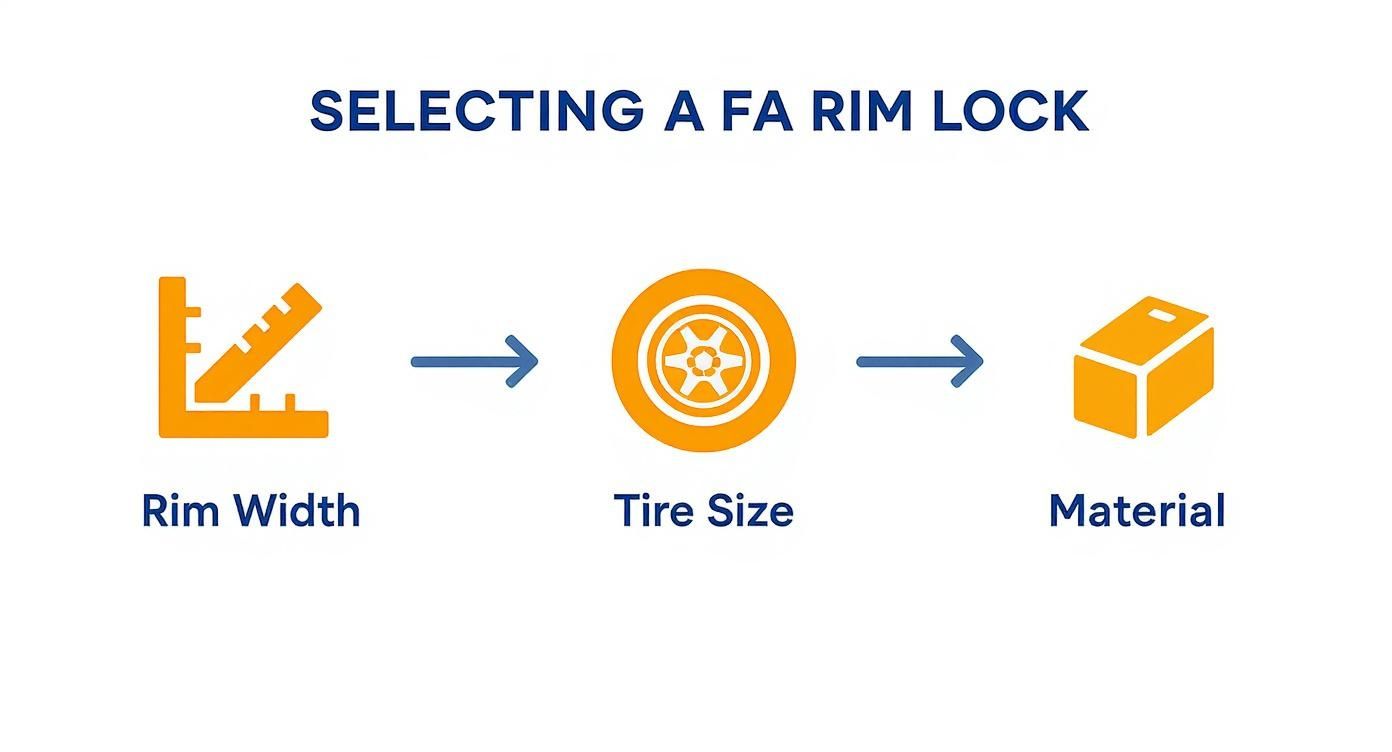
This just drives home the point that matching the lock to your rim width and tire size is the critical first step.
With the lock in place, it’s time to get the tire back on. Lube up the tire bead with plenty of soapy water. Start by working one side of the tire bead over the rim. When you reach the rim lock, you’ll need to push its post down into the wheel, which allows the tire bead to slip in between the lock's wedge and the rim. The wedge part of the dirt bike rim lock has to be inside the tire bead, ready to clamp down on it.
Crucial Tip: Double-check that the tire bead isn't sitting on top of the rim lock's wedge. It must be seated right next to it, in the channel between the lock and the rim. This is a common mistake that makes the lock completely useless.
Installing the Tube and Seating the Final Bead
Before you put the inner tube back in, give it just a little puff of air. This helps it hold its shape and prevents it from getting twisted or pinched under a tire lever. Carefully feed the valve stem through its hole, then gently work the rest of the tube into the tire.
Now for the grand finale—getting that last, stubborn section of bead over the rim. Start right at the rim lock, pushing that part of the bead down into the center channel of the rim with your hands. This gives you the most slack possible on the opposite side of the wheel.
Using your levers, start working the bead over the rim, moving away from the rim lock in both directions. Again, small bites are key. As you get to that last foot or so, the tire is going to fight back hard. This is the moment to make sure the bead on the far side is still pushed deep into the rim's center channel—you can even use your knee to hold it there.
As you lever that final piece on, use one hand to push down on the rim lock's post. This can create just enough extra room for that last bit of bead to pop into place. Once it's on, do a quick visual check on both sides to ensure the bead is seated evenly all around. Inflate the tire to fully seat the bead, then you can drop it to your preferred riding pressure.
If you're ever unsure about torque specs for your specific bike, it's always smart to check the official resources; we keep a handy collection of electric dirt bike user manuals for this very reason. Finally, tighten down that rim lock nut. Don't go crazy—about 10-15 ft-lbs of torque is all you need to lock it in place.
Dialing In Your Torque and Tire Pressure
Getting your rim lock installed is a huge step, but the job isn't quite done. The real magic happens now, in the final setup. This is where you transform that piece of hardware into a serious performance upgrade by dialing in the torque and adjusting your tire pressure. It’s a step too many riders rush, but it's where the biggest traction gains are hiding.
One of the most common—and costly—mistakes I see is over-tightening the rim lock nut. It’s tempting to just crank it down, thinking tighter is always better. But that’s a surefire way to strip the threads, crack the lock, or even damage your rim. We're not torquing down a cylinder head here; this is all about finesse.
The goal is simple: apply just enough clamping force to pin the tire’s bead securely without putting a death grip on everything. For most standard aluminum or composite rim locks, the sweet spot is right around 10 to 15 ft-lbs (foot-pounds) of torque. That's firm, but it’s probably a lot less muscle than you think.
Mastering the Torque Spec
The absolute best way to hit that 10-15 ft-lbs mark is with a torque wrench. It takes all the guesswork out of the equation and gives you perfect, repeatable results every single time. If you don't have one, it's one of the best investments you can make for your workshop.
But what if you're out on the trail and need to make an adjustment? This is where experience comes in. Using a standard-length wrench, tighten the nut until it feels snug. From there, give it just another quarter-turn. That gentle pressure is usually all you need to get the job done without breaking anything.
A correctly torqued rim lock feels solid, not strained. If you see the rubber washer under the nut start to bulge or squash out, you’ve gone too far. Back it off and try again with a lighter touch.
Taming the High-Speed Wobble
A new rim lock adds a chunk of weight to one side of your wheel, and that creates an imbalance. You might not notice it picking your way through a rock garden, but get up to speed on a fire road or a long straight, and you'll feel that annoying, sometimes sketchy, wobble.
Luckily, the fix is straightforward: balance your wheel. You just need to add small spoke weights directly opposite the rim lock to counteract its weight.
- First, get your wheel on a balancing stand so it can spin freely.
- Let it spin and settle. The heavy spot—your rim lock—will naturally fall to the bottom.
- Now, start adding spoke weights to the spokes at the very top of the wheel, directly opposite the lock.
- Keep adding small amounts of weight and re-testing until the wheel stays put no matter where you stop it.
Balancing your wheel makes for a dramatically smoother ride, cuts down on vibration, and even reduces wear and tear on your wheel bearings and suspension. If you're looking for the right tools for the job, you can usually find quality spoke weights in a good collection of electric dirt bike parts and accessories.
Unlocking Low-Pressure Performance
With the lock torqued and the wheel balanced, you’re ready to cash in on the main benefit: running super-low tire pressures for insane grip. The perfect PSI really depends on where and how you're riding.
Here are a few starting points based on my experience:
- Hard-Packed Trails: For firm ground where you need sidewall stability, 12-14 PSI is a solid baseline.
- Mixed Singletrack: On typical trails with rocks and roots, dropping to 10-12 PSI lets the tire mold around obstacles for better grip.
- Mud or Deep Sand: When things get slippery or loose, airing down to 8-10 PSI creates a massive footprint to help you find traction.
- Extreme Enduro: For gnarly, technical stuff, riders often go as low as 6-8 PSI to get maximum tire flex over slick logs and rocks.
Don't be afraid to experiment. Sometimes dropping just one or two PSI can completely change how your bike hooks up. This ability to fine-tune your setup for the terrain is exactly why a rim lock is a must-have upgrade for any serious off-road rider.
Troubleshooting Common Rim Lock Problems
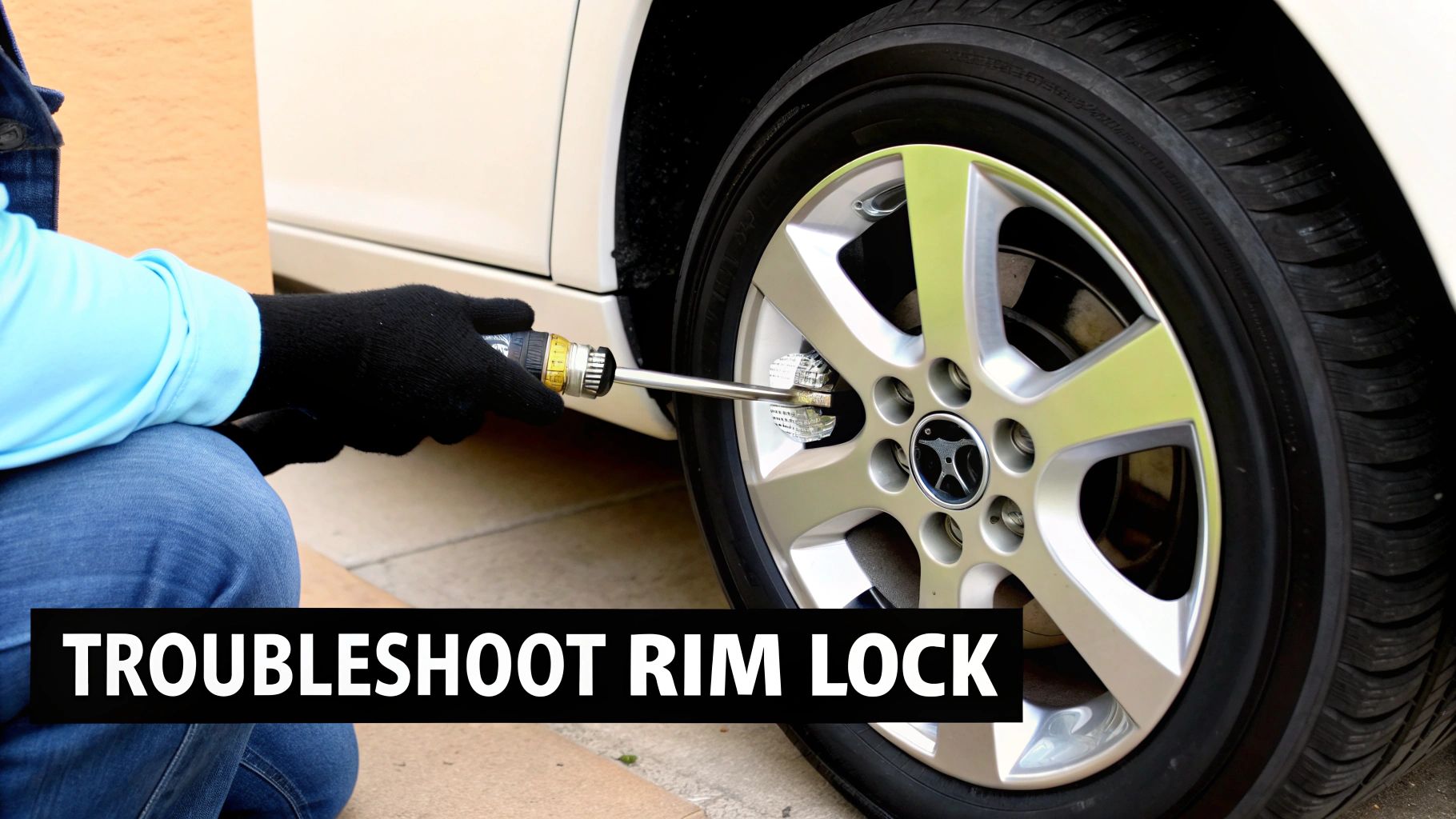
Even with a perfect installation, rim locks can sometimes throw you a curveball. We’ve all been there: a sudden slow leak, a nut that backs itself off, or the dreaded feeling of a tire spinning on the rim despite your best efforts. It can kill a good day on the trails.
The good news is that most of these issues are common and have pretty straightforward fixes. Let's walk through the most frequent headaches you might run into and get them sorted out before they ruin a ride.
Diagnosing a Slow Leak Near the Rim Lock
You just mounted a fresh tire, and a day later, it's suspiciously soft. If you’re constantly topping off the air, the area around your rim lock is the number one suspect. More often than not, a slow leak right there means you've pinched the inner tube.
It’s incredibly easy to do. The edge of the rim lock body can easily trap and puncture the tube when you're wrestling the tire on. To find out for sure, mix up some soapy water and spray it all around the rim lock's post and the nearby spoke nipples. See bubbles? You've found the culprit. Unfortunately, the only real fix is to pull the tire back off and patch or replace the tube.
To avoid this headache next time:
- Always put a little air in the tube before installing it. This gives it shape and helps it avoid getting pinched.
- Before seating the final bead, peek inside and make sure the tube isn't caught between the tire and the rim lock.
- Go easy with your tire levers when you get near the lock.
The Spinning Rim Lock That Won't Tighten
This one is infuriating. You go to tighten the nut, and the whole rim lock post just spins in the rim. This almost always points to one of two things: either the threads on the lock's bolt are stripped, or the lock itself isn't seated properly in the rim.
Stripped threads are usually caused by over-tightening. If that’s the case, the rim lock is shot—time for a new one. There's no safe way to repair a thread that needs to hold 10-15 ft-lbs of torque reliably.
If the lock is just spinning freely, try this: loosen the nut completely and push the post back into the wheel. Jiggle it around until you feel its square base pop securely into the matching hole in the rim. Then, hold the post steady while you try tightening the nut again.
When the Tire Still Slips on the Rim
So, you have a rim lock installed, but after a hard ride, you notice your valve stem is angled. That’s the classic sign that your tire is still spinning on the rim, defeating the entire purpose of the lock.
This usually boils down to three potential causes:
- Wrong Size Lock: You can't use a 1.60 rim lock in a 2.15 rim. It just won't be wide enough to properly grab the tire bead.
- Improper Seating: The tire bead is sitting on top of the lock instead of beside it, so it can't get a good grip.
- Not Enough Torque: The nut is simply too loose to provide the clamping force needed to hold everything in place.
The fix involves breaking the bead in that spot, making sure the lock’s wedge is correctly positioned right next to the bead, and then re-torquing the nut to spec.
Proactive Maintenance for a Reliable Setup
Honestly, the best troubleshooting is prevention. A little bit of proactive maintenance in the garage can save you a ton of frustration on the trail.
Before you head out, run through this quick checklist:
- Check Torque: Grab a wrench and give the rim lock nut a quick check. It shouldn't be loose.
- Inspect for Corrosion: If you ride in wet or muddy conditions, check the post and nut for rust that could weaken them over time.
- Look at the Valve Stem: Is it still perfectly straight? A tilted stem is your earliest warning that the tire is starting to slip.
Catching these little things early ensures your rim lock does its job, letting you focus on riding instead of worrying about your tires.
Got Questions About Rim Locks? We've Got Answers
Even after you've got the basics down, a few questions always seem to pop up when you're wrestling with a rim lock for the first time. Getting a handle on these common hangups will save you a ton of grief in the garage and keep you from second-guessing yourself out on the trail. Let's dig into what riders ask most often.
One Rim Lock or Two?
For 90% of riders hitting the local trails or motocross track, a single rim lock in the rear wheel is plenty. The rear tire is where all the engine's power goes, and it's the one most likely to spin on the rim. The front wheel? It rarely needs one unless you're getting into some pretty specialized, low-pressure situations.
However, sometimes one just isn't enough. For the really demanding stuff, adding a second rim lock is a smart move. You'll often see two locks on bikes built for:
- Hard Enduro: Think running tire pressures down below 8 PSI to get that "spider-web" grip on slimy rocks and logs.
- Desert Racing: The insane speeds combined with heavy-duty tires can put way too much stress on a single lock.
- Running a Mousse: When you ditch the tube for a bib mousse, a second lock is great insurance to keep the mousse from shifting around inside the tire.
If you go with two, make sure to install them directly across from each other on the rim. This gives you a fighting chance at balancing the wheel later, though you'll definitely still need to add some spoke weights to smooth things out for faster sections.
Can I Run a Rim Lock with a Tubeless Setup?
That's a definite no. A classic rim lock is built for one job: clamping a tire bead against the rim in a setup that uses a standard inner tube. Dedicated tubeless systems, like the Tubliss system, work on a completely different principle.
A tubeless system is basically its own 360-degree rim lock. It uses a small, high-pressure inner bladder that presses the tire bead against the rim wall, which both creates the seal and prevents any chance of the tire slipping. Trying to add a traditional rim lock would just get in the way of that seal and cause problems.
Is a Rim Lock Going to Make My Wheel Unbalanced?
Oh, absolutely. It's a heavy chunk of metal and rubber bolted to one spot on your wheel. You're definitely going to notice an imbalance. At slow, technical trail speeds, you might not feel a thing. But as soon as you open it up on a transfer section or a fast straight, you'll feel a very clear hop or vibration.
The fix is simple: you have to balance the wheel after you install the lock. This just means adding spoke weights to the rim on the side directly opposite the rim lock. By counteracting the weight of the lock, you can get the wheel spinning perfectly smooth for a stable ride at any speed.
What's the Worst That Can Happen if I Overtighten It?
This is easily the most common mistake people make, and it's a costly one. It’s tempting to just crank down on the nut thinking "tighter is better," but that's a fast track to some serious issues.
When you go overboard, you can strip the threads right off the bolt, crack the aluminum body of the lock, or even pull the stud completely out of the rubber wedge. Even worse, all that focused pressure can warp or even crack your rim—and that's a much more expensive problem to solve.
Always use a torque wrench. The sweet spot is usually around 10-15 ft-lbs. This gets it perfectly snug and secure without risking damage to the lock or your wheel.
Ready to feel the difference that perfect traction makes? Find the right electric dirt bike for your next off-road mission at eBike Gang, LLC. See the whole lineup and gear up for your next adventure by visiting us at https://ebikegang.com.