

Picture this: you're carving through a forest trail, but instead of a roaring engine, the only sounds are your tires gripping the dirt and the wind rushing past. This isn't a fantasy—it's the new reality of off-road riding, all thanks to the electric dirt bike.
This guide is your deep dive into that quiet revolution. We're moving past the familiar world of gas-powered bikes and into the silent, instant power of electric.
Welcome to the Quiet Revolution in Off-Road Riding
Think of this as your complete map to understanding why electric dirt bikes are more than just a passing trend. They represent a fundamental shift in off-road motorsports. We'll cover everything from the nuts and bolts of the technology to finding the perfect bike for you, so you can hit the trail feeling like a pro.

This shift is changing how riders connect with the outdoors. Instead of dominating the landscape with engine noise, an electric dirt bike lets you feel like you're a part of it. It’s a more immersive experience, plugging you directly into the trail in a way a loud, vibrating gas machine simply can't match.
What Is Driving This Change?
So, what's behind this move to electric? It boils down to riders wanting a cleaner, quieter, and more accessible way to ride. People are quickly realizing the benefits go way beyond just being eco-friendly. These bikes are solving old problems and creating brand-new possibilities.
A few game-changing advantages stand out:
- Instant Torque: A gas engine has to build up revs to hit its powerband. An electric motor, on the other hand, delivers 100% of its power the second you twist the throttle. This means explosive acceleration out of corners and the ability to conquer steep hills without a running start.
- Minimal Maintenance: Forget about oil changes, messy air filter cleanings, and complicated engine work. Keeping an electric dirt bike in top shape is refreshingly simple. Most of your time will be spent on the basics, like the chain, brakes, and tires.
- Near-Silent Operation: The quiet ride is a huge deal. It lets you explore areas where noise is a concern, and you can ride without disturbing wildlife or neighbors.
This isn't just a niche movement; the numbers prove it. The global electric dirt bike market was valued at around USD 1.5 billion in 2023 and is expected to rocket to almost USD 4.9 billion by 2032. You can dig into more on the electric dirt bike market growth on Dataintelo.com.
The electric dirt bike offers a unique combination of raw power and refined control. It’s less about managing a combustion engine and more about a direct, unfiltered connection between the rider, the machine, and the terrain.
How an Electric Dirt Bike Redefines Your Trail Experience
So, what's the big deal with electric dirt bikes? How are they really any different from the gas-powered bikes we all know? It’s about way more than just the noise—or the lack of it. The entire feel of the ride changes, transforming how you interact with the bike, the trail, and even the world around you.
Think about a traditional gas bike. You've got to rev the engine to get into the "powerband," that sweet spot where the bike really comes alive. It's a constant dance between the throttle, clutch, and gears to keep it there. An electric dirt bike completely rewrites that playbook.
Here, the battery is your fuel tank, and the motor is an engine that gives you everything it's got, right now. The real wizard behind the curtain is the controller. It’s the bike’s brain, taking the slightest twist of your wrist and turning it into an immediate, silky-smooth wave of power. No revving, no waiting for the power to build. Just pure, instant go.
The Magic of Instant Torque
The first thing that’ll blow you away is the torque. A gas bike has to spin up—build RPMs—to deliver its maximum twisting force. An electric motor, on the other hand, gives you 100% of its torque the second you touch the throttle. From a dead stop.
On the trail, this is a total game-changer. Picture a steep, gnarly climb. With a gas bike, you’d need a running start, feathering the clutch and keeping the revs high. On an e-bike, you can roll up to it slowly, pick your perfect line, and then just feed in smooth, predictable power to walk right up. It feels like you've unlocked a cheat code for traction.
It's like this: a gas bike is a sprinter who needs a few steps to get up to full speed. An electric dirt bike is a superhero who can leap from zero to full power instantly. That immediate response gives you a level of precision that just feels different—and incredibly empowering.
This unique power delivery has some seriously practical benefits:
- Climb Like a Goat: You can tackle hills and obstacles that would normally demand a ton of skill and aggression on a gas bike.
- Nail Your Corners: Powering out of a turn is smooth and controlled, so you can just focus on your line without upsetting the bike's balance.
- Beginner-Friendly Power: The linear, predictable throttle is way less intimidating for new riders, making it much easier to learn control without a loud, vibrating engine.
A Simpler, More Direct Ride
It's not just the power that's different; the whole experience is simpler. There’s no clutch to work, no gears to shift, and no engine vibration buzzing up your arms. It boils the experience down to its purest form: you, the throttle, and the trail. This direct connection lets you put all your focus on technique and line choice.
That simplicity carries over to the garage, which is one of the biggest perks of ownership. Kiss those weekends goodbye that you used to spend on:
- Changing oil and filters
- Cleaning and oiling air filters
- Fiddling with carburetors
- Swapping spark plugs
- Worrying about engine rebuilds
With an electric dirt bike, maintenance is basically just keeping an eye on your chain, brakes, and tires. That means way less time with wrenches in your hand and a lot more time on the trail. If that low-hassle fun sounds appealing, our guide on choosing an off-road electric bike for adults is a great next step.
Actually Hearing the Trail
Maybe the most underrated part of riding electric is the silence. For the first time, you can actually hear your tires digging for grip. You can hear the crunch of leaves and the snap of twigs under your wheels. It’s a completely new sensory experience.
This isn’t just a nice little bonus; it’s a genuine performance advantage. You’re more connected to what the bike is doing, feeling the edge of traction through sound. It also means you can ride in places that were off-limits before due to noise, letting you explore without disturbing wildlife or neighbors. This is the quiet revolution, and it’s a more immersive, connected, and downright thrilling way to ride.
Decoding the Specs That Actually Matter
Staring at an electric dirt bike's spec sheet can feel like you’re trying to read another language. You get hit with a wall of acronyms and numbers—kW, Nm, kWh—and it's not always clear how they translate to the actual ride. But buried in that data is the whole story of how a bike will perform, feel, and ultimately, fit into your life.
Think of it like this: a spec sheet is a recipe. The motor, battery, and controller are your ingredients, and the numbers tell you whether you’re about to bake a fun weekend trail machine or a full-blown race-day beast. You only need to understand a few key metrics to decode that recipe and find the perfect bike for your adventures.
Power vs Torque: The Push and The Pull
The first two terms you'll run into are motor power, measured in kilowatts (kW), and torque, measured in Newton-meters (Nm). They sound related, but they describe two totally different parts of the performance puzzle.
Motor power (kW) is like a runner’s top speed. It’s the maximum output the motor can sustain, which translates directly to how fast you can go on open trails or fire roads. A bike with high kilowatts can really stretch its legs.
Torque (Nm), on the other hand, is the runner’s explosive strength right off the starting block. It’s the raw, twisting force that the motor sends to the rear wheel—what you feel as instant, gut-punching acceleration. High torque is your best friend on steep, technical climbs, letting the bike claw its way up and over obstacles from a dead stop.
For most trail riding, torque is what really counts. It's the grunt that pulls you out of a muddy rut or up a rocky ledge. High kW is the horsepower that lets you fly down a graded road. A great electric dirt bike balances both, but what you prioritize really depends on where you plan to ride.
This infographic breaks down some of the core differences between the electric approach and traditional gas-powered bikes.
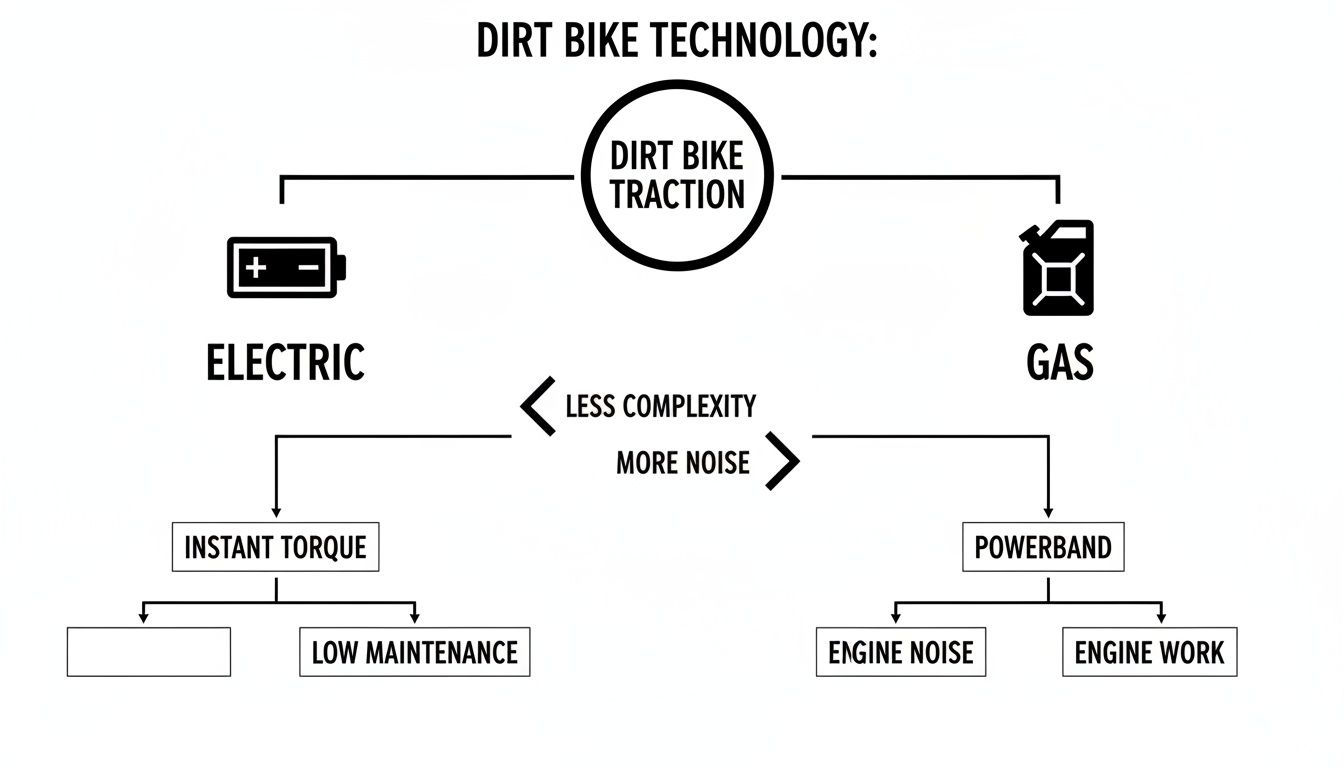
As you can see, the instant torque from an electric motor makes managing power a lot simpler than feathering a clutch and working through the powerband of a gas engine.
Battery Capacity: The Fuel in Your Tank
If the motor is the engine, the battery is the fuel tank. Its capacity is measured in kilowatt-hours (kWh), which simply tells you how much energy it can store. A bigger kWh number means a longer potential ride time. It's that straightforward.
But real-world range isn't just about battery size. It's a moving target influenced by a few big factors:
- Rider Weight: It takes more energy to move more mass. A heavier rider will see a shorter range.
- Terrain: Battling up steep hills or plowing through soft sand will drain a battery way faster than cruising on flat, hard-packed dirt.
- Riding Style: An aggressive rider who's constantly pinning the throttle will chew through the battery charge far more quickly than someone riding at a smooth, steady pace.
Think of it like the gas mileage in your car. A massive fuel tank is great, but if you’re flooring it up a mountain pass, you’ll still be visiting the pump sooner than you expected. For a deeper dive into making the right choice, check out our complete electric bike buying guide.
How Specs Change For Different Riders
An electric dirt bike built for a ten-year-old is going to have a radically different spec sheet than one designed for a competitive adult racer. The key is understanding the trade-offs between power, range, weight, and of course, price.
The technology has come a long way in just a few years. Between 2020 and today, we've seen huge improvements in usable range and a drop in the total cost of ownership. For 2024–2025, several major manufacturers are rolling out street-legal and dual-sport models that were just prototypes a short time ago, with some offering power comparable to 125–250cc gas bikes.
This progress means there’s a perfect bike out there for just about anyone. The table below shows how specs generally line up for different types of riders.
Electric Dirt Bike Spec Comparison by Rider Type
This table illustrates how key specifications vary across different categories of electric dirt bikes, helping buyers match technical details to their intended use.
| Specification | Youth/Beginner Model | Recreational Trail Model | High-Performance/Race Model |
|---|---|---|---|
| Peak Power (kW) | 1-3 kW | 5-10 kW | 12-25+ kW |
| Torque (Nm) | 10-30 Nm | 40-90 Nm | 100-300+ Nm |
| Battery (kWh) | 0.5-1.5 kWh | 2.0-4.0 kWh | 4.0-7.0+ kWh |
| Real-World Range | 1-2 hours | 2-4 hours | 1-3 hours (at race pace) |
| Primary Goal | Safety and learning | Fun and exploration | Maximum performance |
As you can see, a beginner's bike prioritizes manageable power and light weight for easy handling. A recreational trail bike hits that sweet spot of enough battery for a solid afternoon ride and enough torque to tackle tough trails. And a high-performance model pushes every metric to the limit, trading some range for the blistering power needed on a track. Once you understand this balance, you can confidently pick the right specs for your next adventure.
Choosing the Right Electric Dirt Bike for Your Adventure
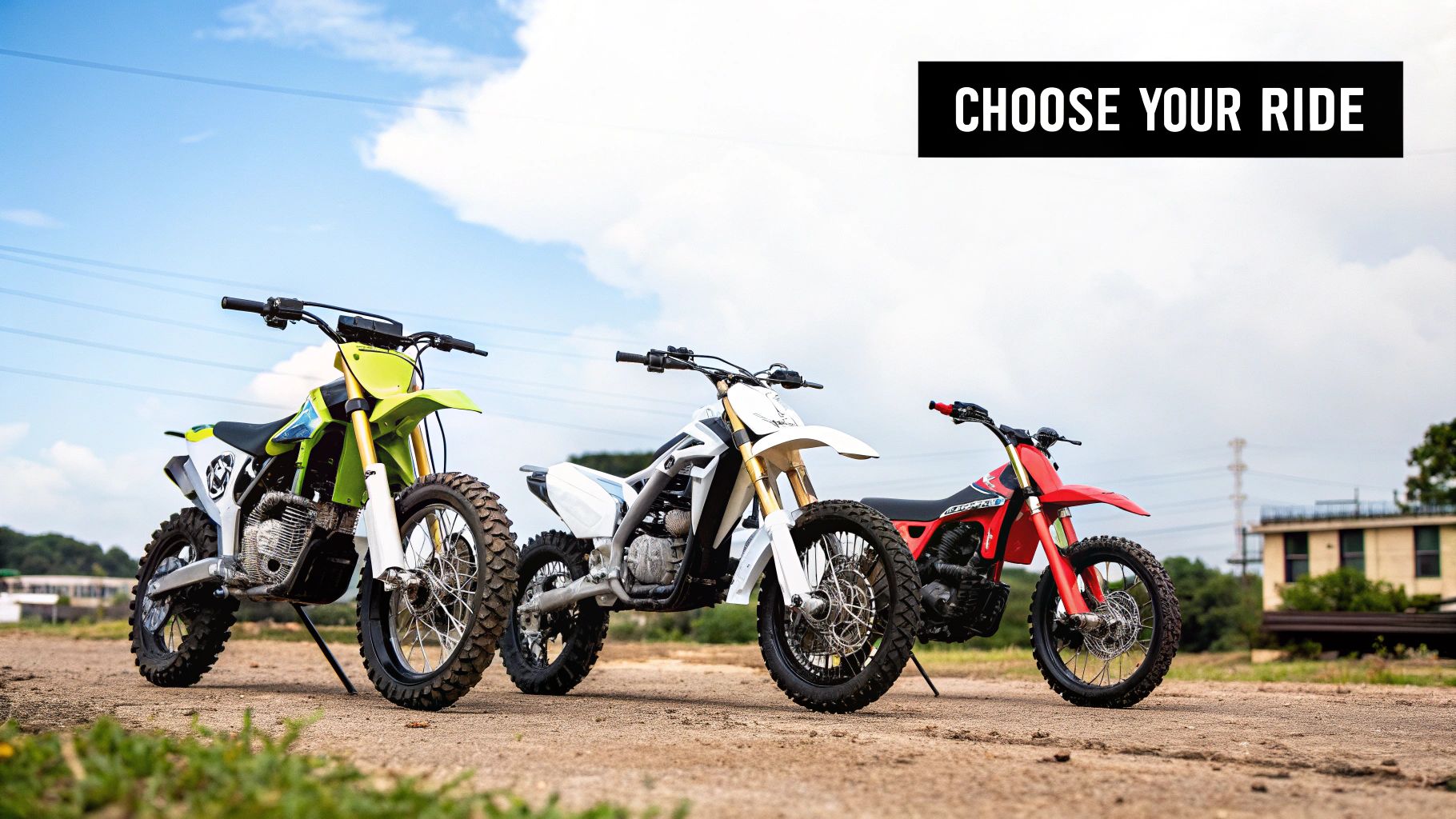
Alright, so you know how to read a spec sheet. That’s a huge step. But now comes the fun part: matching those numbers to the real world. The "best" electric dirt bike isn't the one with the flashiest specs—it's the one that feels like it was made just for you.
Think of it like buying any specialized tool. You wouldn’t use a massive sledgehammer for a small finishing nail, right? It's all about picking the right bike for the job. By figuring out what kind of rider you are, you can cut through the marketing hype and focus on what truly matters for your rides.
Let's break down the most common types of riders and what they should be looking for.
For the Young Rider and Concerned Parent
Getting a kid into riding is an amazing feeling, and honestly, an electric dirt bike is the perfect way to start. They're quiet, which is way less intimidating for a child, and the power comes on smoothly, making it so much easier for them to learn throttle control. For this group, safety and ease of use are everything.
When you're looking at youth models, you want features that build confidence, not fear.
- Low Seat Height: Your kid needs to be able to get a foot down easily. It’s a massive confidence booster and critical for stability when they're just starting out.
- Adjustable Power Modes: This is non-negotiable. Look for a bike that lets you dial back the top speed. You can set it to a "beginner" mode and then unlock more power as they get better.
- Lightweight Build: A light bike is just easier to handle. When they inevitably tip over, they can pick it back up themselves, which keeps the frustration low and the fun high.
- Manageable Power: You're looking for something in the 1-3 kW range. That’s plenty of zip to be exciting, but not so much that it's going to get away from them. Smooth power delivery is way more important than raw speed here.
This isn’t the time to worry about a massive battery or crazy torque figures. The whole point is to give them a safe and fun introduction to riding. The best bike for a new rider is one that lets them master the basics of balance and control without any stress.
For the Weekend Trail Explorer
You’re the rider who lives for Saturday mornings. You're not lining up at a starting gate; you're heading out to explore fire roads, singletrack, and whatever cool-looking trail you can find. Your bike needs to be a trusty partner for a full day of adventure.
For the weekend warrior, the game changes. You need a bike built for endurance and all-around capability.
- Battery Range: This is your number one priority. Period. A battery with 2.0-4.0 kWh or more is a must-have to make sure your day isn't cut short. A lot of riders in this camp also swear by models with swappable batteries, letting them double their ride time with a spare in the truck.
- Quality Suspension: You'll be hitting everything from roots and rocks to ruts and washouts. Good, adjustable suspension will soak it all up, saving your body from a beating and giving you more control when things get technical.
- Balanced Torque and Power: A motor in the 5-10 kW range is the sweet spot. It'll have enough grunt to haul you up steep climbs without breaking a sweat, but it’s still predictable enough that you won't get worn out managing it all day.
Your perfect bike is like the 4x4 of the electric dirt bike world. It’s not a specialized race machine, but it’s incredibly versatile and will confidently take you almost anywhere you want to go. It’s the kind of bike that makes you want to see what’s around just one more corner.
Your Essential Guide to Ownership, Maintenance, and Safety
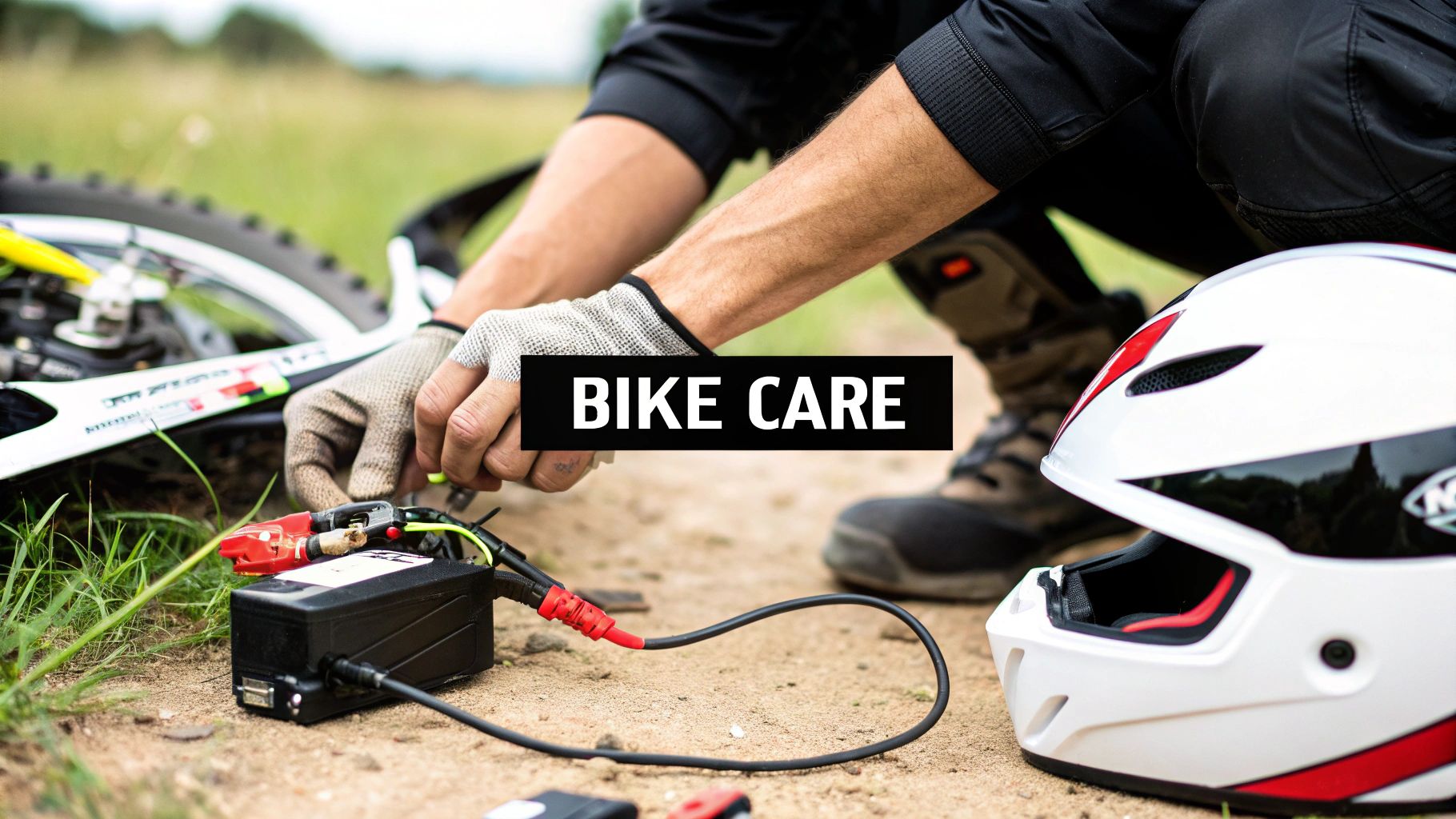
Bringing your new electric dirt bike home is an incredible feeling, but it’s really just the start of the adventure. Now, you get to move from buyer to owner, which means getting to know your machine, learning its simple maintenance needs, and gearing up for safe, responsible riding.
Consider this your roadmap to becoming a confident owner.
Unlike a gas bike that needs a whole complex break-in period, getting your electric dirt bike trail-ready is refreshingly straightforward. The first things you’ll do are all about personalization—making the bike a perfect fit for you. This initial setup is a one-time job that pays off every single time you hit the dirt by giving you better control and way more comfort.
Your First Ride Checklist
Before you even think about kicking up some dust, take a few minutes to dial in your bike’s ergonomics. These small adjustments make a massive difference in how the bike feels and handles.
- Adjust Your Levers: Position your brake levers so you can reach them easily without stretching or shifting your grip. You want your wrists to stay in a straight, neutral position.
- Set Handlebar Position: Most bikes let you roll the handlebars forward or back. Tweak them so you can stand comfortably on the pegs in a good "attack position" without feeling hunched over or too stretched out.
- Check Tire Pressure: This is probably the most overlooked step, but it’s absolutely critical. Check your manual for the recommended PSI for off-road use—it directly impacts your traction and handling.
Think of this like adjusting the driver's seat and mirrors in a new car. You wouldn't just drive off the lot without doing it, and the same principle applies here. A bike that fits you is a bike you can actually control.
Simple Maintenance for Maximum Fun
One of the best parts about owning an electric dirt bike is how little maintenance they need. Seriously. Forget about oil changes and engine rebuilds. Your routine will focus on just a few key areas that keep your bike running smoothly and safely.
The most critical component is the battery—it’s the heart of your bike. Good charging and storage habits are essential to get the most out of its lifespan and performance. For a deep dive, check out our guide on dirt bike battery chargers to make sure you're using the best practices.
Beyond that, keeping your chain clean, lubed, and properly tensioned is vital for smooth power delivery. A quick check of that and your brakes before each ride will cover most of your maintenance needs.
Gearing Up for Safety
Okay, your bike is ready, but are you? The thrill of off-road riding comes with real risks, and the right protective gear is your best defense. Never, ever compromise on safety. Your gear is just as important as the bike itself.
Here’s the essential list:
- A Certified Helmet: This is completely non-negotiable. Always wear a DOT-approved or similarly certified helmet that fits snugly.
- Goggles: Protect your eyes from dust, rocks, and branches. You’ll be glad you have them.
- Boots: Sturdy, over-the-ankle motocross boots are a must to protect against twists and impacts.
- Gloves: They improve your grip and save your hands in a fall.
- Body Armor: A chest protector and knee guards are highly recommended for any kind of trail riding.
Knowing Where You Can Ride
Finally, you have to know the rules of the road—and the trail. An electric dirt bike is almost always classified as an Off-Highway Vehicle (OHV). That means it’s illegal to ride on public streets or sidewalks in most places.
Always check your local and state regulations. Some communities have designated OHV routes, but many don't. Respecting these laws protects everyone's access to trails and keeps things positive with the community. As you think about long-term ownership, understanding personal vehicle insurance options can also help protect your investment.
Bottom line: stick to designated trails and private property to enjoy your ride without any legal headaches.
Answering Your Top Electric Dirt Bike Questions
Alright, so you've got a good handle on the tech and a picture in your mind of what you want. But it's totally normal to have a few last questions before you pull the trigger. Moving from gas to electric is a big step, and you want to be sure you've covered all the bases. This is where we'll tackle those final "what if" scenarios head-on.
We've heard just about every question in the book, so we’ve put together straight-up answers to the most common ones. The goal here is to iron out any lingering doubts and give you that final boost of confidence to choose the right bike for your adventures.
How Long Does a Battery Last on One Charge?
This is the big one, isn't it? The honest answer is: it really depends. Think of your bike's battery like the gas tank in your truck—your mileage changes a lot depending on whether you're cruising on the highway or hauling a heavy load up a mountain pass. It's the exact same idea here.
The range a manufacturer lists is usually based on perfect conditions. What you'll actually get out on the trail is shaped by a few key things:
- Battery Capacity (kWh): Simple enough. A bigger "tank" gives you more juice to play with.
- How You Ride: Are you pinning the throttle out of every corner? That aggressive riding will burn through a battery way faster than a smooth, steady pace.
- The Terrain: Fighting your way up steep, loose climbs or churning through deep sand takes a ton more energy than cruising on flat, hard-packed dirt.
- Rider Weight: It just takes more power to move more weight, especially uphill.
As a general rule of thumb, a smaller youth bike might give you 1-2 hours of fun in the backyard. A full-sized trail bike will usually deliver a solid 2-4 hours of real-world riding. If you're planning those all-day epic adventures, your best bet is to look for a model with a swappable battery. Just pop in a fresh one and you’re good to go for round two.
Can I Ride an Electric Dirt Bike in the Rain?
Absolutely. You can definitely ride your electric dirt bike in the rain and through mud. These bikes are built to be water-resistant, but it's important to know they aren't fully waterproof.
What does that mean? The motor, battery, and all the important electronics are sealed up tight to handle splashes, mud, and a good downpour without a problem.
Where you need to be careful is with full submersion. You never want to dunk the bike in a creek crossing that’s deeper than the motor or battery case. And when it comes time to clean up, stay away from the pressure washer. That high-pressure jet can force water past the seals and into places it shouldn't be, like your bearings and electrical connections.
A great habit to get into after a wet or muddy ride is to give the bike a quick towel-dry. Pay a little extra attention to the charging port and any visible connectors. This little step helps prevent any corrosion and makes sure everything is ready for the next charge and the next ride.
What Kind of Maintenance Does an Electric Dirt Bike Require?
This is where you're really going to love owning an electric dirt bike. The difference in maintenance is probably the single biggest perk over a gas bike. You can officially say goodbye to oil changes, fouled spark plugs, finicky carburetors, and messy air filter cleanings.
Your to-do list gets a whole lot shorter and focuses on the things you'd check on any off-road bike.
- Chain Care: This is your main job. Keeping the chain clean, lubed, and at the right tension is key to smooth power and making your sprockets last.
- Brake Inspection: Just keep an eye on your brake pad wear and make sure the fluid level in the reservoirs looks good.
- Tire Pressure: Check your tire pressure before every ride. It’s crucial for getting the right grip and feel on the trail.
- Battery Health: The most important long-term task is just taking good care of the battery. Follow the charging and storage advice from the manufacturer to keep it healthy for years to come.
That's pretty much it. All this means you get to spend way more time riding and a whole lot less time wrenching in the garage.
How Does the Power Feel Compared to a Gas Bike?
The power delivery on an electric dirt bike is a whole different ballgame—and once you get used to it, you'll see how much more effective it is on the trail. A gas bike makes you dance with the clutch and shifter to stay in that narrow "powerband." An electric bike is much more direct.
The magic word is instant torque. The second you twist the throttle, you get 100% of the motor's torque—right now. The result is silent, immediate, and incredibly powerful acceleration from a dead stop. There’s no lag, no vibration, no waiting for the engine to rev up.
For newer riders, this smooth, predictable power makes it so much easier to find traction and build confidence. For seasoned riders, it gives you a crazy new level of precision, letting you dial in the exact amount of power needed to crawl over a technical rock garden or launch up a ledge. Top-tier electric bikes are now matching the peak horsepower of 125cc and 250cc gas bikes, but they deliver it in a smooth, linear way that connects you to the trail like never before.
At eBike Gang, we're all-in on the idea that the future of off-roading is electric. Our UGBK2 and VETRA BLAZER electric dirt bikes are built from the ground up to give you that instant torque, low-maintenance freedom, and stealthy performance you're after. With a 12-month warranty, free shipping in the US, and real-person support, we make it easy to join the quiet revolution.
Explore Our Full Lineup of Electric Dirt Bikes at eBikeGang.com