

Ever seen a bike that looks like it's ready for anything? That’s pretty much a fat tire e bike in a nutshell. Think of it as the monster truck of the cycling world—it takes the muscle of an electric motor and pairs it with massive, oversized tires to tackle terrain that would stop a regular bike in its tracks. They're built from the ground up for incredible stability and grip, making them perfect for cruising over sand, snow, or muddy trails.
What Makes a Fat Tire E Bike Different
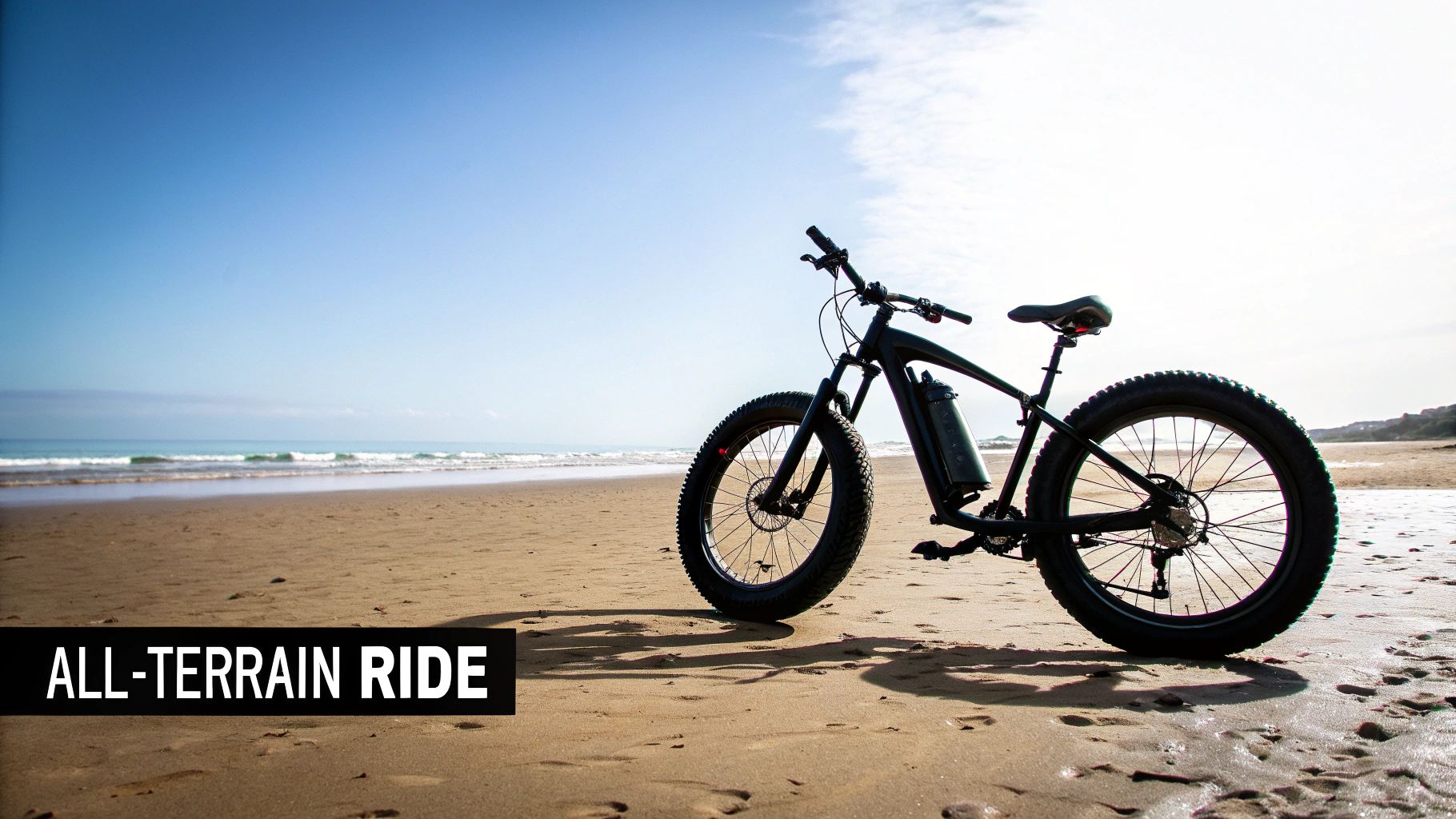
Here's a simple way to think about it: a standard bike tire is like a pizza cutter, designed to slice a narrow path. A fat tire, on the other hand, is like a baker's rolling pin. It spreads the bike's weight over a huge surface area. This is the secret sauce that lets it "float" over soft ground instead of digging in and getting bogged down.
Now, add a powerful electric motor and a beefy battery to that "go-anywhere" tire design, and you've got a seriously fun and versatile machine. The electric assist takes the grunt work out of pedaling these heavier bikes, making molehills out of mountains and turning intimidating trails into weekend adventures. It’s this blend of raw power and unshakable stability that has made them so popular, not just for fun but for practical commuting too.
The market backs this up. The global fat tire electric bike scene is expected to grow at a compound annual growth rate (CAGR) of around 6.1% for the next several years. People are catching on to the appeal of an e-bike that can handle just about anything you throw at it. For those who love the numbers, you can explore more data on market trends to see the full picture.
To help you get a clearer sense of what makes these bikes tick, here’s a quick rundown of their core features.
Fat Tire E-Bike Core Features at a Glance
| Feature | Typical Specification | Main Advantage |
|---|---|---|
| Tires | 4.0 inches or wider | Provides exceptional traction, stability, and a cushioned ride on uneven surfaces. |
| Motor | 500W to 1000W+ | Delivers the torque needed to overcome tough terrain and move the heavier frame. |
| Battery | 48V, 15Ah or higher | Ensures a practical range to power the motor for long rides and adventures. |
| Frame | Reinforced aluminum or steel | Built to withstand the added stress of off-road riding and support heavier components. |
| Brakes | Hydraulic or mechanical disc | Offers reliable stopping power, which is critical for a heavier, faster bike. |
These components are engineered to work together, creating a ride that’s not just capable, but also surprisingly comfortable and confidence-inspiring.
The Core Components of Versatility
When you get down to it, a fat tire e-bike's unique personality comes from a few key parts working in perfect sync. Each one is intentionally over-engineered to support the bike's all-terrain mission.
- Ultra-Wide Tires: These are the headliners, usually measuring 4 inches or more. They run at a much lower air pressure (PSI) than you'd use in a road or mountain bike. This lets the tire squish and conform to the ground, maximizing grip and acting as natural suspension.
- Robust Electric Motor: You need some serious muscle to get those big tires rolling and to power through mud or up a steep hill. The motor provides that essential grunt, making the bike feel lively and responsive instead of sluggish.
- High-Capacity Battery: A powerful motor is thirsty. A larger battery is essential to give you a decent range, so you can finish your adventure without getting stuck with a dead bike miles from home.
Understanding E Bike Power Classes
Not all e-bikes are built the same, especially when it comes to power and speed. In the U.S., e-bikes are sorted into three classes, which helps everyone understand what the bike can do and where it's allowed to go. Knowing these classes is key before you buy.
A key takeaway is that the class system standardizes e-bike performance, ensuring a consistent and predictable experience for riders and regulators alike. It helps determine which trails, paths, and roads are appropriate for your specific model.
Here’s how they break down:
- Class 1: The motor only kicks in when you’re pedaling (this is called pedal-assist), and it cuts out once you hit 20 mph.
- Class 2: This class also tops out at 20 mph, but it comes with a throttle. That means you can get a boost from the motor even if you aren’t pedaling.
- Class 3: These are the fastest of the bunch. The motor provides pedal assistance all the way up to 28 mph. Some have throttles, some don't, but the pedal-assist will always stop at that 28 mph mark.
Exploring the Core Technology Inside Your E-Bike
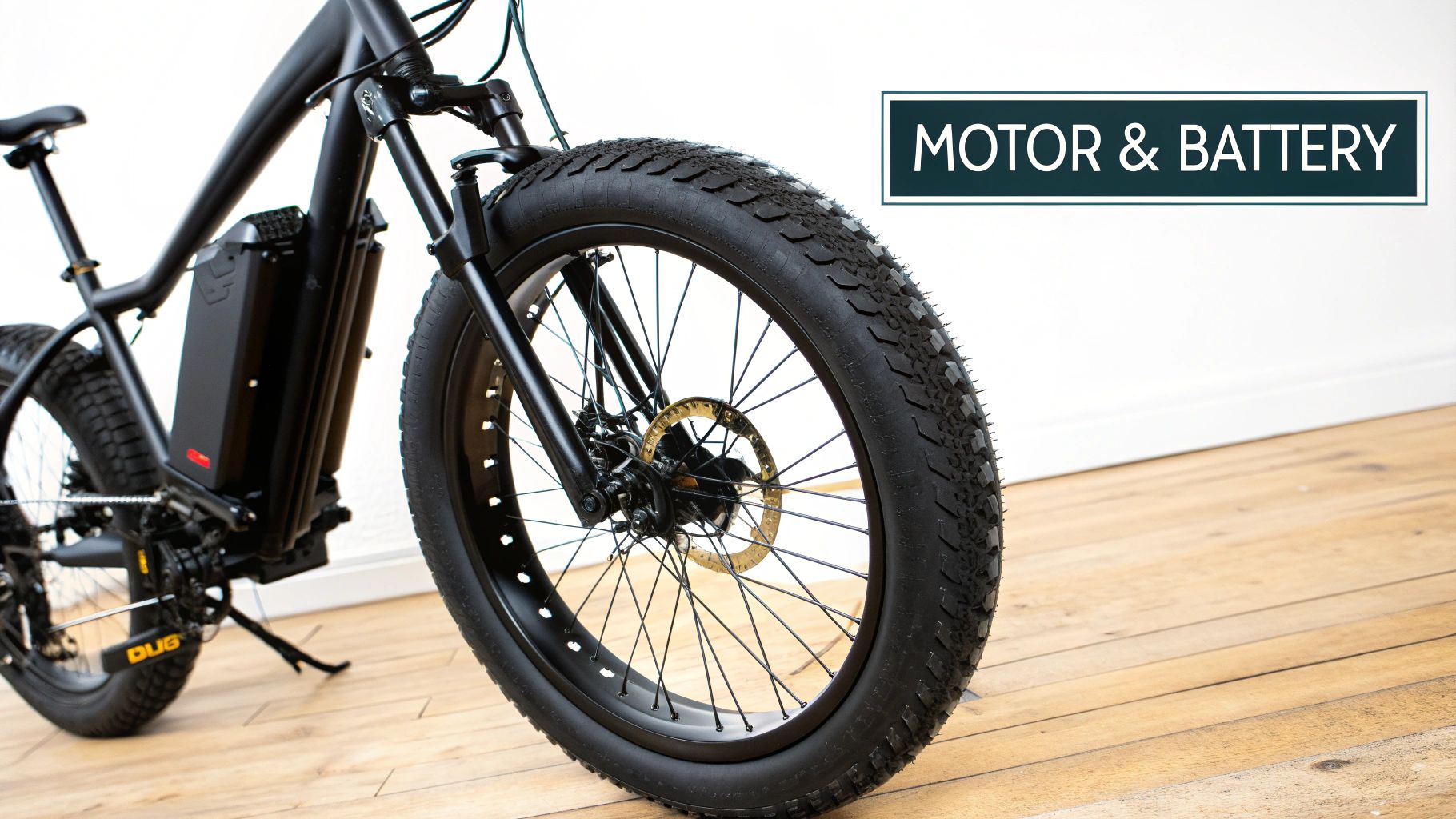
While those oversized tires are the first thing you notice on a fat tire e-bike, the real magic is happening under the surface. The way the motor, battery, frame, and suspension work together is what gives these bikes their unique personality and capability. Getting to know this tech is the key to understanding what makes them so good and, more importantly, choosing the right one for your adventures.
It all starts with the tires, of course. These aren't just for looks; tires measuring 4.0 inches or wider are designed to run at much lower air pressures than a standard bike tire.
This is a deliberate engineering choice, not an accident. Lowering the pressure lets the tire squish down and flatten out, creating a massive footprint on the ground. Think of it like wearing snowshoes instead of high heels in the snow—the wider base distributes your weight, letting you float over soft stuff like sand, mud, and snow instead of digging in. Your ability to adjust the tire pressure (PSI) is your secret weapon for conquering any terrain.
The Powerhouse: The Motor
The electric motor is the heart of your fat tire e-bike. It's what provides that addictive push that makes these beefy machines feel surprisingly quick and powerful. You'll generally run into two types: hub-drive and mid-drive motors, and each one delivers a totally different ride feel.
-
A hub-drive motor sits right in the center of the front or rear wheel. It’s a self-contained unit that spins the wheel directly, completely independent of your gears. This setup is beautifully simple, reliable, and usually more affordable. It’s a fantastic choice for commuters or casual riders who just want a straightforward power boost.
-
A mid-drive motor, on the other hand, is mounted right in the middle of the frame where your pedals connect. It sends power through the chain, meaning it works with your bike's gears. This is a game-changer for tackling steep hills. You can shift to a lower gear to multiply the motor’s torque, just like you would on a regular bike, making mid-drives the top pick for serious off-road riders.
The motor’s assistance truly defines the experience. How it delivers that power—whether through a throttle or a pedal-assist system—directly impacts how connected you feel to the trail. To get a better grasp of how this works, you can learn more about what pedal assist on an e-bike is and how it functions.
The Lifeline: The Battery
If the motor is the heart, the battery is the fuel tank. Its capacity is the single biggest factor in determining how far you can ride on one charge. The metric you really need to care about here is watt-hours (Wh). Think of watt-hours as the size of the tank.
A higher Wh number simply means you have more juice to burn, which translates to a longer potential range. For a heavy fat tire e-bike with a power-hungry motor, you'll want to look for a battery with at least 600-700Wh as a good starting point. This ensures you have enough power for those longer adventures without getting range anxiety. A little bit of proper care, like keeping it out of extreme heat or cold and not letting it sit empty, will go a long way in making it last.
The Backbone: Frame and Suspension
The final pieces of the puzzle are the frame and suspension, which are all about durability, comfort, and how the bike handles. The frame has to be incredibly tough to deal with the extra weight of the motor and battery, not to mention the stress of being ridden on aggressive terrain. Most are built from strong but reasonably light aluminum alloys.
Suspension is another crucial element. While the fat tires themselves do a great job of soaking up small bumps, many models also come with a front suspension fork. This is what absorbs the big hits from rocks, roots, and potholes, saving your arms and wrists from getting beaten up on a long ride. Some high-end bikes even have full suspension (both front and rear), which offers the absolute best in comfort and control for the gnarliest trails.
These choices in components have a direct impact on both performance and price. Here’s a quick breakdown:
| Component | Standard Option | Premium Option | Key Benefit of Upgrading |
|---|---|---|---|
| Frame | Aluminum Alloy | Carbon Fiber | Lighter weight and improved stiffness for better handling. |
| Suspension | Front Suspension Fork | Full Suspension (Front & Rear) | Superior comfort and control on extremely rough terrain. |
| Brakes | Mechanical Disc Brakes | Hydraulic Disc Brakes | Greater stopping power and finer control with less effort. |
Once you understand how these core technologies—from tire pressure to motor placement—all interact, you can start to see past the spec sheet. You're no longer just looking at numbers; you're able to imagine how a bike will actually feel and perform out on the trails or streets you plan to ride.
What It's Really Like to Own One: The Pros and Cons
So, what's it actually like to live with a fat tire e bike? It’s a completely different experience from riding anything else—a mix of go-anywhere freedom and real-world practicalities. These bikes are tanks, built to roll over terrain that would stop a regular bike in its tracks.
But like any specialized piece of gear, they’re a bundle of trade-offs. To figure out if one of these beasts is right for you, you need an honest look at both the good and the not-so-good. Let's get into what you can expect day-to-day.
The Upside: Why You'll Love It
The first thing you'll notice is the incredible stability. Those big, squishy tires aren't just for show; they act like giant shock absorbers, soaking up bumps, rocks, and roots. It gives you this wonderfully planted, secure feeling on the trail, almost like you're floating over the rough stuff.
That feeling of security isn't just for dirt paths. It’s a game-changer in the city, too. Potholes, busted pavement, and trolley tracks that would have you gripping your handlebars for dear life on a skinny-tired bike are barely noticeable.
Here’s where these bikes truly shine:
- Go-Anywhere Capability: Seriously, these things don't care about the surface. Sand, snow, mud, or loose gravel—they just keep on rolling. It opens up year-round riding and lets you explore places you never could before.
- A Cushier Ride: All that air volume in the tires provides a natural suspension. It smooths out vibrations and takes the edge off of jarring impacts, making for a much more comfortable ride.
- Confidence-Inspiring Grip: The massive contact patch from the tires gives you fantastic traction. You feel way more in control, whether you're carving through a loose corner or navigating a slick, rainy street.
- Hills Become Trivial: Combine a powerful motor with those super-grippy tires, and steep hills just... flatten out. What used to be a lung-busting climb becomes a manageable spin to the top.
This isn’t just a niche trend, either. The U.S. electric bicycle market is booming, valued at an estimated USD 2.2 billion in 2024. Experts predict it will more than double to USD 4.5 billion by 2034, largely thanks to the versatility of bikes like these. You can dig into the numbers and see the growth of the U.S. e-bike market for yourself.
The Downside: The Practical Realities
Now for the other side of the coin. While the benefits are huge, you have to be realistic about the challenges that come with owning a big, heavy machine.
The most obvious issue is the weight. Your typical fat tire e-bike comes in at 60-80 pounds, sometimes more. That’s a whole lot heavier than a standard bike, and you feel every pound of it when you’re not riding.
The sheer mass of a fat tire e-bike is its greatest strength on the trail but can be its biggest weakness at home. Lifting it onto a car rack, carrying it up a flight of stairs, or maneuvering it in a tight garage requires significant effort.
Here are the main drawbacks to keep in mind:
- The Weight and Bulk: These things are a handful to move around. Forget about easily tossing it in your car—you'll likely need a specialized, heavy-duty rack that can handle both the weight and the wide tires.
- They Take Up Space: These are not compact bikes. With wide handlebars and a long frame, they demand a good chunk of real estate in your garage, apartment, or shed.
- Higher Upfront Cost: All those heavy-duty parts—the beefy frame, massive tires, powerful motor, and big battery—add up. Expect to pay more than you would for a standard e-bike or a traditional bike.
- More Rolling Resistance: On smooth pavement, those big tires create more friction. If you ever run out of battery and have to pedal home unassisted, you'll feel like you're riding through sand. The motor makes this a non-issue most of the time, but it's something to be aware of.
In the end, it boils down to a simple question: Are you willing to deal with the extra weight and size for that incredible, all-terrain freedom?
How to Choose the Right Fat Tire E-Bike
Shopping for a fat tire e-bike can feel a bit like exploring a new trail—it's exciting, but there are a lot of forks in the road. With so many options out there, how do you find the one that’s a perfect match for your adventures?
The trick is to start with yourself, not the bike.
Your ideal ride depends entirely on where and how you plan to use it. Are you dreaming of conquering snowy trails, cruising down a sandy beach, or do you just want an incredibly stable bike for your daily commute? Figuring out your main reason for riding is the most important first step.
A bike built for aggressive off-roading will have a completely different feel and feature set than one designed for a comfortable city cruise. Being honest about your needs stops you from paying for high-tech features you'll never use or, worse, getting a bike that can't handle the terrain you want to tackle.
Matching the Bike to Your Riding Style
Let's break things down by looking at a few common types of riders. See which one sounds the most like you, and use it as a starting point to focus on the specs that actually matter.
This infographic lays out the basic trade-offs you'll be making. You're balancing go-anywhere versatility against some serious heft.
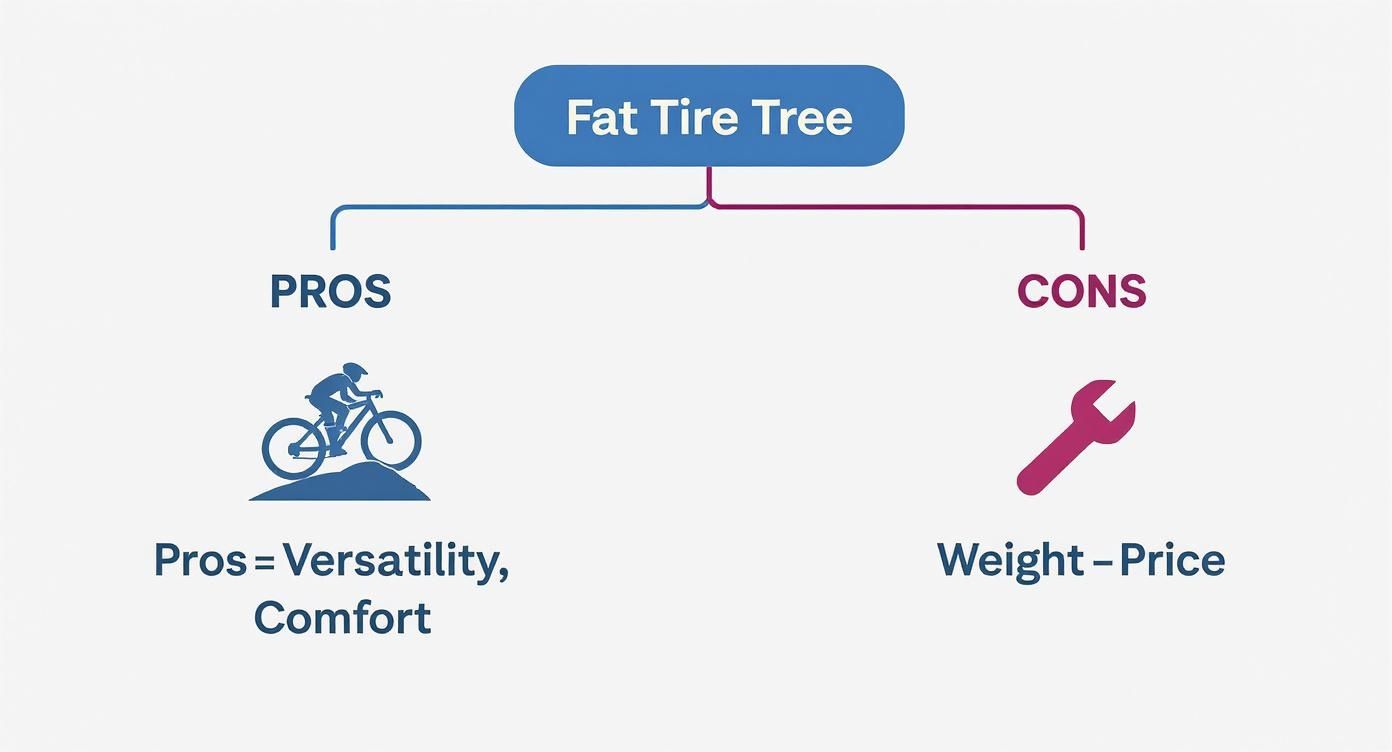
As you can see, while these bikes deliver amazing comfort and all-terrain capability, you have to be ready for their significant weight and higher price tag.
The All-Terrain Adventurer
If your main goal is to get out there and explore rugged trails, mud, and snow, you need to be thinking about power and durability. You're the kind of rider who needs a machine that won't quit when the going gets tough.
- Motor Type: A mid-drive motor is your best friend here. It delivers incredible torque by working directly with the bike's gears, which is exactly what you need for climbing steep, technical hills.
- Suspension: At a minimum, look for a quality front suspension fork. If the budget allows, full suspension is a game-changer for maintaining control and comfort on the roughest terrain.
- Brakes: Don't even think about cutting corners here. Hydraulic disc brakes are non-negotiable for the consistent, powerful stopping ability you'll need on steep descents.
The Urban Navigator
For commuters and city riders, it’s all about stability and comfort. You want a bike that laughs at potholes, cracked pavement, and slick city streets, giving you unshakable confidence on your ride.
- Motor Type: A hub-drive motor is often the perfect choice for city life. It’s a simple, low-maintenance system that gives you a smooth power boost for getting up to speed and cruising on mostly flat ground.
- Frame Style: Think about a step-through frame. It makes getting on and off the bike a breeze, which is a huge plus if you're making frequent stops around town.
- Accessories: Little things make a big difference for daily riding. Models that come with fenders, a rear rack, and integrated lights already installed are a huge win for any commuter.
No matter your riding style, remember that the best fat tire e-bike is the one that fits your body and your budget. Test rides are invaluable, but if you’re buying online, pay very close attention to the manufacturer’s frame size charts.
Your Essential Buying Checklist
Once you’ve figured out what kind of rider you are, use this checklist to compare different models. This isn't about finding the biggest numbers; it’s about finding the right combination for your needs.
- Motor Wattage and Type: Do you need the raw hill-climbing torque of a mid-drive (750W+), or will the simple efficiency of a hub motor (500-750W) work for your flatter routes?
- Battery Capacity (Watt-hours): How far are you realistically going to ride? A battery with at least 600-700Wh will give you a decent range, but aim higher if you're planning long, power-heavy adventures.
- Suspension System: Is a front suspension fork enough to smooth out city bumps, or do you need a full-suspension setup for true off-road comfort?
- Brake Type: Are mechanical disc brakes good enough for casual riding, or do you need the superior, all-weather stopping power of hydraulic brakes?
- Frame and Fit: Does the bike come in your size? Double-check the standover height and reach to make sure you'll have a comfortable and safe riding position.
Picking an e-bike can seem complicated, but breaking it down like this makes it much more manageable. For a deeper dive, our complete electric bike buying guide has even more tips to help you make a confident choice. By matching the bike’s specs to your real-world riding plans, you'll find a fat tire e-bike you'll be excited to ride for years.
Essential Maintenance and Safety Practices

A fat tire e-bike isn't just a purchase; it's an investment in your freedom and fun. And like any good investment, it pays to look after it. The great thing is, you don't need to be a pro mechanic. A little bit of routine care will go a long way in keeping your bike running smoothly, extending its life, and making sure every ride is a safe one.
These bikes are built like tanks, but the core components—your battery, chain, and those massive tires—really benefit from regular attention. Think of it as a quick pre-ride ritual, a way to connect with your machine before you head out.
Your Simple Maintenance Checklist
Getting into a regular maintenance groove is the single best thing you can do for your bike's health. You don't need a fancy workshop; just a few minutes before or after you ride can make all the difference.
- Tire Pressure is Everything: Those big tires are your primary suspension and your connection to the ground. Get in the habit of checking the pressure before every single ride. You'll want to adjust it based on the terrain—a bit lower for soft stuff like sand, and firmer for pavement. This one simple check prevents flats and makes your bike handle like it should.
- Keep the Chain Clean and Lubed: A gritty, dry chain is a sad chain. It robs you of power and wears out quickly. Just wipe it down with a rag after a messy ride and apply a good bike-specific lube. It'll run quieter, shift smoother, and last so much longer.
- Battery Care for Longevity: Your battery is the heart of your e-bike, so treat it right. Keep it out of extreme heat or cold and try to maintain its charge between 20% and 80% for daily use. That's the sweet spot for keeping lithium-ion cells happy for the long haul.
- Brake Inspection: This one's a no-brainer. Your brakes are your most important safety tool. Give the pads a quick look for wear and tear, and listen for any squealing or grinding noises. Those are signs they need a little love, either an adjustment or a replacement.
These little habits stop small problems from turning into big, expensive ones. It's also a smart financial move. With tariffs and import costs on components like lithium-ion battery cells sometimes jumping by as much as 70%, keeping your existing parts in prime condition is more important than ever. You can discover more insights about these market dynamics and see why proactive maintenance really pays off.
Smart Riding for Maximum Safety
Staying safe on a fat tire e-bike is about more than just wearing a helmet. These machines are heavier and pack more punch than a standard bike, and that changes how they ride. Learning to manage that extra weight and power is key to staying upright and in control.
That extra mass means you need to think a little further down the trail or road. Your stopping distance is going to be longer, and you'll carry more momentum through corners.
Always anticipate your moves well in advance. Braking early and gently is much safer than grabbing a handful of brake at the last second, especially on loose dirt or wet pavement where even those big tires can slide out.
Mastering Control of a Heavier Bike
Once you get a feel for the unique character of your fat tire e-bike, you'll become a much more confident and safer rider. The ideas are simple, but they take a bit of practice to become second nature.
- Brake with Finesse: Always use both brakes together to get the most stopping power. Feather them gently rather than yanking on the levers. This helps you maintain traction and control, preventing nasty skids.
- Look Through Your Turns: This is a classic for a reason. Your bike follows your eyes. As you enter a corner, focus on where you want to go—the exit of the turn—not the big rock you're trying to miss.
- Use Your Body Weight: Don't just sit there! Lean the bike into turns and shift your body weight to stay balanced. This helps you maintain control and lets those big, grippy tires do their job.
Making these habits part of every ride won't just keep you safe; it'll help you get the most fun and performance out of your bike. For a deeper dive, check out our guide on essential electric bike safety tips to build on what you've learned here.
Got Questions? We’ve Got Answers.
Even after laying out all the benefits, it's totally normal to have a few questions rattling around before you pull the trigger on a fat tire e-bike. These machines are a unique beast—a blend of raw power and all-terrain grit—which naturally brings up some practical questions. Let's tackle the big ones head-on.
Getting these final details ironed out is the last step between just being curious and actually owning one. We want you to know exactly what you're getting into.
Are These Things a Pain to Pedal Without Power?
The short answer? Yep, they can be. Pedaling a fat tire e-bike with the motor off is a real workout.
Imagine trying to push a heavy-duty pickup truck versus a little sedan. The bike's sheer weight, often tipping the scales at 60-80 pounds, plus the massive friction from those super-wide tires, creates a ton of rolling resistance. You can definitely do it, but it’s a grind, especially from a dead stop or on even a slight incline.
Most riders find themselves using at least the lowest pedal-assist setting just to make the bike feel responsive and cancel out that natural drag. The motor isn't just for hitting top speed; it's what makes the bike feel agile and fun to ride.
What's a Realistic Range on a Single Charge?
This is the million-dollar question, and the honest answer is always: "it depends." Manufacturers might throw out big numbers, like 20 to 80 miles, but what you get in the real world is a whole different story. A good analogy is your car's gas tank—your mileage varies wildly depending on how you drive, and the same goes for your e-bike.
A few key things will make or break your range:
- How You Ride: Leaning on that throttle non-stop will drain the battery way faster than casually pedaling with a low-assist setting.
- The Terrain: Battling steep hills chews through battery life. Cruising a flat bike path barely sips it.
- Total Weight: The more weight the motor has to move (you plus any gear), the harder it works and the more juice it uses.
- Tire Pressure: Running lower pressure for off-road grip creates more resistance on pavement, which can shave a few miles off your range.
A solid rule of thumb is to take the manufacturer's max range and slash it by about 30-40%. That’ll give you a much more realistic estimate for mixed riding with moderate pedal assist.
Should I Get a Hub Motor or a Mid-Drive Motor?
This choice really boils down to where you'll be riding and what you want to spend.
A hub motor, which sits in the center of the rear wheel, is like having a direct push from behind. It’s a simple, reliable, and more affordable system that works independently of your gears. This makes it a fantastic choice for commuters, casual riders, or anyone sticking to mostly flat ground.
On the other hand, a mid-drive motor is built right into the bike's crankset, where your pedals are. It sends power through the bike's own gears, and that's its secret weapon. By shifting into a lower gear, you can multiply the motor's torque, making it a monster for climbing steep, rugged hills. It also centers the weight for better balance and a more natural pedaling feel, which is why serious off-road riders swear by them.
Do I Need a License to Ride One of These?
For the most part, no. In most places across the U.S., you don't need a special license, registration, or insurance as long as your bike fits the standard Class 1, 2, or 3 e-bike definitions. These rules are in place to treat e-bikes more like bicycles than motorcycles.
But—and this is a big but—you absolutely have to do your local homework. E-bike laws can change dramatically from one state, county, or even city to the next. Some areas have specific rules about:
- Minimum rider age
- Where you're allowed to ride (bike paths, roads, multi-use trails, etc.)
- Helmet laws, which can be different for e-bike riders
Before you hit the road, do a quick check with your local DMV or city's transportation department. It's the only way to be sure you're riding legally and safely, and it'll save you from any potential headaches down the line.
Ready to experience the go-anywhere freedom of a powerful and reliable ride? The team at eBike Gang, LLC is here to help you find the perfect model for your adventures. Explore our full collection of high-performance electric bikes today and start your next journey.