

Let's cut right to the chase: No, your e-bike is not waterproof. It is, however, water-resistant. This means it’s built to handle splashes from puddles and getting caught in the rain, but you should never, ever fully submerge it in water.
A great way to think about it is like your favorite rain jacket—it'll keep you dry in a storm, but you wouldn't go for a swim wearing it.
Understanding Water-Resistant vs Waterproof
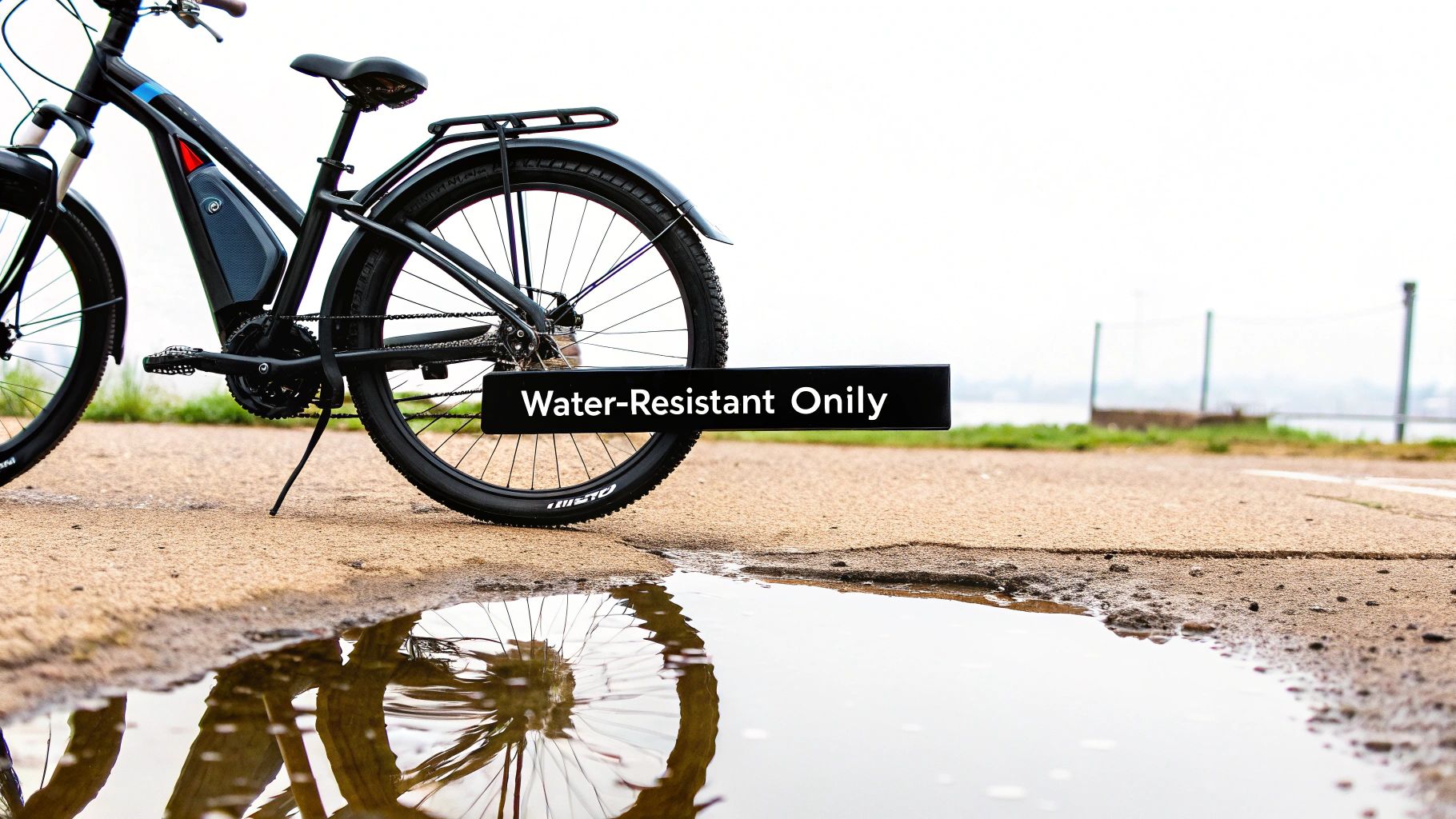
This is probably the single most important thing to understand as an e-bike owner. Getting these two terms mixed up can lead to some seriously expensive damage—the kind that your warranty almost certainly won't cover. Knowing the difference lets you ride with confidence, whatever the weather, without accidentally frying your bike's sensitive electronics.
Waterproof vs Water-Resistant Quick Guide
To make this crystal clear, here’s a quick breakdown of what these terms mean in the real world of e-biking.
| Characteristic | Water-Resistant (Most Ebikes) | Waterproof (Rare for Ebikes) |
|---|---|---|
| Protection Level | Protects against splashes, light rain, and moisture from multiple angles. | Completely sealed against water ingress, even when fully submerged. |
| Real-World Example | Riding through a rain shower or splashing through a small puddle. | A dive watch or specialized marine-grade equipment. |
| What to Avoid | Submersion, high-pressure jets (like a pressure washer), deep puddles. | Designed to handle submersion; no common restrictions. |
| Manufacturing | Achieved with gaskets, sealed casings, and protective coatings. | Requires hermetic sealing, making it very expensive and bulky. |
As you can see, the protection offered is fundamentally different. One is designed to repel, while the other is designed to be impenetrable.
What Water-Resistant Really Means
So, when we say an e-bike is water-resistant, we mean that its electrical system—the battery, motor, display, and controller—has been sealed up to prevent water from getting in during normal wet-weather riding.
This covers you for situations like:
- Riding home in a light or moderate downpour.
- Hitting those unavoidable shallow puddles on the road.
- Dealing with moisture from heavy fog or morning dew.
But that resistance has its limits. Those seals are designed to keep water out, not to create a submarine-like barrier that can withstand constant, high-pressure exposure.
Why Waterproof is Different
True waterproofing means something is completely sealed off from water, even if you dunk it in a lake for a while. Think of a GoPro action camera or a diver's watch.
A waterproof device is hermetically sealed, making it impenetrable. A water-resistant e-bike has protective seals that can handle water up to a certain point, but they will fail if hit with too much pressure or submerged for too long.
Building an entire e-bike to be truly waterproof would be incredibly expensive and, frankly, overkill for what it's designed to do. This basic difference is why you should always steer clear of things like riding through deep streams or blasting your bike with a pressure washer—both can easily force water right past the seals and into the electronics they're supposed to protect.
Now that we've got the basics down, let's look at how manufacturers measure this protection. We're going to dive into the IP rating system, which tells you exactly how much water your e-bike can safely handle.
Decoding Your Ebike's IP Rating
Ever look at the spec sheet for your e-bike and see a code like "IP65" or "IPX4" tucked away in the details? That’s not just techy gibberish. It's the Ingress Protection (IP) rating, and it’s a universal standard that tells you exactly how tough your bike's electrical parts are against things like dust and, more importantly, water.
Think of it like a durability score card. It’s the most straightforward way to know what your bike can realistically handle when the weather takes a turn.
Breaking Down The IP Code
An IP rating always has two numbers, and each one tells a specific part of the story.
- The First Digit (Solids): This number, from 0 to 6, tells you how sealed the component is against solid stuff. A ‘6’ means it's totally dust-tight, so no grit is getting in there.
- The Second Digit (Liquids): This is the one we really care about. Ranging from 0 to 8, this number reveals how well the component keeps water out. The higher this number, the better the protection.
So, when you see a rating like IP65, you know the component is completely sealed against dust (that’s the '6') and can handle low-pressure water jets from any direction (that’s the '5').
What The Water Rating Numbers Mean For Riders
Let's get practical. How do these numbers translate to an actual ride? The second digit is what makes the difference between a bike that's fine in a light shower and one that can shrug off a serious downpour.
An IP rating is a promise made under controlled lab conditions. While a high rating like IP67 is excellent, it doesn't guarantee lifelong waterproofing against real-world wear and tear, such as degraded seals or repeated high-pressure washing.
Here’s what those common water protection ratings really mean for you out on the road:
- IPX4: You’ll see this one a lot. It means the component is protected against water splashes from any direction. This is your coverage for riding through a shallow puddle or getting caught in a bit of rain. It’s basic, but it gets the job done for most fair-weather riders.
- IPX5: This is a solid step up. An IPX5 rating can handle low-pressure water jets. Think of it as being able to withstand a spray from a garden hose. It gives you a bit more confidence if the rain starts coming down harder.
- IPX7: Now we're talking serious water protection. This rating means the component can survive being submerged in up to 1 meter of water for 30 minutes. While we’d never suggest you go for a swim with your bike, this offers major peace of mind. If you accidentally drop your removable battery into a deep puddle while taking it off, it should be just fine.
The IP code is the go-to international rating to see if an e-bike is water-resistant. Manufacturers will often label a motor or battery as IP67 or IP65, which shows they passed specific tests. But remember, those tests don't account for years of use, aging rubber seals, or the corrosive effect of road salt.
If you're curious about the industry standards that drive these ratings, this global electric bicycle market report from market.us offers a deeper dive. Ultimately, understanding your bike's IP rating helps you make smarter choices, so you know exactly what it was built for before you head out into a storm.
Your E-bike's Most Vulnerable Parts in the Rain
An e-bike’s overall water resistance is only as good as its most exposed part. While the IP rating gives you a solid idea of what to expect, the real secret to keeping your bike safe is knowing exactly where its weak spots are. Think of it as preventative medicine for your ride—a little targeted care can save you from a world of expensive, water-related headaches later on.
It helps to imagine your e-bike’s electrical system as a chain. If one link gets rusty and breaks, the whole thing stops working. Let’s pinpoint those critical links that need the most protection from the rain.
The Brains and the Brawn
Two of the most crucial—and costly—components on your e-bike are the controller and the motor. Each has its own Achilles' heel when it comes to water.
-
The Controller (The Brain): Usually tucked away inside the frame, the controller is the central computer that tells your battery and motor how to work together. If water finds its way in, it can cause a short circuit. That’s a fancy way of saying it can fry your bike’s brain, leaving you with a very expensive paperweight.
-
The Motor (The Brawn): Hub motors are built to be tough, sealed units, but they aren't completely invincible. Over time, gaskets and seals can wear down, and water can sneak in through those tiny openings or where the cables enter. Once inside, moisture leads to internal corrosion and, eventually, a dead motor.
Power and Communication Hubs
Just as critical are the parts you see and use every day, along with the web of connections that holds the whole system together. These are often the most exposed to the elements and, therefore, the most at risk.
The chart below gives you a quick look at how a common IP rating like IP65 is broken down. The first number (6) rates protection against solids like dust, while the second number (5) rates protection against water.
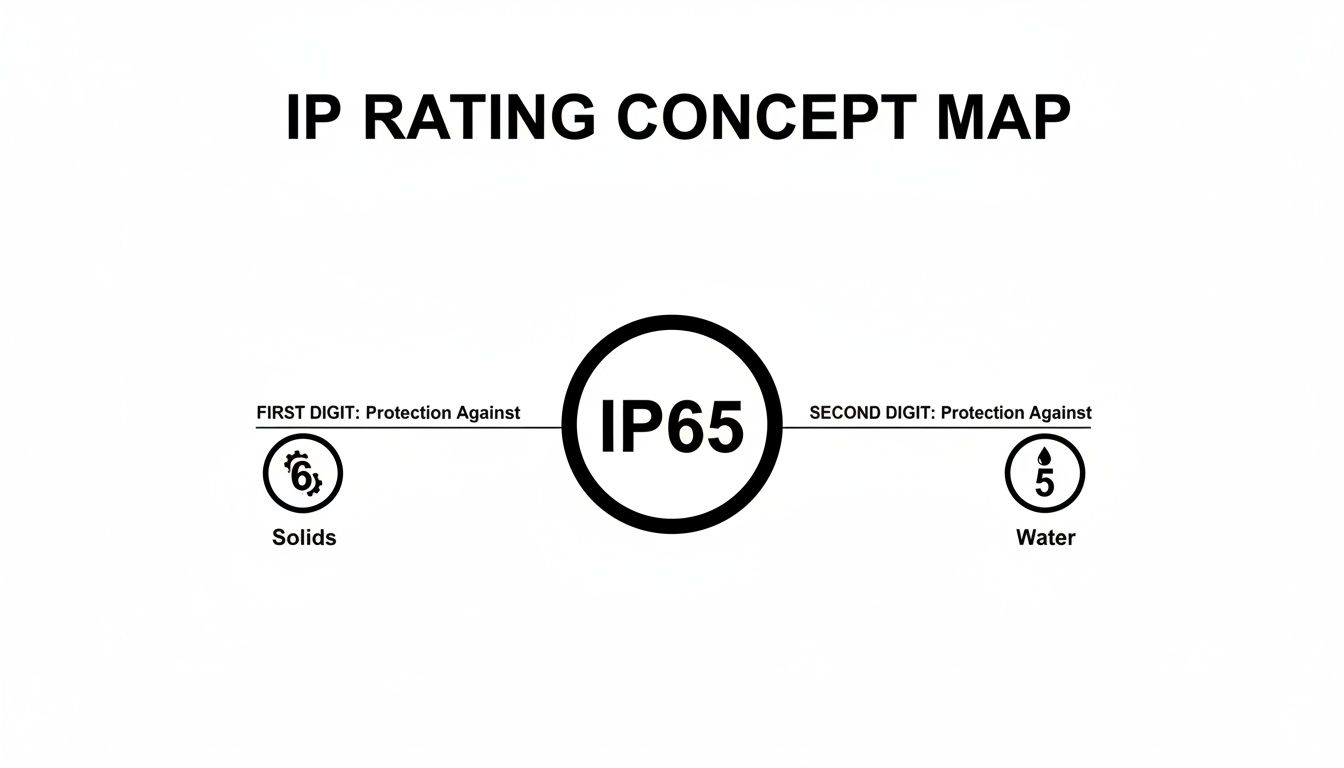
As you can see, a "5" is great for handling jets of water from a hose or a downpour, but it's a long way from being truly waterproof or submersible.
An e-bike’s defense against rain is a system of seals and casings. The battery port, display screen, and cable connectors are the most frequent points of failure because they are constantly exposed to the elements.
Let's break down these common trouble spots:
-
The Battery and Connection Port: Your battery holds all the power, but its connection port is a major weak point. Even a single drop of water getting onto the charging pins can start a corrosive process or cause a short. This is why you must always ensure the port cover is securely sealed before heading out in wet weather.
-
The Handlebar Display: Your display is right there on the front lines, taking the full force of any rainstorm. Tiny gaps or aging rubber seals can let moisture creep inside, which might just fog up the screen or could completely destroy the sensitive electronics inside.
-
Electrical Connectors: Your e-bike relies on a network of cables to function. The points where these cables connect are prime targets for water. Once moisture gets in, it can lead to rust and poor electrical contact, causing all sorts of frustrating issues like intermittent power cuts or total system failure.
How to Ride Your Ebike Safely in the Rain
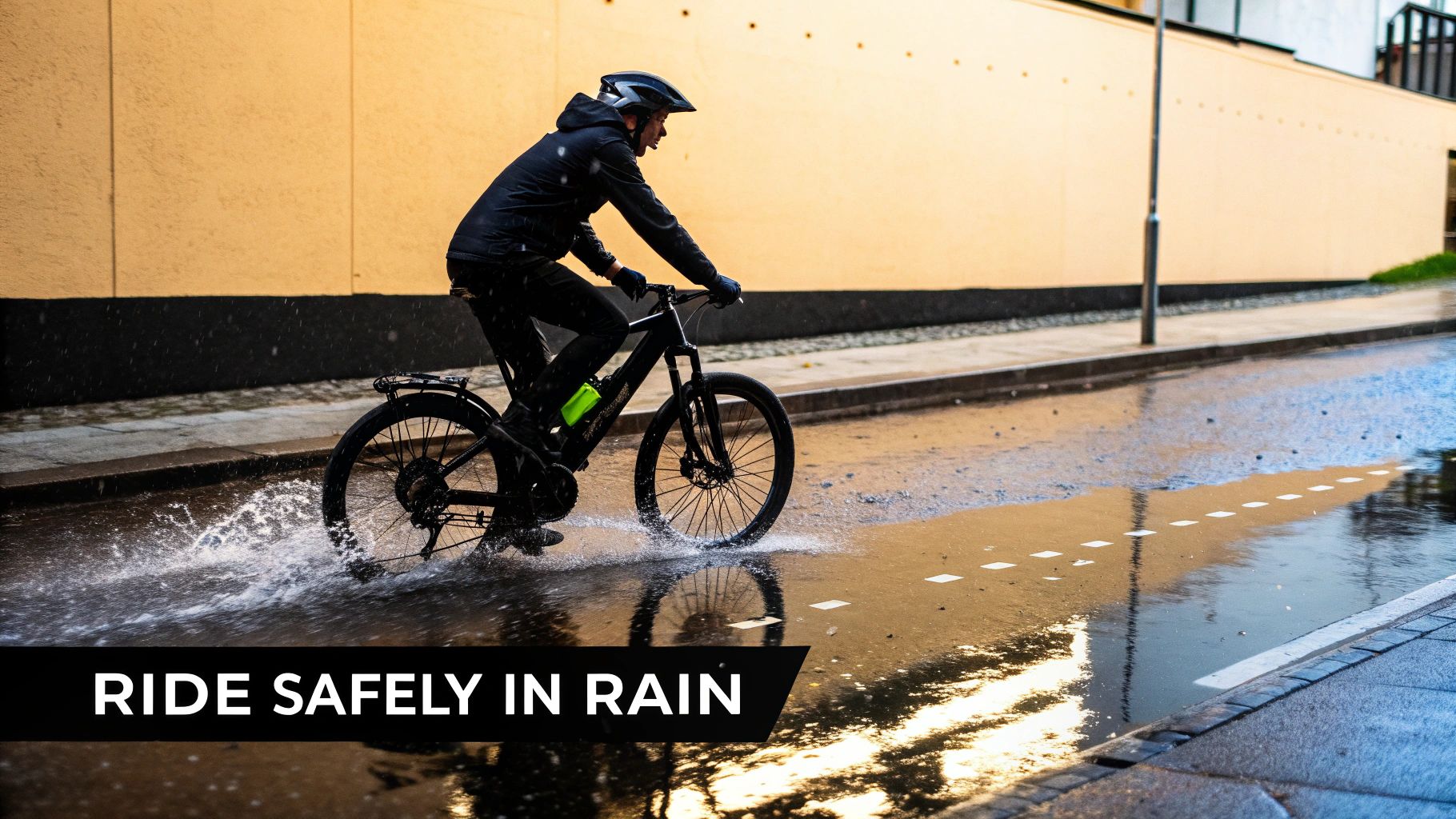
Knowing your e-bike is water-resistant is great, but riding smart when the skies open up is what really counts. With just a few simple habits, you can confidently handle wet streets and keep your bike's sensitive electronics safe from damage.
Think of it as a simple three-part checklist: a quick pre-ride inspection, a few adjustments to how you ride, and a proper post-ride clean-up. These aren't complicated steps, just common-sense routines that will protect your investment and keep your e-bike running smoothly for years to come.
Before You Head Out
A quick, two-minute check before you leave can save you a world of hurt later. It’s all about making sure your bike's defenses are up and ready for the rain.
- Seal the Deal: Make sure the rubber cover for your battery's charging port is pushed in firmly. A tight seal here is critical, as this is one of the most common spots for water to sneak in.
- Check Your Connections: Give the main electrical connectors a quick visual inspection. You want to see them fully seated and clicked into place, with no gaps for moisture.
Your main goal before any wet ride is simple: close all the doors and windows. A securely sealed charging port and tight connectors are your e-bike’s first and best line of defense.
Smart Riding Techniques in Wet Conditions
Once you’re out on the road, how you ride is just as important as your prep work. Adjusting your technique for slick pavement protects both you and your bike.
Slow way down and give yourself way more room to brake. Wet roads seriously mess with your tire grip and can double the distance you need to stop safely. Plan your turns and stops much earlier than you would on a dry day. For more great advice, be sure to check out our essential guide on electric bike safety tips.
Most importantly, steer clear of the deep end. That puddle might look innocent, but it could be hiding a nasty pothole that could damage your bike or, worse, submerge your motor or controller. Always try to ride around deep or standing water.
After Your Rainy Ride
Your job isn't quite done when you get home. A good post-ride routine is the key to stopping long-term rust, corrosion, and electrical problems from taking hold.
- Power Down Immediately: First thing’s first—turn off the bike's entire power system. This cuts the risk of a short circuit if any water did manage to get inside.
- Give It a Gentle Wipe-Down: Grab a dry, soft cloth and wipe down the whole bike. Pay extra attention to the vulnerable spots: the battery casing and its contacts, the display screen, handlebar controls, and any connectors you can see.
- Let It Air Dry Completely: Park your e-bike in a dry, sheltered spot like a garage or shed. If you can, it’s a great idea to remove the battery and let it air dry separately. Never, ever try to charge the battery until you are 100% certain both it and the charging port are bone dry.
Following this simple before, during, and after process will let you tackle wet weather with confidence, knowing you're keeping both yourself and your e-bike safe.
Long-Term Ebike Care for All-Weather Riding
Riding safely in the rain is one thing, but keeping your ebike happy and healthy through seasons of wet weather requires a bit of a long-term game plan. It’s less about a single cleanup and more about building simple, protective habits.
Think of it as a wellness routine for your bike's electrical system. A few easy, preventative steps can be the difference between a reliable ride you can count on and a bike that lands you with a frustrating repair bill. The goal here is to stop problems before they even have a chance to start.
Creating a Moisture-Proof Barrier
One of the best-kept secrets for protecting your ebike is dielectric grease. This stuff is magic in a tube. It’s a non-conductive, silicone-based compound that you apply to electrical connectors to seal out moisture and stop corrosion in its tracks.
It works without getting in the way of the actual electrical connection. Just put a small dab on the pins and sockets for your battery, motor, and display cables. It's like a tiny, invisible waterproof jacket for every critical connection, safeguarding the heart of your bike.
The Golden Rule of Ebike Cleaning
If you take away just one thing from this guide, let it be this: never use a pressure washer on your ebike. Ever. That high-powered jet of water can easily blast its way past the seals and gaskets designed to protect your sensitive electronics. It’s a fast track to catastrophic damage.
Instead, stick to the gentle approach. A low-pressure hose, a bucket of soapy water, and a soft brush or cloth will get the job done perfectly without risking the integrity of your bike’s water-resistant seals. After any wash, always take a moment to dry the bike thoroughly with a clean towel.
Proactive Inspections and Storage
Make a habit of giving the rubber seals and gaskets around the battery housing and other components a quick once-over. Over time, they can dry out, crack, or get knocked out of place, creating a perfect entry point for water. If you spot any damage, get it replaced. It’s a small fix that prevents a huge problem.
Field service data shows a clear pattern: preventative maintenance works. Simple steps like using dielectric grease and avoiding pressure washers can cut down on water-related electrical failures by an estimated 50–70%, based on technician reports.
The numbers don't lie. Warranty claims often show that while electrical issues account for about 30–45% of first-year service tickets, a huge chunk of those are directly caused by moisture—either from aggressive washing or riding through extreme downpours.
Proper storage is another massive piece of the puzzle. If you can, always store your ebike indoors in a dry place. This protects it not just from rain, but also from humidity and condensation, which can be just as sneaky and damaging over time. Protecting your battery is especially critical; learn more in our guide on how long ebike batteries last.
For those who store their bikes for longer periods, it's worth checking out some strategies to avoid water problems during storage that boat owners use. The principles are surprisingly similar. By building these habits, you’re not just cleaning your bike—you’re investing in its future.
How Your Warranty Covers Water Damage
This is the big question, isn't it? "If my e-bike gets wet, am I covered?" The honest answer is almost always, "it depends." Most manufacturer warranties, including ours here at eBike Gang, are there to protect you against defects in materials and workmanship.
Think of it like this: your warranty is your safety net if a factory seal was faulty and lets water in during a normal rainy ride. What it isn't is an insurance policy against misuse or extreme situations.
Normal Use vs. Misuse
Getting a handle on this difference is probably the single most important thing you can do to protect your investment. There's a clear line that every warranty draws between expected riding conditions and actions that push the bike way past its design limits.
- Covered (Normal Use): Getting caught in a light or moderate rain shower is part of life. Hitting a shallow puddle on your commute is, too. That's normal.
- Not Covered (Misuse): Things like fording a stream, blasting your bike with a pressure washer, or leaving it out in a hurricane fall squarely into the misuse category.
A warranty is a promise that we built your bike right. It isn’t a get-out-of-jail-free card for subjecting it to conditions it was never meant to handle. Following the advice in this guide isn't just about keeping your bike in top shape—it's about making sure your warranty stays valid.
Why IP Ratings and Warranties Matter
As more and more people rely on their e-bikes for daily transportation, having solid, verified water resistance is a huge deal. It’s a major selling point, and studies show that riders are often willing to pay a premium of 5–12% for models that have higher IP ratings and better warranty coverage to back it up.
That's why we believe in being completely upfront about our coverage. To get the full picture of what is and isn't covered, we strongly encourage every one of our riders to read the specifics in the official eBike Gang warranty policy.
And while it's a different world, if you ever find yourself in a situation where you need to make a claim, knowing how to fight and win your water damage claim can be incredibly helpful, as many of the same principles apply.
Your Top Questions About E-bikes and Water
Even after you get the hang of IP ratings and what "water-resistant" really means, you're bound to have some real-world questions. Let's tackle the most common situations we hear about from riders.
Can I Leave My E-bike Out in the Rain Overnight?
Look, we get it. Sometimes you forget or an unexpected storm rolls in. A single surprise shower probably won't be a catastrophe, but you absolutely should not make a habit of leaving your e-bike out in the rain.
Think of it like a tent. It's designed to handle a storm, but if you leave it set up in the yard all year, the constant exposure to moisture will eventually wear down the seams and waterproofing. The same goes for your e-bike's seals and gaskets—they'll degrade over time, making it easier for water to sneak into the electronics. Your best bet is always a dry spot, like a garage or shed.
Is It Safe to Charge a Wet E-bike Battery?
This is a hard no. Never, ever charge a battery that is wet.
Before you even think about plugging it in, grab a cloth and wipe the battery down completely. Pay extra close attention to the charging port and the connectors—they need to be bone dry. Trying to charge a wet battery is asking for trouble; you could cause a short circuit that fries the battery and the charger for good.
The rule here is simple and non-negotiable: if any part of the charging system feels even slightly damp, just wait. A little patience can save you from some very expensive and permanent damage.
What Should I Do if My E-bike Gets Submerged?
If your e-bike takes an unexpected dive into a deep puddle or, worse, a creek, you need to act fast. Whatever you do, don't try to turn it on to see if it still works.
- Kill the Power: Get that battery off the bike immediately.
- Drain It: Tip the bike upside down and on its side to let as much water as possible drain out of the frame and components.
- Be Patient: Move the bike to a warm, dry place and let it air dry for at least 24 to 48 hours.
Even when it seems dry on the outside, there could still be moisture hiding where you can't see it. This is one of those times when it's worth getting it checked out by a pro. Hidden water can lead to corrosion and serious electrical failures down the road.
At eBike Gang, our goal is to make sure you're a confident and happy rider. You can check out our entire lineup of tough, water-resistant e-bikes built for real-world riding at https://ebikegang.com.