

A dirt bike electric model ditches the old-school gasoline engine for a modern battery and electric motor. The result? Instant power, a whisper-quiet ride, and way less time spent in the garage. It’s the high-tech evolution of off-road riding—all the adrenaline, none of the noise and fumes. This guide is your complete map to understanding this exciting new world.
The Future of the Dirt Track Is Electric
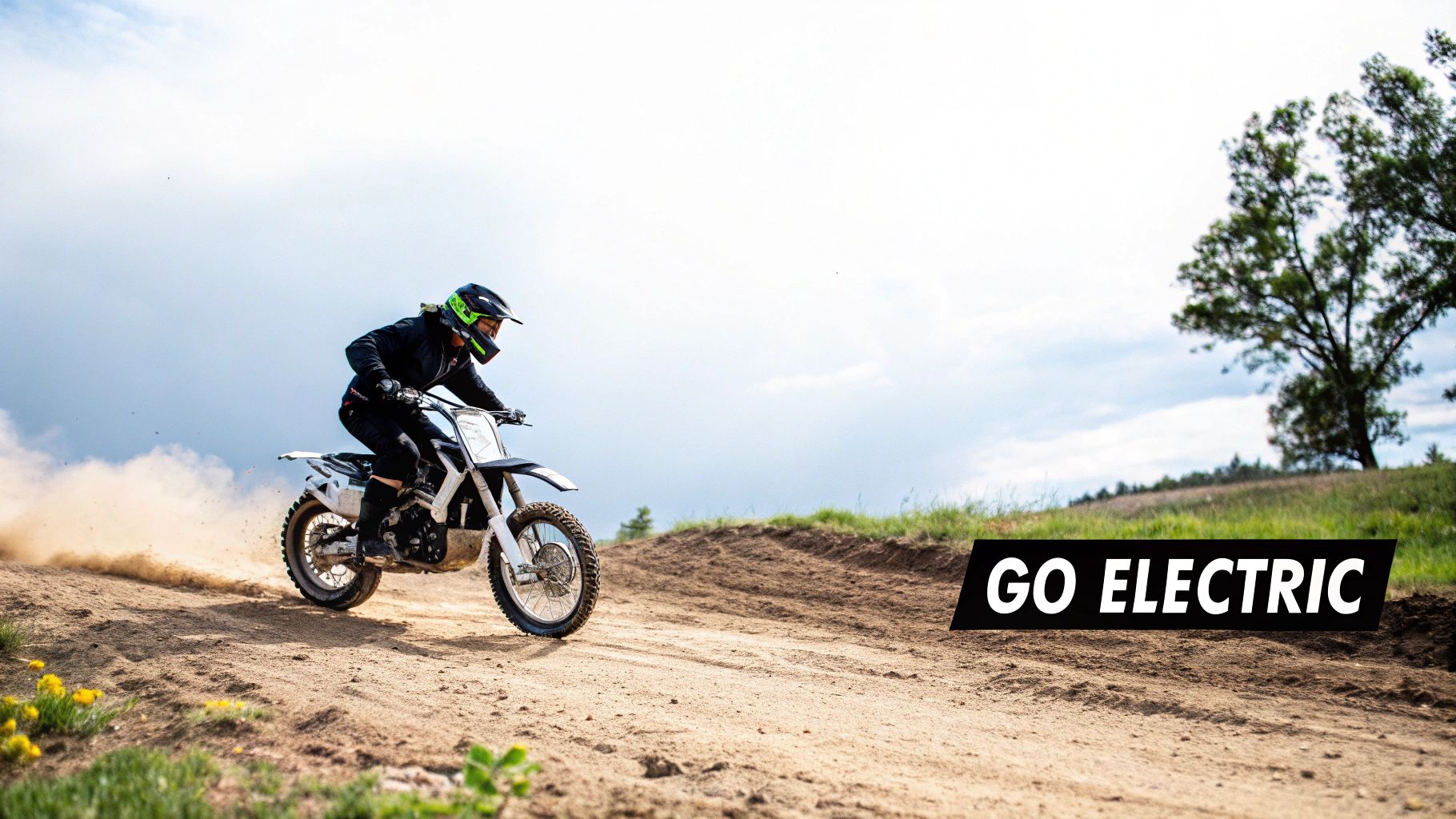
For decades, the sound of a two-stroke engine ripping through the trails was the soundtrack of off-roading. But a quiet revolution is taking over. The electric dirt bike is no longer just a weird niche concept; it's a serious contender turning heads from seasoned pros to absolute beginners. And this isn't just about being green—it's about a total shake-up in performance and accessibility.
The appeal is pretty straightforward. An electric powertrain gives you a completely different feeling on the trail. You're not messing with carburetors, oil changes, or complicated engine rebuilds. Instead, you get a machine that’s ready to go with the flip of a switch. That simplicity alone is bringing a whole new crowd into the sport—people who were maybe put off by the mechanical headaches of gas bikes.
A Rapidly Growing Market
This isn't just a flash in the pan. The excitement around electric off-road bikes is real, and the numbers back it up. The global electric dirt bike market was already valued at over $1.3 billion in the mid-2020s and is on track for huge growth by the early 2030s. This isn't just a trend; it's a permanent shift in what riders want. You can dive deeper into these market shifts and what they mean for shops like eBike Gang in detailed industry reports.
The secret weapon of a dirt bike electric model is its instant torque. A gas engine has to rev up to hit its powerband, but an electric motor gives you 100% of its power the second you twist the throttle. That translates to insane acceleration out of corners and the ability to claw your way up the gnarliest hills.
This is a leap forward, kind of like when we all went from flip phones to smartphones. It completely changes the experience and sets a new standard. For riders, it simply means more time riding and less time wrenching.
To really see the difference, let’s put them side-by-side.
Electric vs Gas Dirt Bikes At a Glance
Here’s a quick breakdown of how electric and gas-powered dirt bikes stack up against each other.
| Feature | Electric Dirt Bike | Gas-Powered Dirt Bike |
|---|---|---|
| Power Delivery | Instant torque, smooth acceleration | Power builds with engine RPM |
| Noise Level | Nearly silent operation | Loud and requires hearing protection |
| Maintenance | Minimal (chain, tires, brakes) | Frequent (oil, filters, engine work) |
| Fueling | Rechargeable battery | Gasoline and two-stroke oil |
| Environmental Impact | Zero emissions during use | Emits CO2 and other pollutants |
As you can see, the choice isn't just about fuel type; it's about two fundamentally different approaches to hitting the dirt. One is about raw, mechanical power, and the other is about clean, instantaneous performance.
How Your Electric Dirt Bike Works
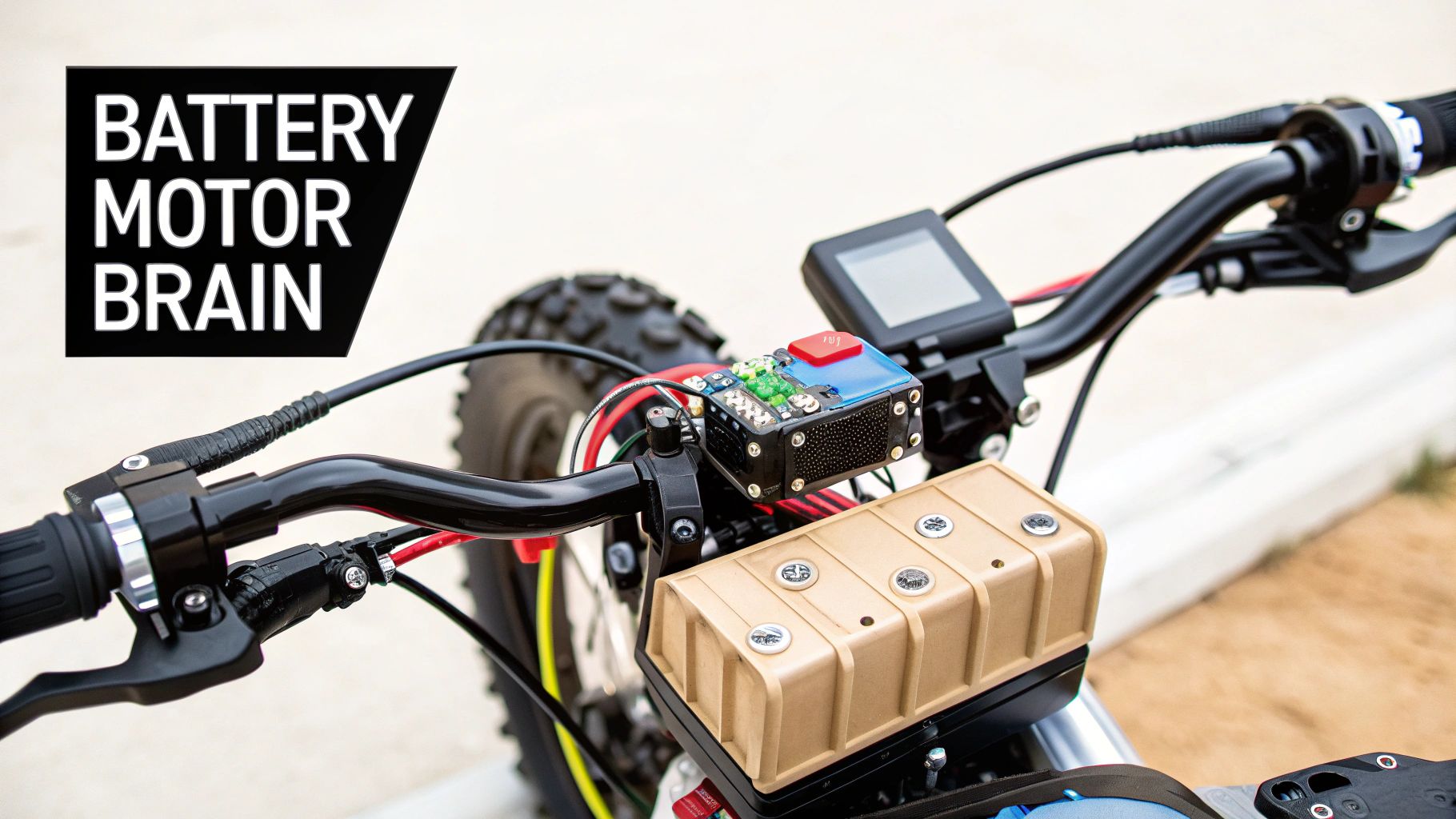
From the outside, a dirt bike electric model might look like some kind of high-tech marvel, but what's going on under the seat is actually quite straightforward. Forget everything you know about gas engines with all their pistons, spark plugs, and noisy exhaust systems. An electric dirt bike relies on just three core parts working together perfectly.
It’s this simple, elegant system that gives you that incredible, instant snap of power the second you touch the throttle.
Think of it this way: the battery is your fuel tank, the motor is your engine, and the controller is the brain. Twist the throttle, and you're sending an order to the brain. The brain immediately figures out what you want and tells the fuel tank exactly how much juice to send to the engine. It all happens in the blink of an eye, creating that addictive, wheel-lifting torque electric bikes are famous for.
The Power Source: The Battery Pack
Everything starts with the battery. This isn't your average AA; it’s a beefy, high-capacity lithium-ion pack. Think of it as a super-sized version of what's in your laptop, but built to handle the abuse of off-road riding and deliver a massive punch of power. This is where all the energy for your ride is stored.
Its main job is to be a reliable reservoir of electricity. The size and quality of this "fuel tank" are what determine your range—how far you can actually go on a single charge. That’s why you always see specs like amp-hours (Ah) and voltage (V); they’re telling you how much fuel the tank holds. A bigger tank means more trail time.
The Engine: The Electric Motor
Next up, the motor. This is what turns the electricity from the battery into the raw power that spins your rear wheel. Most electric dirt bikes use a brushless DC motor, an incredibly efficient design that has very few moving parts to break. This is a huge win over a gas engine—there’s no friction, no oil changes, and way less to wear out.
When the controller zaps it with power, the motor spins up instantly, driving the chain and getting you moving. That direct connection is what creates the bike's signature acceleration. You don't have to wait for the RPMs to build. The power is just on.
A key takeaway is the motor's simplicity and reliability. With no combustion, no clutch to manage (on most models), and no complex gearing, the electric motor provides a pure, direct connection between the throttle and the trail.
The Brain: The Controller
The controller is the unsung hero of the whole setup. It's a smart little computer that acts as the bike's central nervous system, managing the flow of power from the battery to the motor with surgical precision. It’s the reason the bike feels so responsive and not like a simple on/off switch.
Here’s what the controller is juggling every second you're riding:
- Throttle Input: It reads how much you're twisting the throttle and turns that into a specific command for more (or less) power.
- Power Delivery: It pulls the exact amount of current needed from the battery to give you smooth, predictable acceleration.
- System Protection: It keeps an eye on battery temperature and voltage, acting like a bodyguard to prevent damage from overheating or running the battery too low.
Basically, the controller makes sure everything works together efficiently and safely, giving you total command over the bike’s power. This smart management is what makes a quality dirt bike electric model feel so intuitive and ridiculously fun to ride.
Decoding Key Specs and What They Mean for You
Staring at a spec sheet for an electric dirt bike can feel like trying to read another language. It's a jumble of abbreviations—Watts, Nm, Ah, V—that don't exactly paint a picture of how the bike will feel carving up a trail. But don't get intimidated. These numbers are the bike's DNA, and once you understand them, you can perfectly match a machine to your riding style.
Think of it like picking out a good pair of hiking boots. A lightweight trail runner is perfect for a quick day hike, but you wouldn't wear it to climb a mountain. In the same way, a bike's specs tell you exactly what kind of adventure it was built for, whether that's casual backyard fun or tackling seriously tough terrain. Let's break down the most important numbers into simple, real-world terms.
The Heartbeat of Power: Motor Watts and Torque
The first things you'll probably notice are motor power, measured in watts (W), and torque, measured in newton-meters (Nm). They're a team, but each tells a different story about the bike's performance.
-
Motor Power (Watts): This is all about the bike's overall muscle and top speed. More watts generally mean the bike can hit higher speeds and handle tough situations without breaking a sweat. A bike pushing 3,000W is fantastic for getting started on trails, while a beast of a machine might boast over 12,000W for true race-level performance.
-
Torque (Nm): This is the raw, twisting force you feel the second you hit the throttle. It's what launches you from a dead stop and what claws you up steep, muddy hills. A high torque number means you get an instant, powerful shove that makes the bike feel incredibly snappy and strong at lower speeds.
Here’s a simple way to think about it: torque is the grunt that gets you moving, while wattage is the stamina that keeps you moving fast. For real trail riding, having plenty of torque is non-negotiable for getting over logs and rocks.
The Fuel Tank: Battery Capacity and Voltage
An electric dirt bike's battery is its gas tank and its heart, all in one. Its specs dictate how far and how hard you can ride. The two big numbers to know are Amp-hours (Ah) and Voltage (V).
Amp-hours (Ah) is pretty straightforward—it's the size of your fuel tank. A bigger Ah number, like 40Ah, means the battery holds more juice, which directly translates to more time on the trail before you're looking for an outlet.
Voltage (V) is like the pressure pushing that fuel to the motor. A higher voltage system can deliver power more efficiently and with a bigger punch. That's why a 72V system feels so much more responsive and powerful under load than a 48V system.
When you multiply volts by amp-hours, you get watt-hours (Wh). This is the golden number for a battery's total energy capacity. For example, a 72V, 40Ah battery holds 2,880Wh of energy, giving you a fantastic apples-to-apples way to compare the potential range of different bikes.
If you want to go even deeper, check out our guide on how long e-bike batteries last to see how your riding habits play a huge role, too.
The Ride Experience: Suspension and Weight
Power is only half the story. How a bike actually feels on the trail comes down to two other huge factors: its suspension and its weight.
Suspension travel, measured in millimeters (mm), is how much the front forks and rear shock can compress to soak up bumps and landings. More travel means a plusher, more controlled ride when things get rocky. A smaller youth bike might have 100mm of travel, but a full-sized off-road machine will have 200mm or more to absorb massive hits without rattling your teeth.
Finally, you have to consider the bike’s weight. Lighter bikes are nimble and easy to throw around in tight corners, which means less fatigue after a long day. On the flip side, a slightly heavier bike can feel more planted and stable when you're flying down a fast section. The right weight really depends on your own size and strength, making it a critical choice for rookies and pros alike.
Choosing Between Gas and Electric Power
Picking between a traditional gas-powered bike and a modern dirt bike electric model is probably the biggest decision a rider will make. This isn't just about what you pour into it; it completely changes how you experience the trail. One gives you that classic roar and the mechanical feel of a combustion engine, while the other offers a silent, instant surge of power that’s always on tap.
It's not always an easy choice. Gas bikes have been around forever, so there's a huge network for parts, fuel, and mechanics who know them inside and out. But electric bikes are catching up fast, bringing a fresh take on performance and convenience that's winning over a whole new generation of riders. To make the right call, you really have to weigh what each one brings to the table.
The Electric Advantage: Quiet Power and Simplicity
The first thing you’ll notice about an electric dirt bike is the sound—or really, the lack of it. This near-silent operation opens up a whole new world. You can hit trails closer to neighborhoods without bothering anyone and actually hear the sounds of nature around you instead of a constant engine drone. For a lot of riders, this "stealth mode" is an absolute game-changer.
The other huge win is just how simple they are. Electric bikes get rid of a whole laundry list of maintenance chores.
- No More Oil Changes: Forget about draining and replacing engine oil.
- No Spark Plugs or Filters: You won't be cleaning air filters or swapping out fouled spark plugs.
- No Engine Rebuilds: An electric motor has very few moving parts, which makes it incredibly reliable and durable compared to a complex gas engine.
What this really means is more time riding and way less money spent on upkeep. You just plug it in, charge it up, and go.
The diagram below breaks down the key specs that make all this possible—the motor, battery, and suspension systems that are the heart and soul of any electric dirt bike.
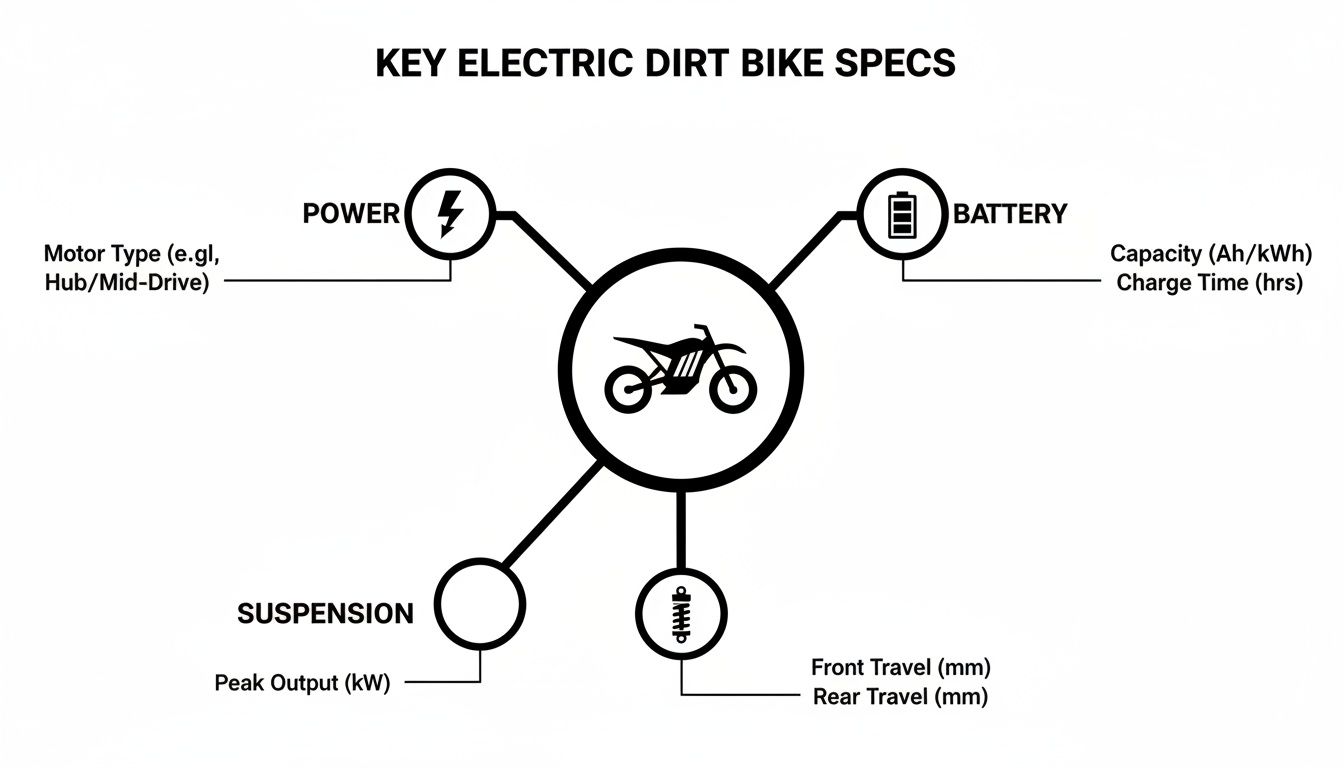
Think of these three components working together. The motor provides the muscle, the battery provides the stamina, and the suspension lets you use it all effectively on rough terrain.
The Gas Bike Stronghold: Range and Refueling
Even with all the benefits of electric, gas bikes still have the upper hand in a couple of key areas, mostly centered on ride time and refueling. You can fill up a gas tank in about two minutes at any gas station, which gets you back on the trail almost immediately.
In contrast, recharging a dirt bike electric model can take a few hours. While some models let you swap out the battery, that means you have to plan ahead and buy a spare. This difference is a big deal for riders who love all-day adventures far from any power outlet.
The decision often comes down to your typical ride. If you enjoy multi-hour sessions at dedicated MX tracks or long-distance trail rides, the quick refueling of a gas bike is hard to beat. But for shorter, more frequent rides, the convenience of charging at home often outweighs the range limitations.
The initial price can also be a factor, though the gap is closing. While high-performance electric bikes can carry a premium price tag, the market is filling out with more affordable options that make it easier than ever to go electric. As battery tech keeps getting better, the differences in range and recharge time are only going to shrink.
Head-to-Head Comparison
To really put things in perspective, let’s look at the core differences side-by-side. This isn't about crowning an overall "winner," but about figuring out which one is the right fit for you and how you ride.
Detailed Comparison Electric vs Gas Dirt Bikes
An in-depth look at the advantages and disadvantages of each powertrain technology for off-road riding.
| Attribute | Electric Dirt Bike Advantage | Gas Dirt Bike Advantage |
|---|---|---|
| Performance | Instant torque for explosive acceleration out of corners and up hills. | Sustained top-end power and a familiar powerband for experienced racers. |
| Maintenance | Drastically reduced upkeep. No oil, filters, or engine work needed. | Established network of mechanics and readily available parts everywhere. |
| Operation | Nearly silent, allowing you to ride in more places without noise complaints. | Unlimited range as long as you can carry or access gasoline. |
| Refueling | Convenient home charging. No more trips to the gas station with fuel cans. | Extremely fast refueling gets you back on the trail in minutes. |
| Ride Feel | Smooth and predictable power that is easy for beginners to manage. | Raw, mechanical connection with the engine's vibrations and sound. |
| Cost | Lower running costs over time with no fuel or engine maintenance expenses. | Lower initial purchase price for many comparable models, especially used. |
Ultimately, choosing between gas and electric is a personal call. It all comes down to what you value most—the quiet simplicity and instant thrill of electric, or the endless range and raw, mechanical soul of a gas bike.
Your Guide to Riding and Simple Maintenance
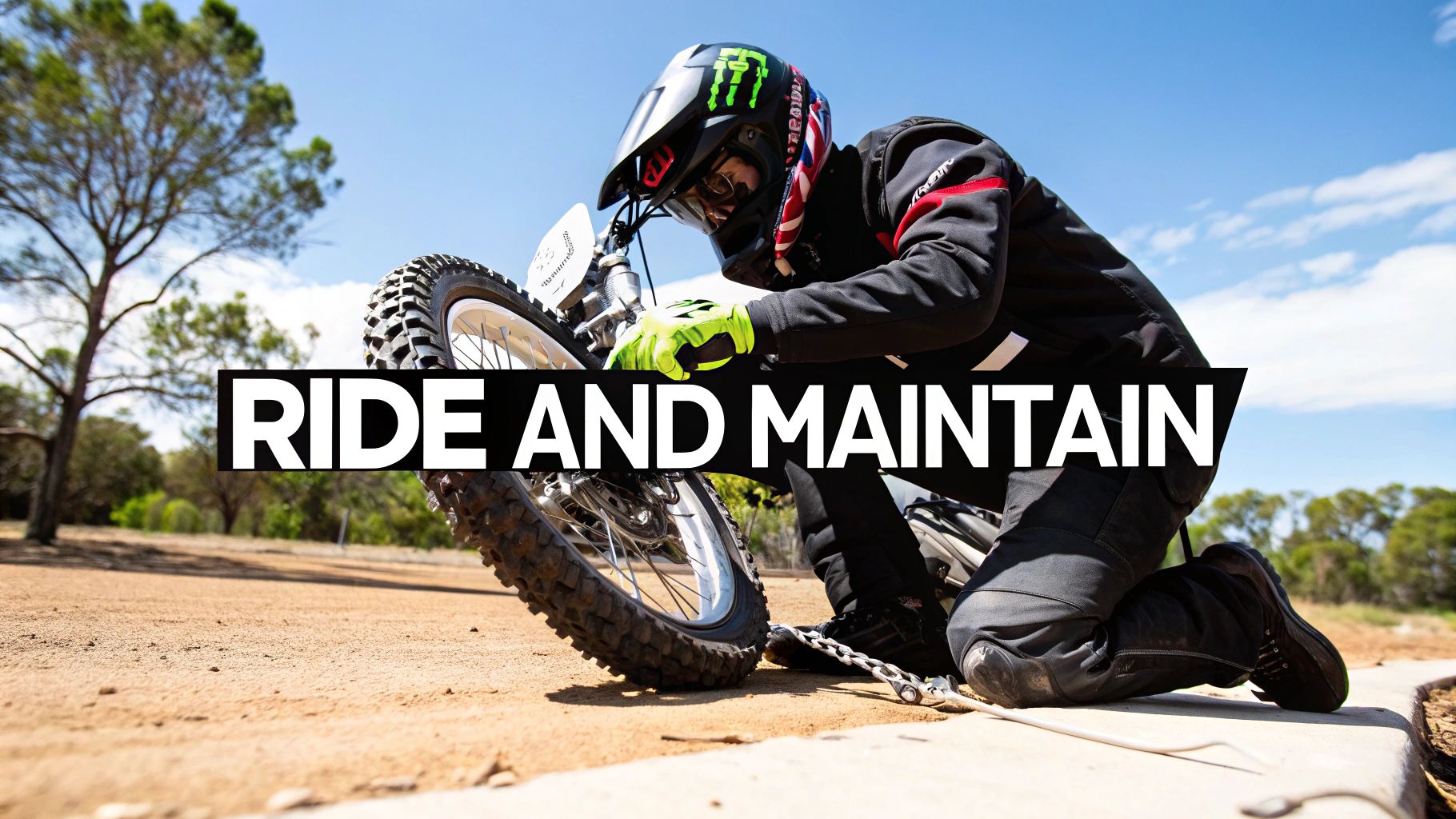
This is where the real fun begins. Owning a dirt bike electric model is all about two things: the thrill of the ride and the ridiculously easy upkeep. Forget everything you know about gas bikes and their constant need for tinkering. Your electric machine lets you spend less time in the garage and more time kicking up dust.
Of course, all that power and simplicity still demand a bit of respect. Getting a handle on the unique feel of an electric dirt bike and running through a few basic checks is key to making sure every ride is safe, fun, and free of surprises. Nail this down, and you'll build the confidence to really let it rip.
Mastering the Ride Safely
The very first thing you’ll notice is the instant torque. There's no lag—just pure, immediate power the second you twist the throttle. Because of this, it's a good idea to start slow in a wide-open space until you get a feel for how the bike responds. And, as with any kind of off-road riding, proper safety gear is completely non-negotiable.
Here’s the essential gear you should have on for every single ride:
- A DOT-approved helmet to protect your most important asset.
- Goggles to keep dirt, rocks, and branches out of your eyes.
- Durable gloves for a solid grip on the bars and protection if you take a spill.
- Riding boots, pants, and a jersey to guard your skin and bones against scrapes and impacts.
Think of your gear as your first line of defense. It’s what allows you to push your limits with confidence, knowing you’re protected when things don't go exactly as planned.
The Simplicity of Electric Maintenance
Here’s where you’ll really fall in love with your electric dirt bike. Say goodbye to oil changes, spark plug swaps, and fiddling with carburetors. The maintenance routine is so simple you can knock it out in just a few minutes before you head out, ensuring your bike is always ready to go.
Think of it like a pilot's pre-flight check. This quick five-minute routine is the best way to catch small issues before they become big problems, extend the life of your bike, and guarantee it’s safe to ride every time.
Your pre-ride inspection boils down to four key areas:
- Tires and Wheels: Check the tire pressure—you can usually find the recommended PSI on the tire’s sidewall. Give the spokes a quick squeeze to make sure none are loose.
- Brakes: Take a look at the brake pads to see how much life they have left. Squeeze both the front and rear brake levers to make sure they feel firm and engage properly.
- Chain and Drivetrain: The chain should have about 1-2 inches of slack. Make sure it's clean and has a fresh coat of lubricant.
- Bolts and Fasteners: Do a quick once-over on the major bolts—handlebars, wheels, suspension—and give them a hand-check to ensure everything is nice and tight.
Battery Care for Maximum Lifespan
The battery is the heart of your machine, and treating it right is the secret to a long and happy life. Always stick with the charger that came with your bike to avoid frying the cells. It's also a good practice to avoid leaving it plugged in for days after it's full, and try not to store it completely dead or at 100% for long periods.
For a deeper dive, check out our complete guide on dirt bike battery chargers to really get the most out of your power source.
It’s also worth noting that as electric dirt bikes become more popular, manufacturers are stepping up their game. Many now offer 12-month limited warranties and ship bikes 85–90% assembled to get you on the trail faster and with fewer headaches.
How to Choose Your First Electric Dirt Bike
Alright, you've got the basics down. Now for the fun part: picking out the perfect dirt bike electric to kickstart your adventures. This isn't just about grabbing the bike with the most impressive numbers. It’s about finding a ride that genuinely fits your goals, whether you’re a parent hunting for a safe backyard machine or an adult ready to tear up some local trails.
Choosing your first bike is a big deal, but it doesn't have to be overwhelming. If you think about who is riding and where they'll be riding, the choices narrow down fast. You’ll be able to find a bike that feels like it was built just for them. Let's walk through the most common types of riders to help you make a solid, confident choice.
For the Young Rider and Backyard Hero
Shopping for a teenager or a younger kid who's just getting started? Your checklist should be all about safety, control, and pure fun. You don't need some high-voltage monster with massive suspension just for lapping the yard or cruising gentle paths.
The sweet spot is a bike with a lower seat height, a lighter frame, and adjustable power modes. These features make the bike way less intimidating and are huge for building a new rider's confidence. A lighter bike is a breeze to pick up after the inevitable tip-over, and being able to cap the top speed is a fantastic feature for parents. The focus here should be on ease of use, not raw, scary power.
Your goal is to find a bike that a new rider can grow with, not one that they will be scared of. A manageable, fun first bike is the key to creating a lifelong passion for off-road riding.
Keep an eye out for these key factors when looking at youth-oriented electric dirt bikes:
- Seat Height: Can the rider plant at least one foot firmly on the ground? This is absolutely critical for control and confidence when they stop.
- Weight: Anything under 150 lbs is usually a great target. A lighter bike is so much easier for a smaller person to handle, both on and off the trail.
- Adjustable Power: Look for models with different speed or power settings. This lets you dial the bike down for learning and then unleash more power as their skills develop.
For the Adult Hobbyist and Trail Explorer
If you're an adult looking for a weekend trail machine, your needs are totally different. You'll want a bike with enough punch to climb steep hills, a battery that won’t die halfway through your ride, and a suspension system that can soak up roots and rocks. This is where you really start digging into the specs like motor wattage, battery voltage, and suspension travel.
For most hobbyists, a mid-range dirt bike electric model hits the perfect balance. You get a thrilling mix of power, range, and agility without having to spend top dollar on a full-blown race machine. A bike running a 72V battery system with at least 5,000W of power will have more than enough juice for most trail systems. For a deeper dive, check out our guide on choosing an off road electric bike for adults.
Final Steps Before You Buy
Once you’ve figured out your rider profile and have a few options in mind, it’s time to lock in your decision. This is where you transition from researcher to owner.
-
Explore Product Pages: Get into the nitty-gritty. Dive into the pages for specific models you're considering, like the VETRA BLAZER or UGBK2. Compare their spec sheets directly against your list of must-haves.
-
Check Verified Customer Reviews: See what real owners are saying. Reviews are gold because they reveal things about real-world performance, battery life, and durability that you’ll never find on a spec sheet.
-
Understand the Warranty: A good warranty, like the 12-month limited warranty we offer at eBike Gang, gives you peace of mind. It shows the company is confident in what they’re selling.
By running through these steps, you’re not just buying a bike; you’re making an informed choice. You're now ready to pick a ride that will deliver countless hours of fun and kick off your electric dirt bike journey with total confidence.
Frequently Asked Questions About Electric Dirt Bikes
It's totally normal to have questions before you jump on the electric bandwagon. This is new territory for a lot of riders, and you want to know how these bikes hold up in the real world. Let's tackle some of the most common things people ask, so you can feel confident about making the switch.
We get these questions all the time from both seasoned pros and people just getting into the sport. Let's get them answered.
How Far Can I Realistically Ride on One Charge?
This is the million-dollar question, and the honest-to-goodness answer is: it depends. The range you see advertised is usually a best-case scenario—think a light rider on a perfectly flat, hard-packed trail. Your actual mileage will change based on your weight, how hard you're twisting the throttle, and what kind of ground you're covering.
Ripping up steep, sandy hills is going to chew through your battery way faster than a casual cruise on a level fire road. For most full-size electric dirt bikes, you can count on a solid 1 to 3 hours of hard riding. For most of us, that's plenty of time for a great day on the trails.
Are Electric Dirt Bikes Waterproof?
Yes and no. Electric dirt bikes are built to be highly water-resistant, but they aren't submarines. They're designed to handle getting caught in the rain, blasting through mud, and splashing through puddles without missing a beat. The important stuff—the battery, motor, and controller—is sealed up tight to keep moisture out.
However, you should never completely submerge your bike or blast it with a pressure washer. That kind of force can push water past the seals and fry the electronics. It’s better to think of them as "all-weather" machines ready for any conditions you'd actually want to ride in.
What Is the Lifespan of the Battery and Motor?
These core components are tough. The brushless motor is a modern marvel; with very few moving parts to wear out, it can run for years with basically zero maintenance. The battery is the part that has a finite lifespan, just like the one in your phone.
A good quality lithium-ion dirt bike battery is typically rated for 500 to 1,000 full charge cycles. Even if you're riding and recharging a few times a week, that translates to several years of solid performance before you'd notice a major drop in range. Taking care of it—like not leaving it in a freezing garage or a hot car—will help it last even longer.
Can Kids Legally Ride These on Public Land?
This one is tricky because it all comes down to state and local laws, so you absolutely have to check the rules for your area. In most places, electric dirt bikes are treated just like gas bikes and are classified as Off-Highway Vehicles (OHVs). That means they're usually limited to designated trails and OHV parks.
Many states also require riders under a certain age (often 18) to pass an OHV safety course before they can legally ride on public land. Always do your homework and confirm the local regulations before you load up and head out.
Ready to feel that instant torque and low-maintenance freedom for yourself? At eBike Gang, we’ve hand-picked a lineup of electric dirt bikes built for an awesome off-road experience. Explore our collection and find the perfect ride to get you out on the trails.