

So, what exactly is an off road electric bike for adults? At its heart, it’s a tough, rugged bicycle built to tackle challenging terrain. But it has a secret weapon: a battery-powered motor that works with your pedaling, turning brutal climbs and technical trails into your new playground.
Think of it as a mountain bike that's been given a serious upgrade. It’s designed to make those long, winding trails and steep, rocky paths far more manageable and a whole lot more fun.
Go Farther, Climb Higher, and Explore More
Picture that one local trail—the one with the killer hill that has you gasping for air and eventually getting off to push. Now, imagine spinning up that same climb with a smooth, powerful boost from the motor, feeling it kick in just when you need it most. That’s the magic of an off-road e-bike.
It's a common misconception that e-bikes do all the work for you. That couldn't be further from the truth. Instead, it amplifies your own power, letting you ride further and faster than before. You can finally explore those backcountry loops that always seemed just a little too far out of reach.
These aren't just your average commuter bikes with a motor slapped on. They are highly specialized machines, engineered from the ground up to handle the abuse of the trail.
What Makes an E-Bike Ready for the Trail?
The real difference is in the details—the specific components and design choices that make these bikes thrive where the pavement ends. It all comes down to a few key areas.
- Tough-as-Nails Frames: Built from burly materials like aluminum or even carbon fiber, these frames are designed to absorb big hits from rocks and roots without flinching.
- Real Suspension: Good suspension is an absolute must. It works just like the suspension on a 4x4, soaking up bumps and chatter to keep your wheels glued to the trail. This means more control for you and a much less jarring ride.
- Powerful Motors & Big Batteries: These bikes pack high-torque motors for the raw power needed to crawl up steep grades. They're paired with high-capacity batteries to make sure you've got enough juice for a proper adventure, not just a quick spin around the block.
- Knobby, Grippy Tires: You'll often see wide, aggressive tires—sometimes called "fat tires." Their deep treads dig into loose dirt, gravel, mud, and even sand, giving you the confidence to ride in almost any condition.
An off-road e-bike perfectly bridges the gap between pure human-powered mountain biking and motorized dirt biking. It blends physical effort with smart assistance, opening up the world of trail riding to people of all fitness levels.
It’s no surprise these bikes are exploding in popularity. The global market for off-road e-bikes is on track to hit an estimated $5,500 million by the end of 2025, growing at a blistering pace of around 15% each year. This boom is driven by a massive wave of interest in outdoor activities and huge leaps in battery technology. If you're curious about the numbers, you can dive deeper into these market trends and their drivers on Data Insights Market. This isn't just a fad; it's a fundamental shift in how people are getting outside and hitting the trails.
Decoding the Tech Specs That Power Your Ride
Stepping into the world of the off road electric bike for adults can feel a bit like learning a new language. You'll see terms like "watts," "watt-hours," and "suspension travel" thrown around, but what do they actually mean for your ride? Think of this section as your personal translator, breaking down the essential tech specs into simple, practical terms.
Getting a handle on these core components is the key to seeing past the marketing buzz and choosing a bike with the performance you genuinely need. We'll pop the hood on the engine, check the fuel tank, test the shock absorbers, and kick the tires of your future e-bike so you can read a spec sheet with total confidence.
This diagram shows how the most critical parts of an off-road e-bike all work together.
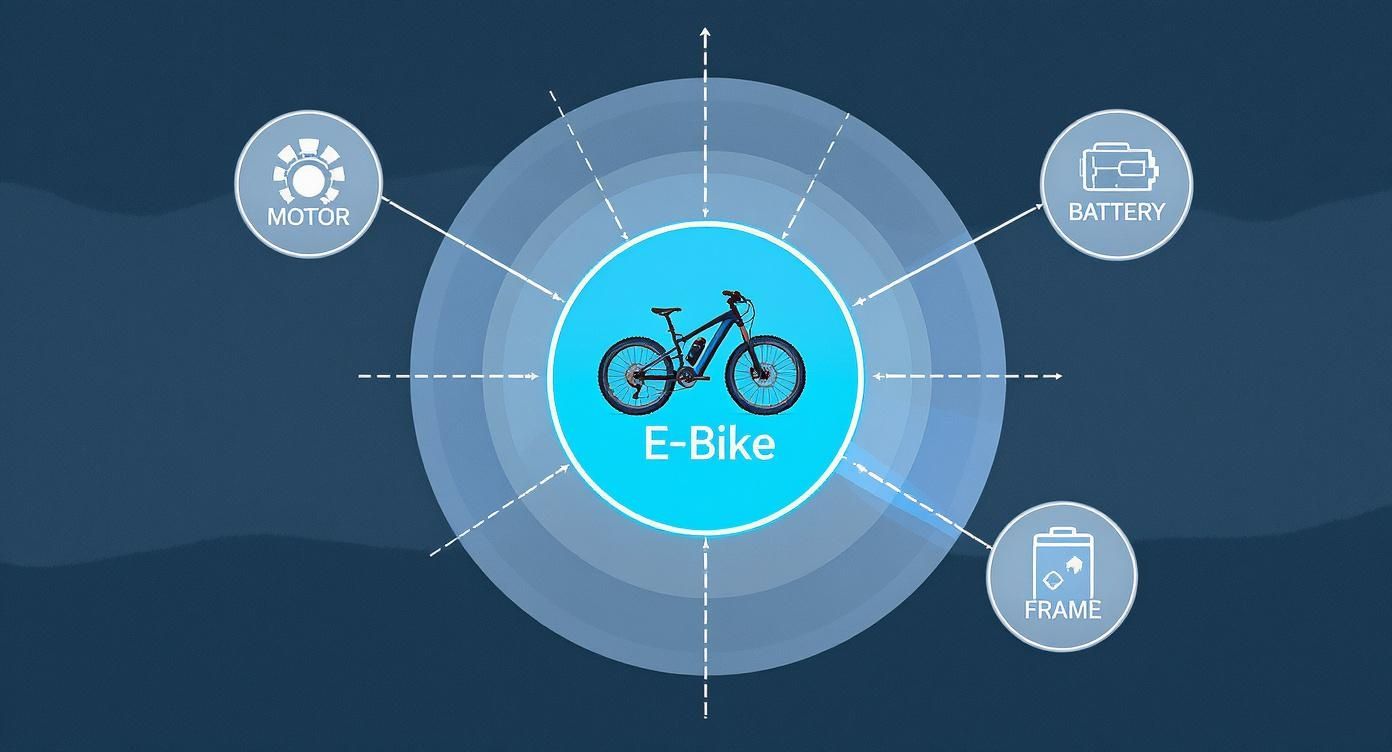
It’s a simple visual, but it perfectly illustrates how the motor, battery, and frame form a single system built to deliver the power and toughness you need for serious off-road fun.
The Motor: Your E-Bike's Engine
At the heart of any e-bike is its motor—this is what gives you the boost to make tough trails feel like a walk in the park. Its power is measured in watts (W). Just like with a car engine, more watts generally mean more raw power and climbing muscle.
For an off-road bike, that power is non-negotiable. A stronger motor produces more torque, which is the twisting force that gets you going from a dead stop and, more importantly, hauls you up steep, loose climbs. A bike with weak torque will bog down on hills, forcing you to mash the pedals or, even worse, get off and push.
You'll usually see two power ratings listed:
- Nominal Power: This is the motor's steady, continuous output. For real trail riding, you'll want to look for a bike with at least a 500W nominal rating.
- Peak Power: This is the maximum juice the motor can deliver in short bursts, which is perfect for punching over a big root or accelerating out of a corner. A peak power of 750W or higher is a great sign you're looking at a capable off-road machine.
A powerful motor works closely with the bike's pedal-assist system, which senses your effort and adds power accordingly. If you're curious about the magic behind it, you can dive deeper into what pedal assist is and how it works in our detailed guide.
The Battery: Your Fuel Tank for Adventure
If the motor is the engine, then the battery is absolutely the fuel tank. Its capacity is what determines your bike's range—or how far you can roam on a single charge. For anyone planning to explore trails far from an outlet, this is one of the most important specs to watch.
Battery capacity is measured in watt-hours (Wh). It's a simple formula: multiply a battery's voltage (V) by its amp-hours (Ah). For instance, a 48V battery with a 20Ah capacity gives you a total of 960Wh.
A bigger watt-hour number means a bigger "fuel tank" and, therefore, a longer potential ride. For most trail adventures, a battery with at least 600Wh is a solid starting point. If you're planning epic, all-day rides, anything over 750Wh is fantastic.
Just remember, the advertised range is always an estimate. Your actual mileage will depend on things like your weight, the terrain, your tire pressure, and how much assistance you're using. A hilly ride with the motor on full blast will drain the battery way faster than a flat path on a low-assist setting.
Suspension: Smoothing Out the Bumps
Suspension is what truly separates an off-road e-bike from a commuter bike with knobby tires. It works just like the shock absorbers in a truck, compressing to soak up impacts from rocks, roots, and drops. This does more than just make the ride comfortable—it massively improves your control by keeping your tires glued to the ground.
Suspension capability is measured by its travel, which is the total distance the wheel can move up and down to absorb a hit, measured in millimeters (mm). More travel means it can handle bigger bumps.
- Hardtail Bikes: These have suspension only in the front fork. They are often lighter and more efficient for climbing but can feel pretty rough on technical descents.
- Full-Suspension Bikes: These feature suspension in both the front fork and a rear shock. They offer way more comfort and control on choppy terrain, making them the go-to choice for aggressive trail riding.
For general trail use, look for a bike with at least 120mm of front suspension travel. If you're into more demanding enduro or downhill-style riding, you'll want to start looking at bikes with 150mm of travel or more.
Tires and Frame: The Foundation of Your Ride
Finally, let's not overlook the two components that connect you and all that tech to the actual trail: the tires and the frame. The right combination is crucial for stability, traction, and long-term durability.
Your tires are your only point of contact with the ground, which makes them absolutely critical for grip and confidence. Off-road e-bikes often come with wide, aggressive tires, sometimes called fat tires. These oversized tires can be run at lower air pressures, creating a bigger footprint that "floats" over soft stuff like sand or mud while also delivering incredible traction on loose dirt and rocks.
The frame is the skeleton holding it all together. Most off-road e-bike frames are made from a tough aluminum alloy, which hits the sweet spot between strength, stiffness, and weight without breaking the bank. It's more than strong enough to handle the stress of trail riding and the extra weight of a motor and battery. While some high-end bikes use carbon fiber to shave off pounds, aluminum remains the reliable workhorse for the vast majority of capable off-road e-bikes.
To help you put it all together, here’s a quick-reference table breaking down these key specs. Think of it as a cheat sheet for when you're comparing different bike models.
Off Road E-Bike Key Specification Guide for Adults
| Component | What It Measures | What to Look For (Beginner to Advanced) - -
| Motor (Power) | The engine's raw strength, measured in watts (W). More watts and torque mean better climbing ability. | Good: 500W nominal / 750W peak. Better: 750W nominal / 1000W peak. Best: 1000W+ nominal for extreme terrain. - -
| Battery (Range) | The "fuel tank" capacity, measured in watt-hours (Wh). A higher number means a longer potential range. | Good: 500-600Wh for shorter rides. Better: 600-750Wh for most trail use. Best: 750Wh+ for all-day epic adventures. -
| Suspension | The amount the shocks can compress to absorb bumps, measured as travel in millimeters (mm). | Hardtail: Front travel of 100-120mm. Full-Suspension (Trail): 120-150mm travel front and rear. Full-Suspension (Enduro): 150mm+ travel. -
| Tires & Frame | The bike's connection to the trail (tires) and its core structure (frame). | Tires: Wide (2.4"+) with aggressive knobs for traction. Fat tires (4"+) for sand/snow. Frame: Aluminum alloy is the strong, reliable standard for most riders. -
Hopefully, this table helps demystify the spec sheet. Knowing what these numbers mean is the first step toward finding the perfect e-bike that matches not just your budget, but your ambition for adventure.
How to Choose the Right E-Bike for Your Adventures
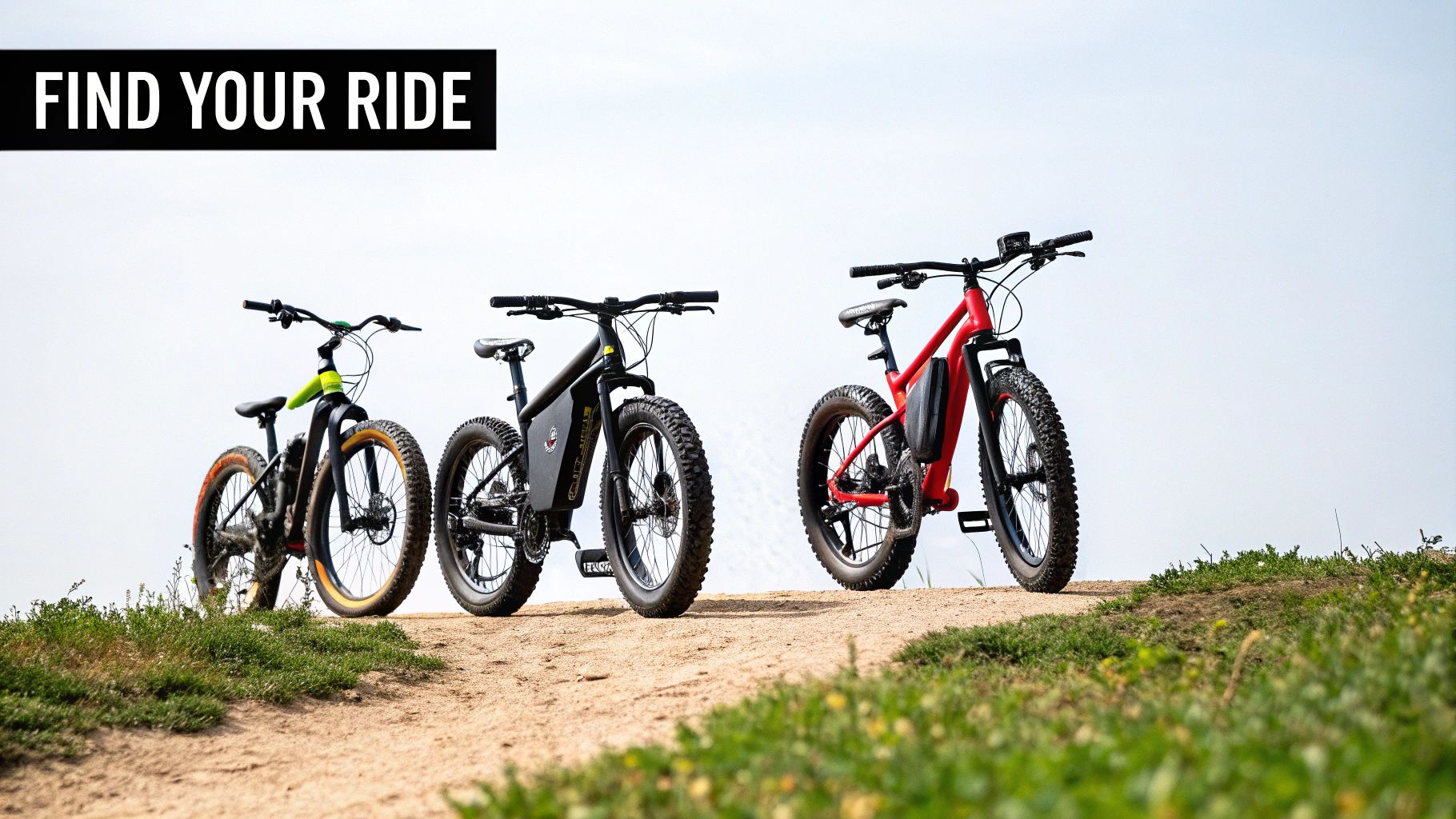
All the tech specs in the world tell you what an e-bike can do, but finding the right one is really about matching those capabilities to you. The best off-road electric bike for adults isn't just the one with the biggest numbers on a spec sheet; it's the one that feels like a natural extension of your body and your sense of adventure. It has to fit you well, and it has to fit the way you plan to ride.
This whole process starts with getting the size right. A bike that doesn't fit you properly is more than just a little uncomfortable—it can be downright unstable and hard to control, especially when you're navigating a tricky, unpredictable trail. Once you've got the fit dialed in, the next step is to be honest with yourself about your riding style. That's how you find the bike that will truly unlock the outdoors for you.
Getting the Perfect Fit
Think of an e-bike frame like a good pair of hiking boots. The wrong size will cause nothing but trouble on the trail, no matter how much they cost. In the bike world, two measurements are crucial for getting the right fit and maintaining control: standover height and reach.
-
Standover Height: This is simply the distance from the ground to the top bar of the frame. You need to be able to straddle the bike with both feet flat on the ground and still have at least 1-2 inches of clearance. This isn't just for comfort; it's a critical safety feature that lets you hop off quickly if you lose your balance on uneven ground.
-
Reach: This is the horizontal distance from your saddle to the handlebars. The right reach puts you in a riding position that feels natural—not too stretched out, not too hunched over. It ensures you can steer effectively and shift your weight around easily without putting a strain on your back or shoulders.
A well-fitted bike feels intuitive. It just responds to your movements, giving you the confidence to ride for hours without aches and pains and tackle more challenging terrain.
Most brands have sizing charts that give you a starting point based on your height. Always start there, but keep in mind that we're all built differently. If you find yourself between two sizes, the general wisdom is to go with the smaller frame. It’s usually much easier to make a small bike feel bigger (by raising the seat post or getting a longer stem) than it is to shrink a bike that's too large.
Matching Your Bike to Your Riding Style
With sizing sorted, it's time for the fun part—figuring out what kind of rider you are. The perfect e-bike for you depends entirely on the adventures you're dreaming up. Are you planning on sticking to local forest paths, or are you mapping out epic, multi-day journeys into the wild?
Let's look at a few common rider profiles and the bikes that fit them best.
The Weekend Trail Explorer
You love spending your Saturdays getting lost in local parks and winding through forest trails. Your rides are a mix of smooth dirt, a few decent climbs, and maybe some roots and rocks thrown in. You need a versatile bike that’s capable but not over-the-top.
- Your Ideal Bike: A hardtail or a trail-focused full-suspension e-bike with around 120-140mm of suspension travel is your sweet spot. This gives you plenty of cushion and control for varied terrain without the extra weight and complexity of a more aggressive machine.
The Adrenaline Seeker
For you, it’s all about the thrill of the descent. You actively seek out steep, technical downhills, jumps, and drops. You need a bike that can take a beating, handle high speeds, and inspire unshakable confidence when things get gnarly.
- Your Ideal Bike: Look for a long-travel enduro or downhill e-bike. These rigs are built for abuse, with 150mm or more of suspension travel, super stable frame geometry, and monster brakes to keep everything under control.
The Backcountry Adventurer
You're dreaming of multi-day treks, exploring remote fire roads, and getting to places most people can’t. Your adventures might involve crossing sand, plowing through mud, or even riding in snow. You need a rugged, reliable workhorse that prioritizes traction and the ability to carry gear above all else.
- Your Ideal Bike: A fat-tire e-bike is the ultimate tool for this job. Those huge, low-pressure tires give you incredible grip and let you float over soft surfaces that would swallow a normal mountain bike whole. To really see what these bikes can do, you can learn more about the unique advantages of a fat tire e-bike for off-road dominance and how they open up entirely new frontiers.
Trail Rules and Essential Safety Gear
An off-road electric bike for adults is an absolute game-changer. It unlocks new trails and gives you the power to explore further than ever before. But that extra power comes with a responsibility to ride safely, legally, and with respect for the trails and other riders.
Think of it like this: knowing the rules of the road (or in this case, the dirt) and gearing up properly is your trail pass. It’s what ensures every ride is a great one—not just for you, but for everyone you share the path with. This isn't just about avoiding a fine; it's about being a smart, courteous member of the off-road community.
Gearing Up for the Trail
Let's face it, off-road riding is unpredictable. You’ve got roots, rocks, and loose gravel that can pop up when you least expect it. Having the right protective gear can be the difference between a minor tumble and a trip-ending disaster. A helmet is absolutely non-negotiable, but for real trail riding, it’s only the beginning.
Here’s a rundown of the essential safety kit I'd never ride without:
- A Quality Helmet: Don't just grab any helmet. Look for one designed for trail or enduro riding with extended rear coverage. It offers much better protection for the back of your head if you take a spill.
- Protective Eyewear: Sunglasses or clear lenses are about more than just blocking the sun. They’re your shield against flying dust, low-hanging branches, and the occasional bug.
- Full-Finger Gloves: These are a must. They give you a much better grip on the handlebars and will save the skin on your palms if you have to put your hands down during a fall. Trust me on this one.
- Knee and Elbow Pads: Even a slow-speed tip-over can leave you with nasty scrapes. Today's pads are so lightweight and flexible you'll barely notice they're on.
- Sturdy Footwear: You need closed-toe shoes with a stiff sole. They protect your feet from rocks and roots and help you put power down on the pedals efficiently.
Investing in this gear is one of the smartest moves you can make. For a deeper dive into staying safe on two wheels, check out our comprehensive guide covering essential electric bike safety tips.
Understanding E-Bike Classifications
In the eyes of the law, not all e-bikes are the same. Most places use a three-class system to manage e-bikes and keep trails safe for everyone. Knowing your bike's class is crucial because it dictates exactly which trails you're allowed to ride on.
The e-bike classification system is like a driver's license for your bike. It tells land managers what your bike is capable of and helps them decide where it can safely operate alongside hikers and traditional mountain bikers.
Here’s a simple breakdown of the three classes:
- Class 1: This is a pedal-assist only bike, meaning the motor only kicks in when you’re pedaling. The motor assistance cuts off at 20 mph. These are the most widely accepted and are generally allowed anywhere a regular mountain bike can go.
- Class 2: This type has a throttle, so you can get power without pedaling. Like Class 1, the motor assistance also stops at 20 mph. Because of the throttle, access can be a bit more restricted on some non-motorized trails.
- Class 3: This is also a pedal-assist bike, but it keeps helping you up to a zippier 28 mph. These are faster e-bikes and are often restricted to roads and dedicated bike lanes, not multi-use dirt trails.
Before you head out, always check the local regulations for the specific park or trail system you're visiting. The rules can and do vary. The electric dirt bike market—a powerful niche within the off-road world—has exploded recently, which has pushed many land managers to clarify their rules. This market was valued at an incredible USD 1.5 billion in 2023 and is expected to reach USD 4.9 billion by 2032. You can read more about this explosive growth in this electric dirt bike market report. With so many new riders hitting the dirt, knowing your class and riding where you're welcome is more important than ever.
Keeping Your E-Bike in Peak Condition
You've just invested in a serious piece of equipment built to handle tough terrain. To make sure your off-road electric bike is always ready for the next adventure, a little maintenance goes a very long way. Think of it like any other high-performance machine—regular attention is the key to keeping it running smoothly and safely.
The good news? You don’t need a pro-level workshop or hours of free time. A few simple habits before and after each ride can dramatically extend the life of your motor, chain, and brakes.
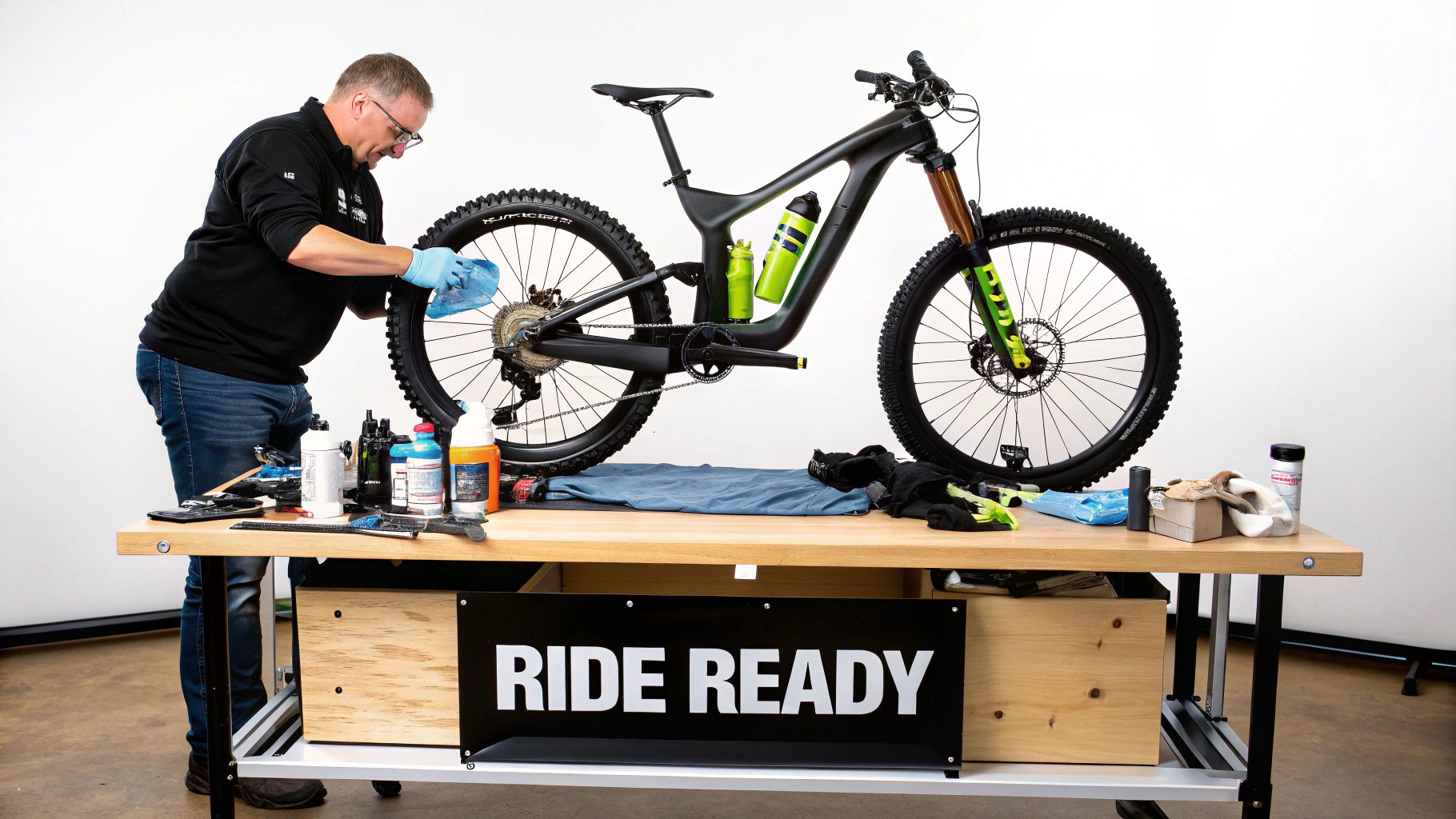
This approach isn’t just about maintenance; it’s about prevention. You’ll catch small issues before they snowball into expensive, ride-ending problems. Let's walk through a practical plan to keep your e-bike in top shape.
Your Pre-Ride Safety Check
Before you even think about hitting the trail, spend two minutes on a quick check. This is one of the best habits any rider can form. It’s like a pilot's final walkthrough before takeoff—a simple routine to ensure everything is good to go for a safe ride.
An easy way to remember the essentials is the "ABC" check:
- Air: Give your tires a squeeze. Are they firm? Proper tire pressure is your first line of defense against flats, but it also helps your battery run more efficiently and gives you the right amount of grip. The recommended pressure is always printed right on the tire’s sidewall.
- Brakes: Pull both brake levers. They should feel firm and responsive, not soft or "spongy." Give the wheels a spin to make sure the brakes aren't rubbing when you let go.
- Chain & Charge: Take a quick look at your chain. Is it clean and lightly lubed? Most importantly, glance at your display. You don't want to run out of juice halfway up a climb, so make sure your battery has enough charge for the ride you have planned.
Post-Ride Cleaning and Care
Let’s be honest, after a long, muddy ride, the last thing you want to do is clean your bike. But leaving all that mud, grit, and water caked on is terrible for its moving parts. That grime acts like sandpaper on your drivetrain and can wreck your suspension over time.
You don't need to do a deep-clean every time. Start with a gentle rinse from a hose—and please, avoid high-pressure washers! They can force water into sensitive bearings and electrical parts where it doesn't belong. A soft brush and some bike-specific soap will handle the rest. Once it's clean, dry it off and give the chain a fresh coat of lube.
A clean bike is a happy bike. More than just looking good, a quick wipe-down gives you the perfect chance to spot little things—a loose bolt, a frayed cable—before they turn into big problems on the trail.
Understanding Your Warranty
Finally, let's talk about the warranty. A solid warranty is more than just a piece of paper; it’s a sign that the company is confident in what they've built. For an off road electric bike for adults, most brands offer coverage for a specific period, usually around 12 months, against any defects from the factory.
So, what’s typically covered?
- Frame: The backbone of your bike, protected against structural failure.
- Motor: The electric motor and its internal workings.
- Battery: This includes the battery pack itself, along with the controller and display.
It’s just as crucial to know what isn't covered. Parts that naturally wear down with use—like tires, brake pads, and chains—are considered consumables and won't be included. Damage from a crash, neglect, or making unauthorized modifications will almost certainly void your warranty. Knowing the difference sets you up with realistic expectations for long-term support.
Your Final E-Bike Buying Checklist
https://www.youtube.com/embed/3VAJMqrYpMc
Alright, you've done the homework. You know the tech, you've figured out your riding style, and you're clear on the rules of the trail. Now, let's put it all together. Think of this checklist as your final, practical tool for comparing bikes side-by-side and confidently picking the perfect off road electric bike for adults.
Before you get close to clicking "buy," run every single bike you're seriously considering through these questions. This isn't just about specs on a page; it's about making sure the bike you choose is the right one for you.
Your Personal E-Bike Scorecard
Take a moment to honestly evaluate each potential bike against these five key points. This simple process cuts through the marketing fluff and focuses on what actually matters for your adventures.
1. Does it have the right power plant?
- Motor: Will the motor get you up the hills you plan to ride? Look for at least a 500W nominal motor, but if you're tackling serious inclines, 750W or more is where you want to be.
- Battery: Check the Watt-hour (Wh) rating. Is it enough for your longest planned rides, with a little juice left in the tank just in case?
2. Is it built for your kind of trails?
- Suspension: Does the suspension travel match your ambition? For general trail riding, something around 120mm is great. If you’re planning on more aggressive terrain with bigger bumps and drops, you'll want to see 150mm+.
- Tires: Are the tires right for the job? You'll want versatile knobby tires for forest paths or go for fat tires if you'll be riding on sand or snow.
By methodically checking each bike against these points, you stop being a casual shopper and start making a smart, informed decision. This is the best way to ensure the bike you bring home will be a source of adventure, not frustration.
3. Will it actually fit you?
- Frame Size: Always, always check the manufacturer's sizing chart. Pay close attention to the standover height to make sure you can comfortably and safely get on and off the bike.
4. What does long-term ownership look like?
- Warranty: Do you know exactly what the warranty covers? Read the fine print for the frame, motor, and battery, and understand the duration for each. Remember, things like tires and brake pads are almost never covered.
The world of off-road e-bikes is exploding, with the market projected to reach nearly $14,650 million by 2025. That boom means you have more choices than ever, which makes a clear-headed approach absolutely essential. If you want to dive deeper, you can read more about the industry's expansion and technological drivers. Answering these questions helps you navigate this growing market and find the perfect machine for your needs.
Frequently Asked Questions
It's totally normal to have a few last questions before pulling the trigger on a big purchase like an off-road e-bike. You're doing your homework, and that's smart. Let's tackle some of the most common things riders ask, so you can feel confident you're making the right choice.
Can a Total Beginner Handle an Off-Road E-Bike?
Absolutely! In fact, an e-bike can be a beginner's best friend on the trail. That little bit of motor assist is a game-changer for flattening out steep climbs that might otherwise feel impossible.
Think of it this way: instead of getting bogged down and exhausted on your first few hills, the bike gives you a gentle push. This lets you focus on the important stuff, like learning how to handle the bike, pick a good line, and corner with confidence. You can dial the power down to a minimum and crank it up as you get stronger and more skilled.
Just How Heavy Are These Bikes?
There's no sugarcoating it—off-road electric bikes are heavier than their traditional mountain bike cousins. With a motor and a hefty battery on board, you can expect most off road electric bikes for adults to tip the scales between 50 and 80 pounds (23 to 36 kg).
While that sounds like a lot, you honestly don't feel the extra weight when you're riding. The motor's power more than makes up for it. The only time it really matters is when you're not on the bike—like when you need to lift it onto a car rack or haul it up a flight of stairs. It's just something to keep in mind for your storage and transport plans.
How Long Does It Take to Charge the Battery?
This depends on two things: how big your battery is and how powerful your charger is. For most off-road e-bikes, charging a completely dead battery back to full will take somewhere in the ballpark of 4 to 8 hours.
Pro Tip: Don't wait for the battery to be completely empty. Topping it off after each ride is a great habit. Not only does it mean your bike is always ready for a last-minute adventure, but it's also healthier for the battery in the long run.
Most people just get into the routine of plugging it in overnight, just like a phone. That way, you wake up to a full "tank" and a full day of trail-riding potential, with zero range anxiety.
Ready to stop wondering and start riding? At eBike Gang, we've hand-picked a lineup of tough, dependable off-road electric bikes that are ready for whatever you can throw at them. Check out what we've got and find the bike that's going to unlock your next big adventure.