

Let's get straight to the point: no, electric bikes are not waterproof. They are water-resistant, which is a world of difference.
Think of it like this: your e-bike is like a good rain jacket. It'll keep you dry in a downpour, but you wouldn't go swimming in it. It’s built to handle the elements you'd typically ride in, not to be submerged in a lake.
Understanding Your E-Bike's Water Resistance

So, how do you know just how much rain your bike can actually take? It’s not guesswork. This is where something called an Ingress Protection (IP) rating comes in.
This little two-digit code is the industry standard for telling you how well a device is sealed against solids (like dust) and liquids (like water). For our purposes, the second digit is the one that really matters—it’s the number that tells you how your bike's expensive electronics will fare against a storm cloud.
Key Takeaway: The IP rating cuts through the marketing fluff. It's a standardized, reliable number that tells you exactly how protected your e-bike is, so you can ride with confidence, knowing its limits.
Translating IP Ratings to Real-World Riding
So, what do those numbers actually mean when you're caught in a sudden shower? Most e-bikes you'll find have at least an IPX4 rating, which is solid protection against splashing from all directions. Some higher-end models might go up to IPX5 or even higher, which means they can handle more sustained pressure. You can dive deeper into the technical standards shaping the market in this industry report.
To make it even clearer, let's break down what these codes mean for your day-to-day rides.
Quick Guide to E-Bike Water Resistance Levels (IP Ratings)
This table breaks down common Ingress Protection (IP) ratings for e-bikes, explaining what each level means for everyday riding scenarios.
| IP Rating | Level of Protection | Safe to Ride In |
|---|---|---|
| IPX4 | Protected from water splashes from any direction. | Light to moderate rain and splashing through shallow puddles. |
| IPX5 | Protected from low-pressure water jets from any direction. | Heavier rain and washing with a low-pressure garden hose. |
| IPX6 | Protected against powerful, high-pressure water jets. | Very heavy downpours and more intensive cleaning. |
| IPX7 | Protected from temporary immersion in water (up to 1m for 30 mins). | Accidental drops into deep puddles, but not for prolonged submersion. |
Ultimately, knowing your IP rating is about knowing your bike's boundaries. It empowers you to enjoy the ride without worrying every time a cloud rolls in.
What IP Ratings Actually Mean for Your Ride
Ever look at a spec sheet and see a code like "IP65"? It might seem like technical jargon, but it’s the clearest answer you'll find to the big question: "Is my e-bike waterproof?" This code is the Ingress Protection (or IP) rating, a standardized system that spells out exactly how well your bike's electronics are sealed off from dust and water.
Think of it like the difference between a cheap phone case and a rugged, waterproof one. One might save your screen from a minor scratch, while the other gives you the confidence to use it in a downpour. IP ratings do the same thing for your e-bike’s most sensitive parts.
Breaking Down the Code
An IP rating has two numbers, and each one tells you something important about how tough your bike is.
- The First Digit (Solids): This number, from 0 to 6, is all about protection from things like dust, sand, and grit. A rating of 5 means it’s well-protected against dust, but a 6 means it’s completely dust-tight—nothing’s getting in there.
- The Second Digit (Liquids): This is the one you really want to pay attention to. Ranging from 0 to 9, it tells you how the bike holds up against water.
It's that second number that truly defines your bike's "water resistance." A bigger number means better protection, which helps you move from just reading specs to knowing how your bike will actually perform out on the road.
An IP rating isn’t just a random number on a list. It’s a direct statement from the manufacturer about how your e-bike will handle the real world. Knowing what it means lets you pick a bike that actually fits where and how you ride.
What Different IP Ratings Mean in the Real World
So, let's translate these codes into situations you’ll actually encounter. Sometimes you'll see a rating like IPX4. That "X" just means it wasn't tested for dust protection, so all the focus is on how it handles water.
Here’s a simple breakdown of the most common liquid protection ratings you'll find on e-bikes:
| IP Rating | Level of Liquid Protection | Real-World Riding Scenario |
|---|---|---|
| IPX4 | Protected against splashing water from all directions. | This is pretty much the standard for any decent e-bike. It's built to handle puddles, road spray, and getting caught in light to moderate rain. |
| IPX5 | Protected against low-pressure water jets from any direction. | Now we're talking about a bike that can handle a much heavier, sustained downpour. You can also give it a gentle rinse with a garden hose. |
| IPX6 | Protected against powerful, high-pressure water jets. | This is serious weather protection. A bike with this rating can take on torrential rain without skipping a beat. |
| IPX7 | Protected against temporary immersion in up to one meter of water for 30 minutes. | You probably won't find this for a whole bike, but it's common for key parts like batteries or motors. It’s peace of mind that a quick, accidental dunk in a deep puddle won't fry the system. |
Once you get a feel for these ratings, you stop guessing. You can look at any e-bike's specs and know right away if it’s a fair-weather friend or a true all-conditions commuter.
Where Your E-Bike is Toughest (and Most Vulnerable) to Water
Think of your e-bike less as a single, solid object and more like a collection of different parts, each with its own level of defense against water. Some components are built like a fortress, while others are more like an open gate in a rainstorm.
Knowing which parts are which is the real secret to riding confidently in the wet. It's not about avoiding every single puddle, but about understanding where the risks are and how to manage them.
The Most Resilient Components
Let's start with the good news. The core power components of your e-bike are generally well-sealed and designed to handle a typical downpour without flinching. These are the parts you can worry about least.
- Motor Hub: The motor, whether it's in the wheel hub or mounted mid-frame, is the heart of your bike. Manufacturers build these inside tightly sealed casings specifically to keep water and gunk out. They're made to take a splash.
- Sealed Battery Casing: The battery itself is protected by a tough outer shell, usually hard plastic or metal. This case does an excellent job of shielding the precious lithium-ion cells inside from direct rain.
The Most Vulnerable Hotspots
Now for the areas that need a little more care. These are the spots where water is most likely to sneak in and cause problems if you're not careful.
- Handlebar Display and Controls: Your LCD screen, throttle, and button pads are loaded with sensitive electronics. While they are sealed to a degree, they're common failure points after heavy or prolonged water exposure.
- Battery Connection Points: The spot where your battery connects to the frame is a critical electrical junction. If water gets into these contacts, it can lead to corrosion and power delivery issues down the road.
- Charging Port: This is a direct entryway to your battery's internal system. It’s absolutely essential that its protective cover is securely in place anytime you're riding, especially if the weather looks iffy.
This is where understanding IP ratings becomes so important. They tell you exactly how protected each component is.

As the chart shows, the first digit is for solids (like dust), but the second digit is the one that really matters for us—it tells you how well the component resists water.
This isn't just theory; it's why e-bikes are so popular in famously rainy places. In the Netherlands, where it seems to drizzle constantly, e-bike sales shot past 50% of the entire bike market by 2020. Over in Germany, they sold a staggering 2.1 million e-bikes in 2023 alone. These numbers don't happen unless people trust their bikes to hold up in the wet. If you're curious, you can dig into these insights on global e-bike trends to see just how big the market has become.
By understanding this map of strengths and weaknesses, you shift from asking "are electric bikes waterproof?" to a more practical question: "How can I protect my e-bike's vulnerable points when riding in the rain?" This mindset is key to keeping your bike running smoothly for years.
Essential Tips for Riding in Wet Weather
Okay, so we've talked about what the IP ratings mean. But knowing your e-bike’s limits is one thing—actually riding confidently in the rain is another. Let's move from the theory to a practical game plan. Here are the essential do's and don'ts to keep you safe and your bike protected when the skies open up.
First, let's clear the air on a common fear: electric shock. You can put that worry to rest. Modern e-bikes run on low-voltage DC systems and are built with multiple layers of safety in mind. The chance of getting a shock from riding in the rain is practically zero, so you can focus on what really matters: smart riding and proper bike care.
Your Pre-Ride Safety Checklist
Before you even think about heading out into a drizzle, take two minutes for a quick inspection. This isn't about getting your tools out; it's a simple once-over to make sure your bike's defenses are up.
- Check the Battery Connection: Give your battery a little wiggle. Is it locked securely into the frame? A snug fit means the rubber seals around the connection points are properly engaged, which is your first line of defense against moisture.
- Secure All Covers: This is a big one. Double-check that the charging port cover is sealed tight. That port is a direct gateway to your battery's electronics, and leaving it open is just asking for trouble.
- Inspect Your Tires and Brakes: Wet roads are no joke. Your bike needs to be ready for them. Make sure your tires have plenty of tread and are inflated to the right pressure. Squeeze your brake levers a few times to confirm they feel responsive before you start rolling.
Smart Riding Techniques for Slick Surfaces
Riding on wet pavement completely changes the game. Your bike won't handle the same way, and your reaction time suddenly becomes twice as important. Adjusting your technique isn't just a suggestion—it's absolutely critical for staying upright and safe.
Pro Tip: Treat every single puddle like it's hiding a secret. What looks like a shallow splash could easily be concealing a deep, wheel-bending pothole. It's always, always better to ride around them, even if it means taking a wider line.
Remember, your braking distance can easily double on wet surfaces. Always start braking much earlier and more gently than you would on a dry day to avoid skidding. When you turn, make your corners wider and smoother, leaning your body more than the bike itself to keep your tires planted. Sudden, jerky movements are your enemy.
Having the right gear helps, too. Fenders and high-visibility lights can make a huge difference in your comfort and safety. For more ideas, check out our guide on the best electric bike accessories.
Post-Ride Care to Prevent Long-Term Damage
What you do after a wet ride is just as important as what you do during it. Seriously, five minutes of care now can prevent the slow, creeping damage that moisture and corrosion love to cause.
- Power Down Completely: The very first thing you should do is turn off the bike's entire electrical system.
- Give It a Gentle Wipe-Down: Grab a dry, soft cloth and wipe down the entire bike. Pay special attention to the most vulnerable spots: the display, the controller buttons, the battery contacts, and the motor casing.
- Dry the Chain: A wet chain is a rusty chain waiting to happen. Wipe it down thoroughly and apply a fresh coat of a lubricant made for wet conditions. This one simple step will keep your drivetrain running smoothly for miles to come.
- Let It Air Dry: Park your bike in a dry, sheltered spot. If you can, it's a great idea to remove the battery. This allows the connection points on both the battery and the frame to air out completely, leaving no place for moisture to hide.
Your E-Bike Got Soaked: What to Do Next
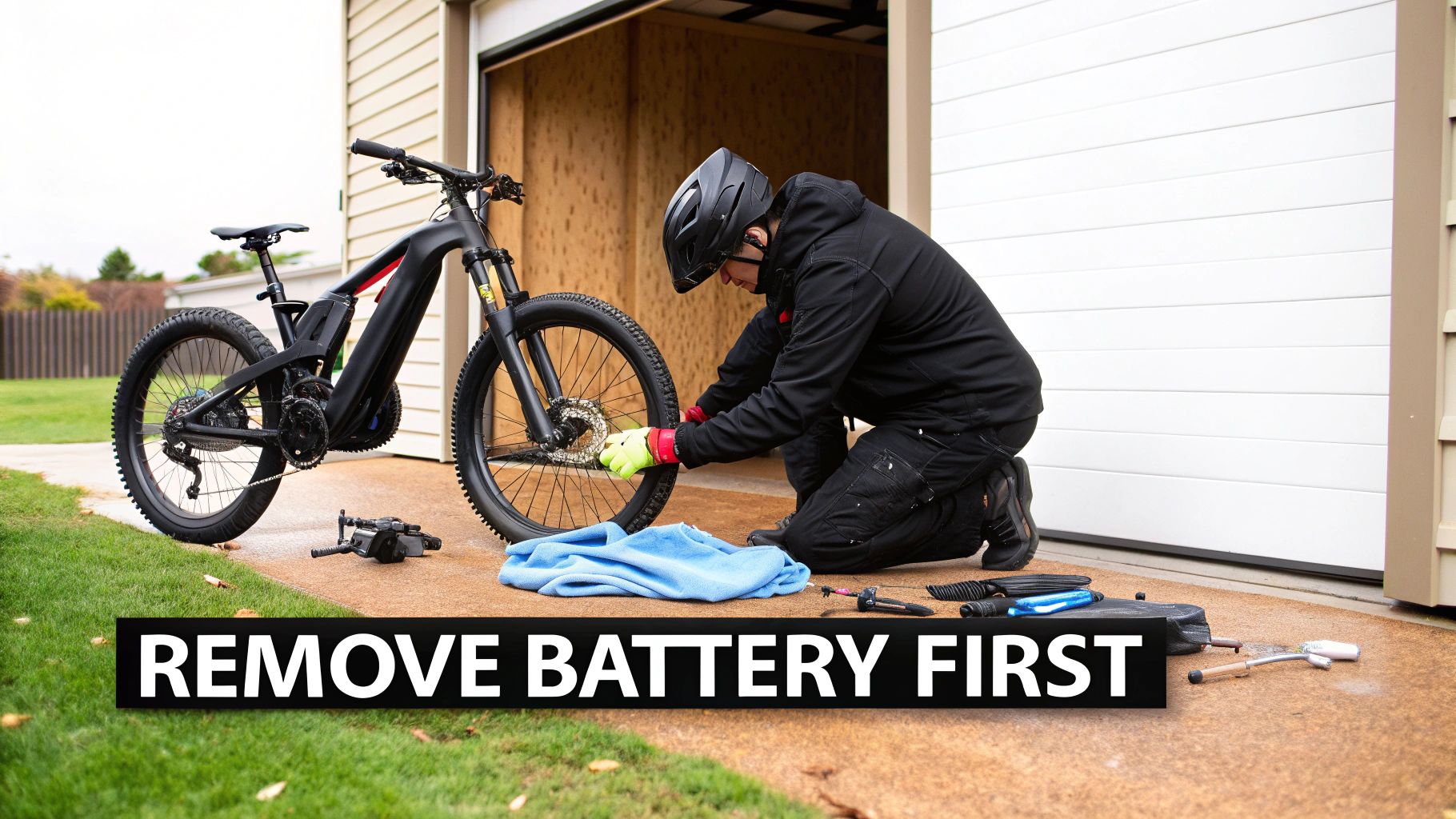
It happens. Even the most careful riders get caught in a sudden downpour or misjudge the depth of a massive puddle. If your e-bike takes a serious soaking, the most important thing is not to panic. Just act quickly and follow a few logical steps to prevent any long-term electrical damage.
Your first move is the most critical: turn off all the power. Right away. This single action is your best defense against a short circuit that could easily fry sensitive, expensive components. Wherever you are, stop and kill the power to the entire system.
With the power off, your next step is to remove the battery, if your model's design allows for it. Getting the main power source away from the rest of the bike's electronics is a huge step toward isolating and protecting your most valuable component.
The Drying and Draining Process
Now that the bike is powered down and the battery is out, your mission is simple: get everything dry. Grab a clean, lint-free towel and start wiping down every surface you can possibly reach.
- Key Focus Areas: Zero in on the most vulnerable spots. You'll want to be extra thorough when drying the battery housing, the electrical contact points (on both the battery and the frame), the charging port, and all the controls on your handlebars, including the display.
- Position for Drainage: Tip your bike to let gravity do some of the work. Tilting it or even carefully turning it upside down for a few minutes can help any trapped water escape from inside the frame or the motor casing.
The e-bike market is projected to hit USD 49.98 billion by 2035, and that incredible growth is fueled by riders demanding bikes that can handle real-world conditions. This is exactly why brands are so focused on IP ratings—building resilient machines that can stand up to the elements, even if they aren't fully waterproof. You can see more on this trend in this in-depth e-bike market analysis.
Patience is Your Best Tool: Whatever you do, don't rush to turn the bike back on or plug it in to charge. You have to wait. Give the bike and the battery at least 24 hours to air dry in a warm, dry place. A can of compressed air can be useful for gently blowing water out of tight spaces, but stay away from intense heat sources like a hair dryer.
After a full day of drying, take a close look at all the connections. If you see any signs of moisture or corrosion, don't proceed. But if everything looks clean and bone-dry, you can reinstall the battery and carefully try powering it on. If anything seems off—if it doesn't turn on or acts strangely—power it down immediately and call a professional.
For more tips on keeping your electrical system in top shape, check out our guide on maintaining electric bike chargers.
Protecting Your E-Bike Investment
An e-bike is a big investment, and really understanding its limits is the best way to make sure you get years of value out of it. It's not just about knowing the answer to "are electric bikes waterproof?" It’s about what you do with that knowledge before you ride and after you get back.
The first thing you should always do is read the user manual. Seriously. It’s the manufacturer talking directly to you, telling you exactly what you can and can’t do with your specific model when it comes to water. That manual trumps any general advice you'll find online. Even before you buy, you should be asking about the bike's IP rating to make sure it can handle the weather where you live.
Warranties and Water Damage
Here's something every e-bike owner needs to know: you have to understand what your warranty actually covers. Most of the time, a manufacturer's warranty is there to protect you from defects—things like faulty wiring from the factory or a controller that was bad from the start. What they almost never cover is damage you cause yourself.
Important Takeaway: Water damage from doing things you shouldn't—like pressure washing your e-bike or plowing through a creek that's deeper than the bike is rated for—is almost always considered user error. That means you'll be the one paying for those expensive repairs, not the company.
Good maintenance is your best line of defense. This means taking care of the whole bike, especially the battery, which is the heart of the entire system. To get a handle on that, check out our guide on how long e-bike batteries last and how you can push that lifespan even further.
Thinking about general care can also give you some good ideas. People who own other high-value two-wheelers often take extra steps to protect them, like applying a ceramic coating for motorcycles to shield the paint and components. When you become an informed owner, you're not just a rider anymore—you're the best protector of your own investment.
You've got the basics of IP ratings down, but let's be honest, real-world situations always bring up more specific questions. Here are some of the most common "what if" scenarios riders ask about, along with some straight-shooting answers.
Can I Use a Pressure Washer on My E-Bike?
I'm going to give you a hard no on this one. It’s incredibly tempting to just blast the mud off after a messy ride, but a pressure washer is your e-bike's worst enemy.
That high-pressure jet of water is powerful enough to push right past the seals and gaskets protecting your most sensitive electronics. Think of it like trying to open a can with a sledgehammer—you'll get it open, but you'll destroy what's inside. Water forced into the motor, battery contacts, or display will lead to corrosion and, very likely, a dead bike. Stick to a gentle garden hose, or better yet, a classic bucket and sponge.
Is It Safe to Charge My E-Bike Battery if It Is Still Wet?
Absolutely not. This is a huge safety hazard. Water and electricity are a dangerous mix, and trying to charge a wet battery can create a short circuit. At best, you'll fry the battery or charger. At worst, you could cause a fire.
Before you even think about plugging it in, make sure the battery, the charging port, and the charger's connector are all completely bone-dry. If you've been through a downpour, give it a thorough wipe-down and then let it air out for at least 24 hours. It’s better to be patient than to be sorry.
What Are the First Signs of Water Damage?
Water damage isn't always a sudden catastrophe. It's often a sneaky problem that starts small and gets progressively worse. You need to know what to look for.
Be on the lookout for these early red flags:
- A Flickering Display: If your screen is acting up—flickering, showing random error codes, or fading in and out—it's a classic sign moisture has gotten into the handlebar controls.
- Hesitant Power: Does the motor feel like it's stuttering or cutting out when you pedal hard? This could mean corrosion is starting to form on the controller or battery connections, messing with the power flow.
- A Battery That Won't Hold a Charge: If you notice a sudden, significant drop in your e-bike's range, it could be a sign that water has seeped into the battery casing and damaged the internal cells.
Do Waterproof Ratings Decrease Over Time?
They sure can. Think of the seals and gaskets on your e-bike like the weatherstripping on a car door. Over time, exposure to sunlight, heat, cold, and general vibration can cause them to dry out, crack, and become less effective.
This is exactly why a quick visual inspection now and then is a great habit to get into. Take a look at the seals around your battery housing, motor casing, and cable ports. Catching a cracked or worn-out gasket early lets you address a potential weak spot before it fails you in a rainstorm. A little proactive maintenance goes a long way in keeping your bike's defenses up.
Ready to ride with confidence, rain or shine? The models at eBike Gang are built with robust, water-resistant components designed to handle real-world conditions. Explore our collection and find your all-weather adventure bike today.