

At its core, an electric bike is a blend of traditional cycling mechanics and a sophisticated electrical system. The parts and accessories you choose define everything from your ride's feel to its practicality. The main power system is a trio: the motor, battery, and controller. These components work together to give you that amazing electric boost, while everything else—from the saddle to your pannier bags—tailors the experience to your needs.
Understanding Your E-Bike's Core Components
The best way to think about an e-bike's electrical system is to picture it as the bike's heart, brain, and muscles all working in perfect harmony. Just like the powertrain in a car, these three core parts—the motor, the battery, and the controller—are what determine your bike's personality. They dictate how fast it accelerates, how it climbs hills, and how far you can go on a single charge.
Getting a handle on this trio is the first real step to truly understanding your e-bike.
This diagram breaks down how the motor, battery, and controller team up to get you moving.
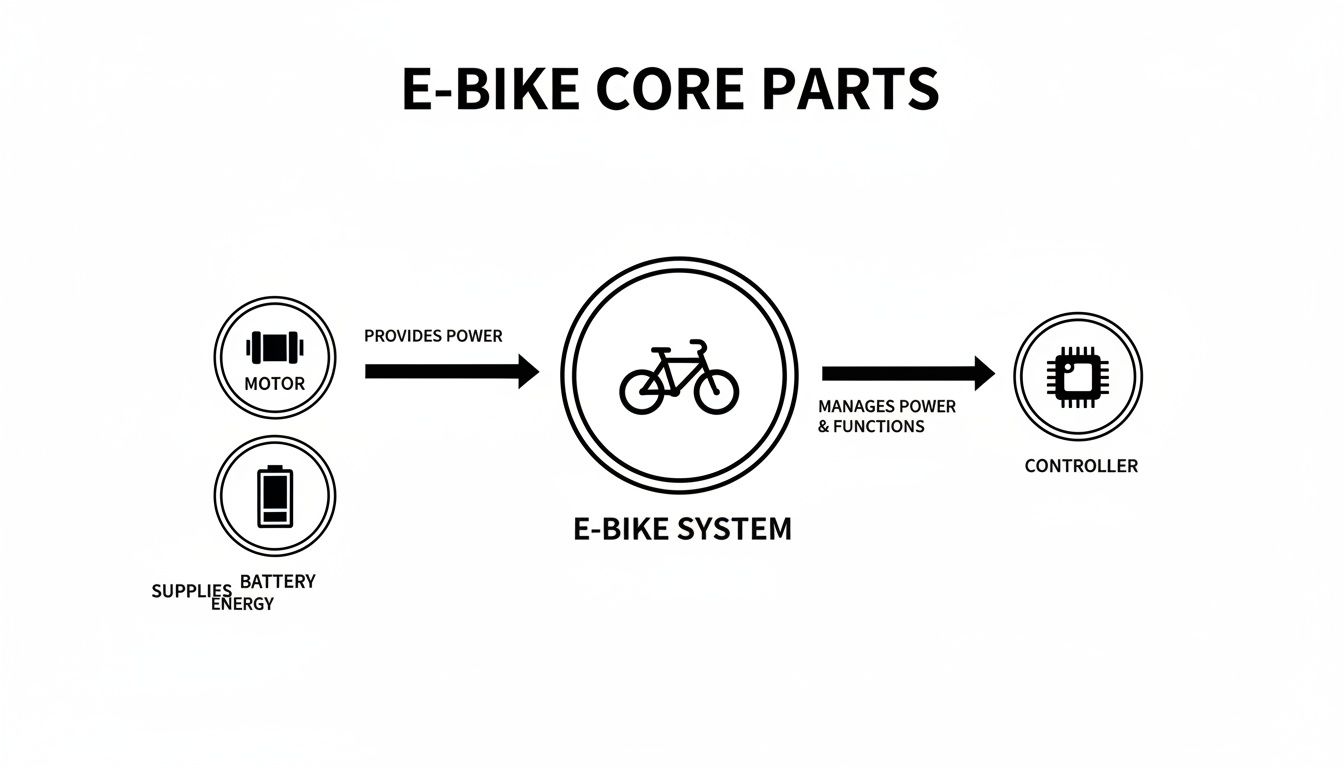
As you can see, the battery acts as the power source, sending juice to the controller. The controller then intelligently tells the motor exactly how much power to use, propelling you forward smoothly.
Let's quickly break down the most essential parts of an e-bike. This table gives you a simple analogy for each, explains its job, and tells you what to look for.
Core E-Bike Components at a Glance
| Component | Analogy | Key Function | What to Look For |
|---|---|---|---|
| Motor | The Engine/Muscles | Provides the electric-assist power to make pedaling easier and faster. | Type (Mid-drive vs. Hub), Power (Watts), and Torque (Nm). |
| Battery | The Fuel Tank | Stores the electrical energy that powers the motor. Dictates your range. | Capacity (Ah/Wh), Voltage (V), and Physical Fit on your bike frame. |
| Controller | The Brain | Manages the flow of power from the battery to the motor based on rider input. | Amperage Rating (must be compatible with both motor and battery). |
| Display | The Dashboard | Shows vital information like speed, battery level, and assist level. | Readability, Features (USB charging?), and User-Friendliness. |
This is just a high-level view, of course. Now, let's dig into what really makes these components tick.
The Motor: The Muscle of Your E-Bike
The motor is what puts the "e" in e-bike. It's the powerhouse that gives you the torque to flatten hills and make acceleration feel almost effortless. When you start exploring the world of electric bike parts and accessories, you'll quickly find there are two main flavors of motors.
-
Mid-Drive Motors: Think of this as your bike's transmission. It's mounted right at the center of the frame, where the pedals are, and it drives the chain directly. This setup is a dream for climbing steep hills because it uses the bike's own gears, letting the motor stay in its most efficient powerband. The result is a super natural and intuitive feel that's a lot like riding a regular bike, only better.
-
Hub Motors: This is more of a direct-drive system. Housed in the hub of the front or rear wheel, these motors are simpler, usually more affordable, and give you a distinct "push" or "pull" feeling. They're fantastic for commuters and anyone who wants straightforward power for cruising on flatter ground.
The Battery: The Fuel Tank
If the motor is the muscle, the battery is its fuel. The battery's capacity is what determines your e-bike's range—in other words, how many miles you can clock before you have to plug it in. When you're comparing batteries, there are two numbers that tell you almost everything you need to know.
-
Voltage (V): This is like the system's horsepower. A higher voltage, like the 48V systems you see on a lot of powerful e-bikes, means the battery can push more power to the motor, and faster. This translates directly to quicker acceleration and better hill-climbing muscle.
-
Amp-Hours (Ah): This number tells you the size of your fuel tank. A bigger Ah rating means the battery can deliver a steady current for a longer time, giving you more range. It's pretty simple: a 15Ah battery will generally take you farther than a 10Ah battery with the same voltage.
Multiply the volts by the amp-hours (V x Ah = Wh), and you get Watt-hours (Wh), which is the total energy capacity of your battery. Getting comfortable with these numbers is a game-changer, something we dive into deeper in our complete electric bike buying guide.
A key takeaway is that an e-bike's power system is a balanced equation. You can't just slap a bigger motor on without thinking about the other parts. A high-power motor needs a battery that can deliver the juice and a controller that can handle the load.
This constant push for better performance is why the e-bike industry is exploding. The global market is on track to jump from USD 61.89 billion in 2024 to an incredible USD 113.64 billion by 2030. More specifically, the motor segment alone is projected to grow at a rate of 14.7% every year through 2032, which shows just how fast this technology is moving.
The Controller: The Brain
The controller is the unsung hero of the whole operation. This little box of electronics is the brain of your e-bike, constantly managing the flow of electricity from the battery to the motor. It takes the signals from your throttle or pedal sensors and, in a split second, decides exactly how much power to deliver. It’s what makes your ride feel smooth and responsive instead of jerky and unpredictable.
The Mechanical Side of E-Bikes: Where Power Meets Pavement
An e-bike's motor and battery get all the attention, but they’re only half the story. All that instant power and speed would be pointless without a rock-solid mechanical foundation to put it on the road and bring you safely to a stop. These are the hardworking electric bike parts and accessories that have to deal with the unique demands of an electric ride.
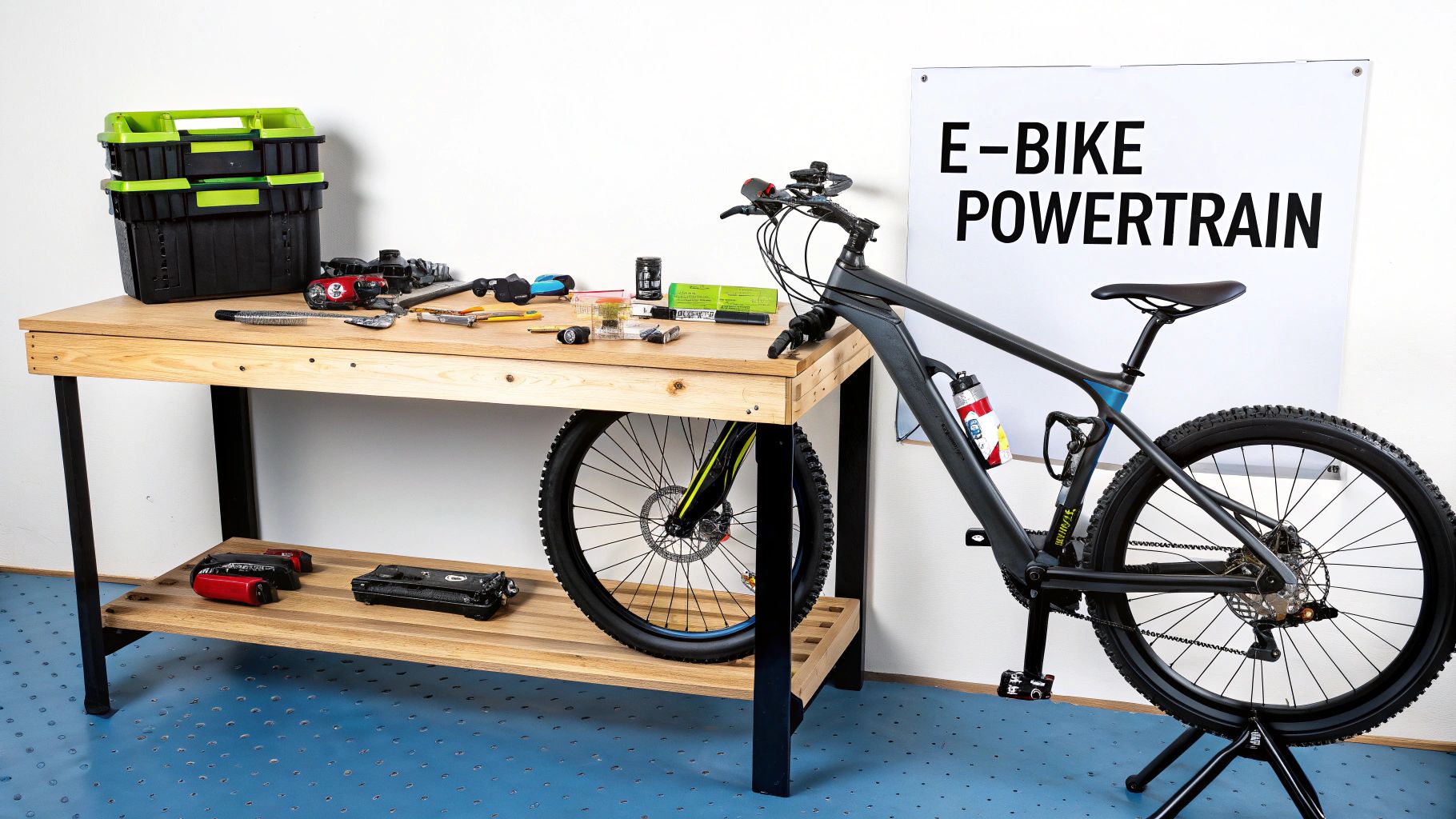
Think of these parts as the unsung heroes of your bike. They handle way more force and weight than the components on a regular bicycle, so their durability is critical for both performance and your safety.
Stopping Power: Brakes Built for E-Bikes
E-bikes are heavier and faster than their non-electric cousins. It’s simple physics—you need a lot more power to slow them down. That’s why great brakes aren't just a nice feature; they're an absolute must-have.
- Hydraulic Disc Brakes: These are the gold standard, and for good reason. Instead of a mechanical cable, they use brake fluid to clamp down on the rotor. This gives you incredibly strong, predictable stopping power with just a light pull of the lever—exactly what you need when slowing down a 50-70 lb machine from full speed.
- Mechanical Disc Brakes: While not quite as powerful as hydraulics, mechanical disc brakes are still a solid and reliable choice. They get the job done, are easier for the home mechanic to adjust, and are a massive step up from old-school rim brakes.
Your bike's battery can last for years with the right care, and you should think about your mechanical parts the same way. To get a feel for how long components can last, check out our guide on how long e-bike batteries last and apply that same maintenance mindset to your brakes, chain, and tires.
Drivetrain Durability
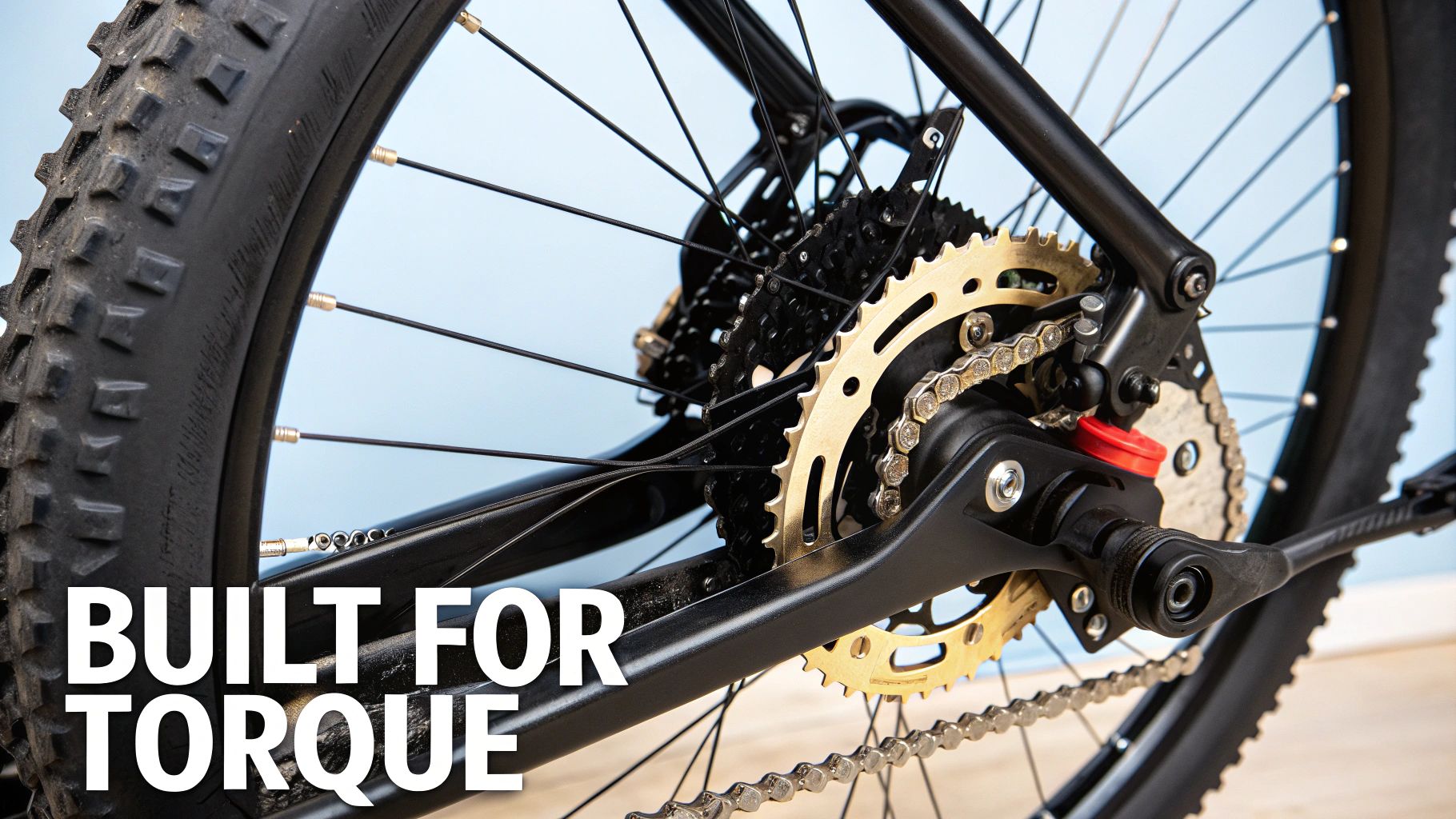
The drivetrain is everything that gets power from you and the motor to the rear wheel—the chain, gears (cassette), and front chainring. On an e-bike, this system is constantly under intense, high-torque pressure that can chew up standard bicycle parts in no time.
To solve this, manufacturers now make e-bike-specific drivetrain components. They’re built with stronger steel and more robust designs to keep the chain from stretching and the gear teeth from wearing down prematurely. A well-cared-for, e-bike-rated drivetrain means you get crisp, reliable shifting ride after ride.
A pro tip when shopping: always look for an "e-bike rated" or "e-bike specific" label on components. This is your signal that the part was engineered to handle the extra stress, saving you hassle and money on frequent replacements down the road.
Suspension for Control and Comfort
Ever hit an unexpected pothole at speed? Suspension is what smooths out those bumps and vibrations, giving you a far more comfortable and controlled ride. It’s even more important on an e-bike, where higher speeds can make every little bump feel much bigger.
- Front Suspension (Forks): This is what soaks up impacts on your front wheel. It keeps you steering true and saves your arms and wrists from getting rattled on rough roads.
- Rear Suspension (Shocks): You'll find these on full-suspension models. A rear shock does the same job for the back wheel, keeping it glued to the ground for better traction and an even plusher ride.
Good suspension can turn a jarring commute into a pleasant cruise and gives trail riders the confidence to take on more technical terrain.
Wheels and Tires: Your Connection to the Road
At the end of the day, your tires are the only part of the bike actually touching the ground. For e-bikes, they have to be seriously tough to handle the extra weight while providing a death grip on the pavement for both acceleration and braking. E-bike-rated tires have stronger casings to fight off punctures and use special rubber compounds that give you long-lasting durability without sacrificing traction. They're the final, crucial link in delivering your bike's power safely and effectively.
Choosing the Right Safety and Security Gear
Once you've got a handle on the core components that make your e-bike go, it’s time to shift gears and protect what matters most: you and your bike. Safety and security accessories aren't just nice-to-haves; they're essential electric bike parts and accessories for every single rider. This is the gear that gives you the confidence to ride further and the peace of mind to park it when you get there.
Think of this section as your playbook for gearing up the right way. We'll cover the crucial equipment that keeps you safe and seen, along with the heavy-duty hardware that makes sure your bike is still there when you come back for it.
Protecting the Rider: Helmets and Lights
Let's start with the non-negotiable: a high-quality helmet. Because e-bikes carry you along at higher average speeds than regular bikes, you simply need a higher level of protection. Your old standard bike helmet might not be up to the task.
Look for helmets with modern technology built specifically for absorbing impact and reducing dangerous rotational forces.
- MIPS (Multi-directional Impact Protection System): This is a game-changer. It’s a low-friction layer inside the helmet that allows it to slide just a tiny bit on impact, which can dramatically reduce the twisting forces that cause brain injuries.
- NTA 8776 Certification: This is a Dutch safety standard created specifically for e-bike helmets. It means the helmet has been tested to withstand impacts at higher speeds, giving you an extra layer of defense.
Lights are your next line of defense, making sure you can see the path ahead and that others can see you. E-bike lights generally come in two flavors. "Be-seen" lights are all about daytime visibility, using super-bright, flashing patterns to grab a driver's attention. For night riding, you'll need a powerful headlight with a focused beam to light up the road and reveal any nasty potholes or surprises.
Securing Your Investment: Choosing the Right Lock
Your e-bike is a prized possession, and protecting it from thieves requires a serious lock. That flimsy cable lock you have lying around? It won't do the job. Investing in a top-tier lock is one of the smartest moves you can make.
When you lock up, always secure the frame to something solid and immovable. If you can, run a secondary lock or cable through the front wheel—it’s a common target for thieves. A locked bike is a deterrent, but a well-locked bike tells a thief to go find an easier mark.
Different locks offer a different mix of security, weight, and convenience.
- U-Locks: Made from hardened steel, these are the gold standard for resisting cutting and prying. They’re a fantastic choice for high-risk areas, though they can be a bit heavy and bulky.
- Chain Locks: These use beefy, hardened steel links that are a nightmare for bolt cutters. Their flexibility is a huge plus, making it easier to lock your bike to signposts, railings, or other awkward objects.
- Folding Locks: A clever design that gives you the strength of a U-lock with the portability of a much smaller package. They fold up neatly and often mount right to your bike frame.
The massive surge in e-bike popularity, especially pedal-assisted models, is driving innovation across the board. The pedal-assist segment is on track to claim a 61.5% market share by 2025. This growth, particularly in markets like North America—which will make up 38.4% of the market—means we're seeing better and smarter accessories every year. You can discover more insights about the growing e-bike market trends and see what it means for riders like you.
In the end, picking the right safety and security gear comes down to your personal riding style and where you ride. An urban commuter faces different risks than a weekend trail enthusiast. By investing wisely in a certified helmet, powerful lights, and a robust lock, you’re setting yourself up for a safer, more secure, and way more enjoyable ride.
Upgrading for Comfort and Everyday Utility
Once you've got the safety and security gear sorted, it's time for the fun part: making your e-bike truly yours. This is where we move beyond the essentials and start tailoring the bike to fit your body and your lifestyle. Think of it as transforming a powerful machine into a personalized ride that feels like an extension of you.
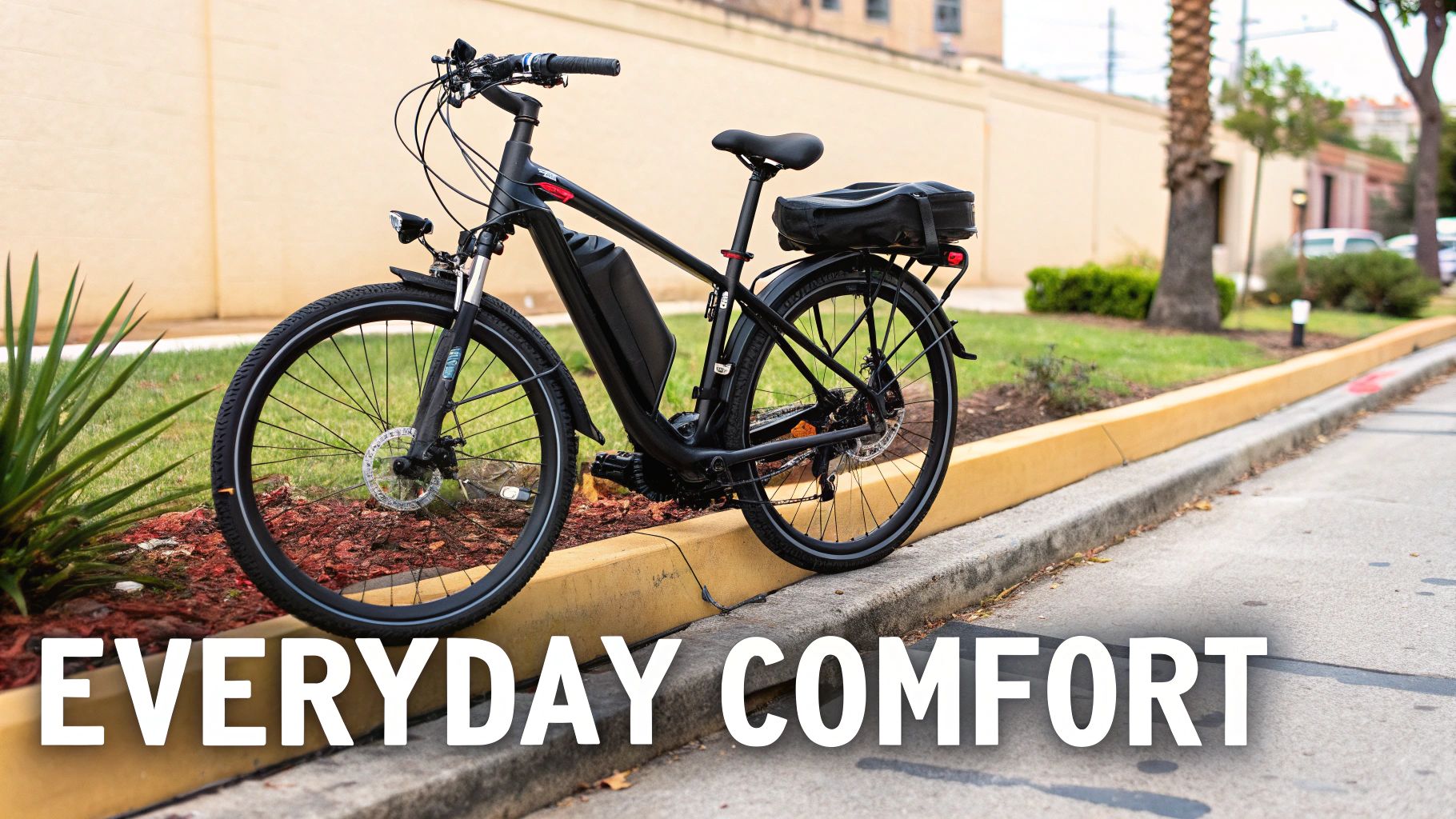
These are the electric bike parts and accessories that iron out the little annoyances and turn your bike into a seriously practical tool for commuting, grabbing groceries, or just disappearing on a long weekend ride. You'd be surprised how a few small tweaks can completely change how much you love riding.
Fine-Tuning Your Fit for Maximum Comfort
An uncomfortable ride is always a short one. If you’re ending your trips with an aching back, numb wrists, or a sore rear, those are tell-tale signs that your bike’s setup isn't quite dialed in for your body. The good news? These are some of the easiest problems to solve.
- Saddles: The saddle that came with your bike was designed for an "average" person—but who is that, really? Finding a saddle that actually fits the width of your sit bones and your riding style might just be the single best comfort upgrade you can make. It's a game-changer.
- Handlebar Grips: Numb hands are a classic complaint from riders. Switching to ergonomic grips, especially those with a wider platform for your palms, helps spread the pressure out. This keeps the blood flowing and stops that annoying tingling on longer rides.
- Adjustable Stems: Feeling too stretched out, like you're reaching for the handlebars? Or maybe you feel too hunched over? An adjustable stem is the perfect fix. It lets you bring the handlebars up, back, or to a different angle for a more relaxed, upright posture.
Think of your bike’s contact points—the saddle, grips, and pedals—as the conversation between you and your bike. Getting this dialogue right is the secret to all-day comfort and preventing those nagging aches and pains.
Each of these parts helps you find that sweet spot, turning a great e-bike into your e-bike.
Adding Everyday Practicality with Utility Accessories
This is how you unlock your e-bike’s potential to replace your car for most trips. With a few smart accessories, your bike is ready to haul the weekly shopping, get you to work on a drizzly morning, and make your daily routine a whole lot smoother.
The idea is to add a ton of function without adding any fuss.
- Racks and Panniers: A solid rear rack is the starting point for carrying just about anything. Add a set of pannier bags (think of them as saddlebags for your bike), and suddenly you have a massive amount of storage for groceries, your work laptop, or a change of clothes.
- Fenders: If you plan on riding in anything other than perfect sunshine, fenders (or mudguards) are a must. They're the unsung heroes that stop that grimy rooster tail of road water from spraying all up your back and clothes.
- Phone Mounts: A good, sturdy phone mount is essential for using GPS or tracking your ride stats. It keeps your screen in your line of sight so you can keep your hands on the bars where they belong.
- Bottle Cages: This one is simple but crucial. Staying hydrated is key, and having a water bottle within easy reach means you’ll actually remember to drink it.
Before you click "buy" on any accessory, you have to be sure it will fit your bike. Racks and fenders are especially picky, as they need specific mounting points on your e-bike's frame to be installed correctly.
To help you out, we've put together a quick checklist. This little guide will help you confirm that the gear you're eyeing will work perfectly with your eBike Gang model.
Accessory Compatibility Checklist
| Accessory Type | Key Compatibility Check | eBike Gang Model Tip (MB750, UGBK2, etc.) |
|---|---|---|
| Rear Racks | Look for threaded eyelets (mounting holes) on the frame near the rear axle and up on the seatstays. | The UGBEST MB750 includes built-in mounting points, making rack installation straightforward. |
| Fenders | Make sure your frame and fork have enough clearance and the right mounting eyelets. Your tire width is critical. | Measure your tire width first; the fender needs to be slightly wider than the tire for proper coverage. |
| Saddles | Most modern saddles use a universal rail system that fits perfectly on standard seatposts. | All eBike Gang models use standard saddle rails, giving you a huge range of upgrade options. |
Taking a moment to double-check these details ensures you get the right part the first time, getting you back out on the road faster and with less hassle.
How to Source and Install New E-Bike Parts
Upgrading or repairing your e-bike is one of the most rewarding parts of owning one. It gives you the power to customize your ride and take charge of its long-term health. This guide will walk you through finding the right electric bike parts and accessories and show you how to tackle installations with confidence, from the easy wins to knowing when it’s time to call in a pro.
The biggest headache in DIY maintenance? Compatibility. There’s nothing more deflating than getting a shiny new part in the mail, only to discover it doesn’t fit. Before you click "buy," the first and most critical step is confirming that a new brake caliper, fender, or even a simple grip will work with your bike's specific frame and mounting points.
Finding the Right Part for Your E-Bike
Sourcing the correct component is all about knowing exactly what you have to begin with. You wouldn't walk into a car shop and ask for a "Ford part"—you'd need the model, year, and engine size. Your e-bike is the same way.
-
Start with the Manufacturer: The surest bet for compatible parts is going directly to the source. Brands like eBike Gang have dedicated parts pages with components that are guaranteed to fit specific models. This completely removes the guesswork.
-
Check the Model Numbers: Take a close look at the part you're replacing. Components like brake calipers, shifters, and derailleurs almost always have a model number stamped or printed right on them. A quick search for that number will point you toward an identical replacement or its modern equivalent.
-
Measure Twice, Order Once: For accessories like racks or fenders, break out the tape measure. Check the distance between your frame’s mounting eyelets and confirm your tire width and clearance. For universal-fit accessories, these real-world measurements are your best friend.
This constant need for compatible parts is a major engine for the global e-bike market. The Asia-Pacific region holds a staggering 76.6% of the market share, fueled by massive adoption. China alone has over 300 million e-bikes on its roads, which creates a huge, ongoing demand for reliable replacement parts to keep that fleet rolling.
DIY Installations You Can Tackle at Home
Once you have the right part, you can handle a surprising number of installations with just a few basic tools. These jobs are perfect for building your skills and saving you a trip to the bike shop.
- Grips and Pedals: These are often the easiest swaps. Most grips just slide on and are secured with a small clamp. Pedals simply unscrew from the crank arms—just remember the left pedal has a reverse thread!
- Saddles: Changing a saddle is usually as simple as loosening one bolt on the seatpost clamp, sliding the old one off, and putting the new one on.
- Tires and Tubes: Learning to fix a flat is a rite of passage for any cyclist. With a good set of tire levers, you can knock out this common repair in minutes.
- Bolt-On Accessories: Things like bottle cages, phone mounts, and many racks are designed to bolt right onto the pre-existing mounting points on your frame. It doesn't get much simpler than that.
A great place to start is by getting a quality set of metric Allen keys (hex wrenches) and a dedicated pedal wrench. With just these two tools, you can perform a huge range of basic e-bike maintenance and installation tasks.
Knowing When to Call a Professional
While many jobs are perfect for the home mechanic, some are absolutely best left to the experts. Knowing your limits is the key to avoiding expensive mistakes or creating a safety issue.
- Electrical System Work: Unless you are a trained technician, never try to modify or repair your motor, controller, or battery wiring. A slip-up here can permanently fry your bike's most valuable components. Our guide on electric bike chargers highlights just how important it is to use certified equipment to protect your system.
- Hydraulic Brake Bleeding: Servicing hydraulic brakes requires special tools and a very precise procedure to purge air bubbles from the fluid lines. If you get it wrong, your brakes could fail completely.
- Wheel Truing: Straightening a wobbly wheel involves carefully adjusting the tension of each spoke. It's more art than science and is best handled by someone with years of experience.
- Complex Drivetrain Adjustments: While tweaking a derailleur is manageable, bigger jobs like replacing a cassette or bottom bracket require specialized tools and know-how to get right.
By starting with simple upgrades and knowing when to tag in an expert, you can keep your e-bike running in peak condition for years to come.
Common Questions About E-Bike Parts and Accessories
When you dive into the world of electric bikes, a few questions always seem to pop up. It doesn't matter if you're a brand new rider or a seasoned pro looking for the next upgrade—getting clear answers is key to keeping your bike in top shape.
Let's walk through some of the most common questions we get from riders. Think of this as your go-to guide for making smart, confident choices about your e-bike.
How Do I Find a Compatible Replacement Battery?
This is probably the single most important replacement you'll ever make for your e-bike. Getting it right comes down to three things: matching the voltage (V), the physical size and mount, and the type of electrical connector.
Mismatched voltage is a surefire way to fry your bike's electronics. It’s like plugging a 12-volt car accessory into a 240-volt wall socket—it’s not going to end well. You can permanently damage your motor and controller in an instant.
The absolute best approach is to get an original equipment manufacturer (OEM) battery directly from your bike's brand. It's the only way to guarantee a perfect fit, electronically and physically, which protects your bike and keeps your warranty intact.
If you have to look at third-party options, be incredibly careful. You need to triple-check that the voltage, the mounting bracket, and the discharge connector are an exact match for your original. Honestly, we always recommend sticking with official parts for safety and longevity.
Can I Upgrade My E-Bike Motor for More Power?
It's tempting to think about dropping in a bigger motor for a speed boost, but this is a much trickier upgrade than it seems. An e-bike's electrical system is a finely tuned trio: the motor, controller, and battery all work together. A more powerful motor needs a controller and battery that can handle the extra electrical demand.
If they aren't perfectly matched, you risk overheating, system failures, or a completely dead bike. To do it right, a motor upgrade almost always means replacing the entire powertrain at once. On top of the cost, a major modification like this will instantly void your manufacturer's warranty.
If you're craving more performance, a much better bet is to look at approved upgrades like better tires and brakes, or simply start looking at a more powerful e-bike model that was built for that kind of output from day one.
What Are the Most Important Accessories for a New Rider?
If you're just getting started, a few accessories are non-negotiable. Nailing these three basics will set you up for a safe and awesome riding experience.
- A Certified Helmet: Your head is worth protecting. Invest in a good helmet, and keep an eye out for models with MIPS technology or an NTA 8776 e-bike certification, which are designed for higher speeds.
- Powerful Lights: A good set of front and rear lights is a must. They don't just help you see where you're going—they make sure cars and other people see you, day or night.
- A Robust Lock: E-bikes are an investment, and a solid lock is the best insurance policy you can buy. A heavy-duty U-lock or a thick chain lock is your best defense against theft.
Once you have those essentials squared away, you can start thinking about comfort and convenience with things like a better saddle, fenders for rainy days, or a cargo rack to haul your stuff.
How Often Should I Replace Parts Like Chains and Brake Pads?
E-bikes are heavier and have more torque than regular bikes, which means they put a lot more stress on mechanical parts. Things just wear out faster, so staying on top of maintenance is critical.
Give your brake pads a quick visual check every month. Depending on how and where you ride, you might need to replace them as often as every 500 miles. Your chain is under a lot of tension, so use a chain-checker tool every few hundred miles to see if it's stretched. To avoid wearing down your more expensive cassette and chainring, plan on swapping in a new chain every 1,000 to 1,500 miles.
The best way to get the most life out of your drivetrain? Keep it clean and keep it lubed.
Ready to find the perfect parts and accessories for your ride? At eBike Gang, we offer a full selection of high-quality, manufacturer-approved components guaranteed to fit your bike and keep it running like new. Explore our collection and upgrade your ride today.