

When it comes to storing lithium batteries, the sweet spot is a 40-60% charge level, kept in a climate-controlled spot somewhere between 32°F and 77°F (0°C to 25°C), and well away from anything flammable. Following these rules isn't just about making your battery last longer—it’s a fundamental safety practice that protects you and your property from fire.
Why Proper Lithium Battery Storage Is Not Optional
After a great ride, the easiest thing to do is plug your e-bike battery in and walk away. But where and how you store that battery is one of the most important safety decisions you can make. Getting it wrong isn't just bad for the battery's health; it's a serious fire risk with some very real consequences.

The Sobering Reality of Battery Fires
The numbers don't lie, and they paint a stark picture. In 2023, fire services in the UK responded to 270 fires caused by electric bikes. That's a massive 71% jump from the 158 fires recorded in 2022.
Even worse, lithium-ion batteries that are thrown away improperly are thought to cause around 201 waste fires across the UK every year. The cost to the economy? Roughly £158 million annually.
These aren't just statistics; they represent a dangerous disconnect between how quickly we're adopting this technology and how little many people know about the risks. Ignoring storage guidelines is a gamble with devastating potential.
The Science Behind Safe Storage
So, what makes these batteries so touchy? At their core, lithium-ion batteries are tiny powerhouses, packed with energy. Inside each cell is a finely tuned chemical balance that makes them so efficient. But that balance is easily thrown off by a few key things:
- Extreme Temperatures: Too much heat can kickstart a dangerous chemical reaction called thermal runaway. It’s a self-sustaining chain reaction that can quickly lead to a fire or an explosion. On the flip side, freezing temperatures can permanently wreck the battery's internal parts.
- Improper Charge Levels: Leaving a battery at 100% or letting it sit completely dead for a long time is incredibly stressful for the cells. A full charge cranks up the internal pressure, while a zero charge can degrade the cells so much that they become unsafe to recharge.
- Physical Damage: A drop, a puncture, or even a significant dent can damage the thin separators inside that keep the positive and negative sides apart. If they touch, it creates an internal short circuit—a fast track to a fire.
A crucial first step is simply respecting the power you're dealing with. It helps to start by understanding the specific hazard classifications for lithium-ion batteries, which lays out why they demand such careful handling. Think of this guide as your go-to manual for protecting your gear, your home, and yourself by mastering these three pillars of safe storage.
Creating the Ideal Storage Environment for Your Battery
Your battery's storage location is its first and best line of defense against degradation and potential hazards. It's easy to just think "a cool, dry place" is enough, but the specifics of that environment are what really matter. The wrong spot can silently chip away at your battery's health or, in a worst-case scenario, create a genuinely dangerous situation.
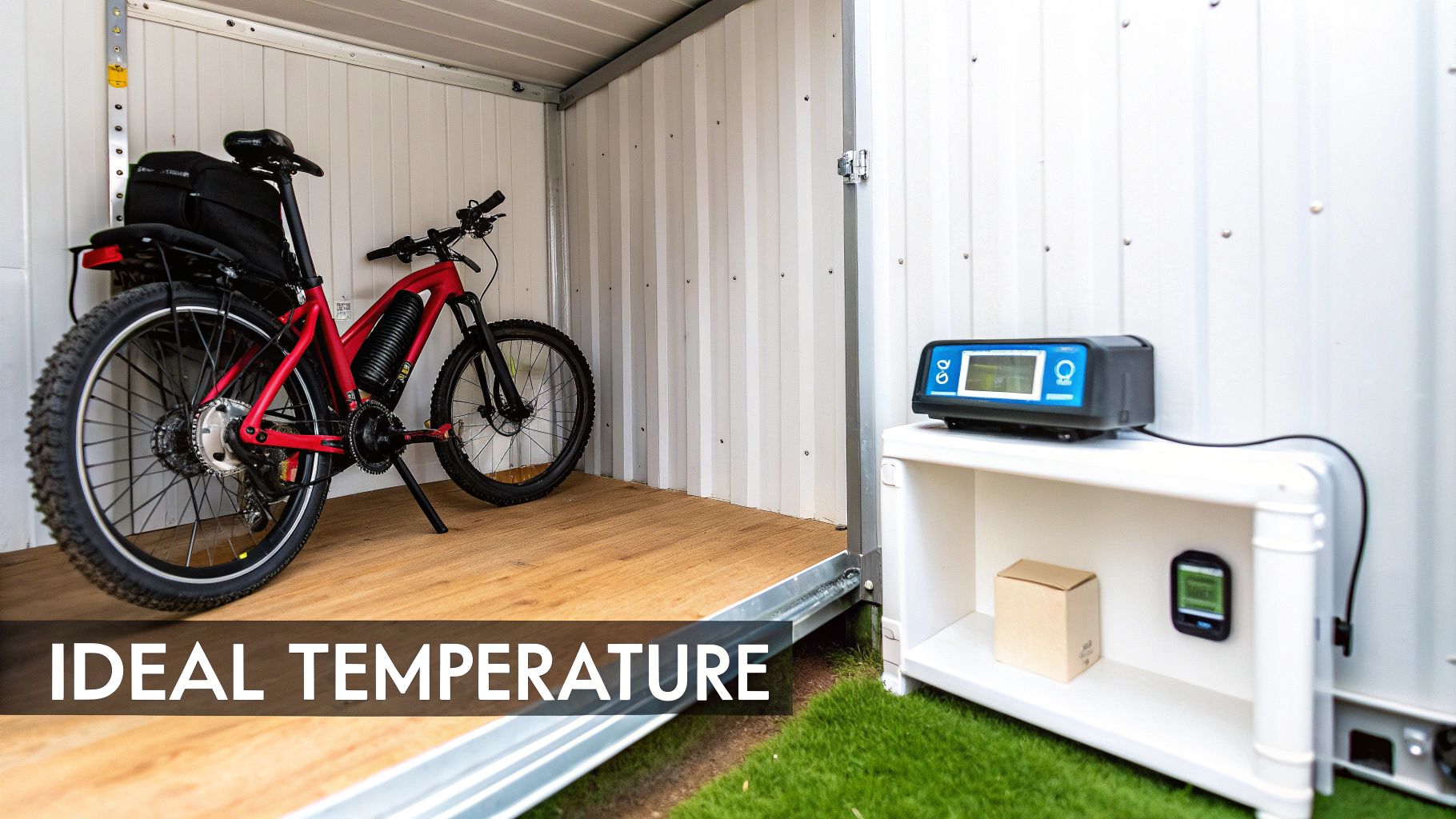
This is where a lot of people go wrong right from the start. They assume the garage is the default safe space. But a garage that freezes solid in the winter or turns into an oven in the summer is one of the worst places you could possibly put your battery. Extreme temperatures are the sworn enemy of lithium-ion chemistry, rapidly speeding up internal wear and dramatically increasing risks.
The Goldilocks Zone: Temperature and Humidity
Think of your battery as a sensitive piece of electronics, because that's exactly what it is. It's happiest in stable, moderate conditions—much like we are. Nailing the right temperature and humidity isn't just a suggestion; it’s non-negotiable for both safety and getting the most life out of your battery.
The sweet spot for storing a lithium-ion battery is between 32°F and 77°F (0°C to 25°C). Letting it get much hotter than that can kick off unwanted chemical reactions inside, leading to permanent capacity loss and a higher chance of thermal runaway. On the flip side, freezing temperatures can cause physical damage to internal components, making the battery unreliable and dangerous to charge later on.
Humidity is the other critical piece of the puzzle. You should aim for a relative humidity of around 50%. A damp, musty basement can cause corrosion on the battery's contacts and internal circuitry. On the other hand, an environment that’s bone-dry can increase the risk of static electricity, which could potentially create a spark and a short circuit. A climate-controlled room, a dry part of your basement, or even an insulated closet inside your home are far better bets than an uninsulated shed or garage.
Key Takeaway: Consistency is king. A battery stored at a stable 68°F (20°C) will stay healthier far longer than one that endures daily swings from 40°F to 90°F, even if the "average" temperature looks okay on paper.
For quick reference, here's a rundown of the ideal conditions.
Optimal Lithium Battery Storage Conditions At a Glance
This table summarizes the ideal environmental parameters for safely storing your eBike's lithium-ion battery to prevent degradation and reduce fire risk.
| Parameter | Ideal Range | Why It Matters | Practical Tips |
|---|---|---|---|
| Temperature | 32°F - 77°F (0°C - 25°C) | Prevents accelerated chemical degradation, capacity loss, and thermal runaway risk. | Store indoors in a climate-controlled space. Avoid attics, garages, and direct sunlight. |
| Humidity | ~50% Relative Humidity | Protects electrical contacts from corrosion (too high) and mitigates static discharge risk (too low). | Use a dehumidifier in damp areas. Avoid storing near bathrooms or in damp basements. |
| Location | Away from flammables and exits | Reduces fuel sources in case of a failure and ensures escape routes remain clear. | Place in a metal cabinet or on a concrete floor, far from paper, chemicals, or gasoline. |
| Ventilation | Good airflow | Helps dissipate minor heat and prevents the unlikely buildup of any off-gassing. | Don't store it in an airtight container. Ensure there's space around the battery. |
Keeping these simple parameters in mind is the single most effective thing you can do to protect your battery and your home.
Building a Safe Storage Haven
Once you’ve found a location with the right climate, the next step is creating a dedicated and secure storage spot. This is about more than just clearing a space on a shelf; it's about proactively minimizing every possible risk.
First, your chosen spot needs adequate ventilation. This helps dissipate any minor heat the battery might generate while sitting and prevents any potential buildup of off-gassing, however unlikely that may be.
Most importantly, the storage area must be kept completely clear of flammable materials. Stashing your battery next to paint thinners, oily rags, gasoline cans, or even just big stacks of cardboard is asking for trouble. If the battery were to fail, those items would act as fuel, turning a small, contained incident into a major fire.
Here are a few practical tips for setting up your storage zone:
- Use a Metal Cabinet or Shelf: Always store the battery on a non-combustible surface like metal or even ceramic tile. Stay away from wooden shelves, carpet, or placing it directly on a concrete floor where moisture can seep in.
- Give It Breathing Room: Don't cram the battery into a tight space. Make sure there’s clear space around it on all sides to allow for airflow and to keep it isolated from anything else.
- Keep It Away From Exits: Never, ever store a lithium-ion battery in a place that could block an escape route, like a hallway or right next to your front door.
The Professional Disconnect and What It Means for You
You might be shocked to learn that this fundamental knowledge isn't as common as it should be, even among safety professionals. A recent survey of over 500 organizations revealed that a staggering 71% had not updated their fire risk assessments to properly account for the dangers of lithium-ion batteries.
This points to a massive awareness gap, which puts the responsibility squarely on us as owners. For eBike riders, this means being proactive—buying from reputable brands that prioritize safety and following storage guidelines to the letter. These practices are your best defense. You can learn more about these safety gaps and why lithium-ion batteries are a growing fire risk in professional settings.
By creating a stable, secure, and smart environment, you're not just storing a battery—you're actively managing risk and protecting your investment.
Preparing Your Battery for Safe Storage
Before you tuck your e-bike battery away for a while—whether it's for a few weeks or the entire off-season—a little prep work goes a long way. This isn't just about finding a good spot on a shelf; it's about setting the battery up for a healthy hibernation to maximize its lifespan and ensure it's ready to roll when you are.
Think of it like a pre-flight check. Taking these few simple steps can prevent the slow, silent damage that often happens when a battery is stored incorrectly.
The "Goldilocks" Charge Level
One of the biggest mistakes people make is misunderstanding the ideal State of Charge (SoC) for storage. Your first instinct might be to charge it to 100% so it's ready to go, or maybe let it run down to empty. Turns out, both are terrible for the battery's health.
Storing a lithium-ion battery at a full 100% charge puts a ton of stress on its internal chemistry. The high voltage actually accelerates degradation, permanently chipping away at its total capacity. It’s like stretching a rubber band to its absolute limit and leaving it that way for months—it’s never going to be as snappy again.
On the flip side, leaving a battery completely dead (at or near 0%) is even more dangerous. When the voltage gets too low, the battery can slip into a deep discharge state, which can cause irreversible damage. In some cases, it can completely kill the battery, making it unable to ever hold a charge again.
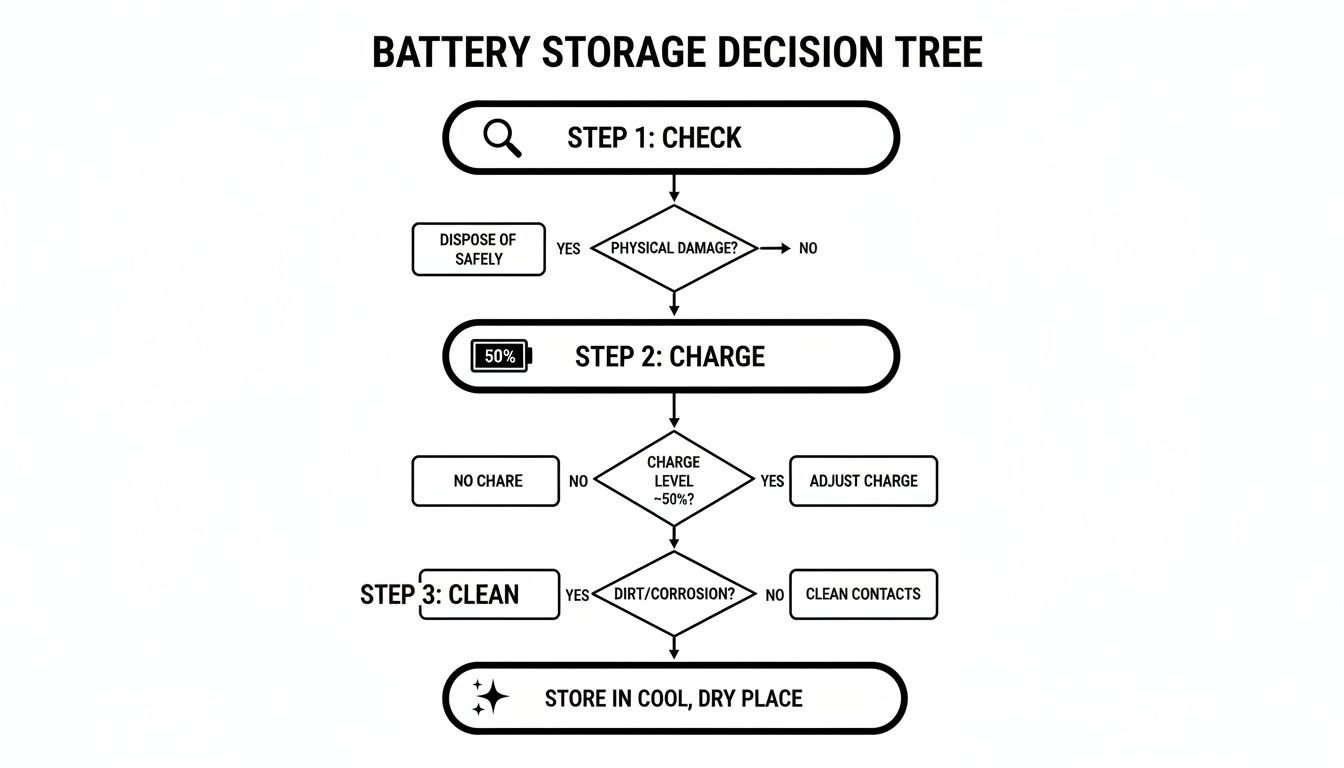
Expert Tip: The sweet spot for long-term storage isn't full or empty, but right in the middle. Aim for a State of Charge between 40% and 60%. This partial charge minimizes internal stress, dramatically slows the aging process, and keeps the battery in a stable, safe state.
How to Hit That Perfect 40-60% Mark
Getting your battery into that ideal range is easier than it sounds. Most e-bike displays give you a good idea of the charge level with bars or a percentage.
If your battery is fully charged, just pop it on the bike and go for a short, easy ride. You're not trying to set any records here; a casual 15-20 minute spin around the block is usually all it takes to burn off enough juice to land in that 40-60% window.
What if your battery is almost dead? Just plug it in and keep an eye on it. For most standard chargers, about 60 to 90 minutes is enough to bring a nearly empty battery up to the target range. Whatever you do, don't just leave it charging overnight before putting it away.
For those who like precision, you can consult a detailed e-bike battery voltage chart to match the exact voltage reading to a 50% charge for your specific battery.
The Pre-Storage Check-Up
Before you store it, give the battery a quick physical once-over. This is your best opportunity to catch small problems before they become serious hazards.
First, give the outer casing a good look. You're searching for any signs of physical damage:
- Cracks or Dents: A seemingly minor crack in the plastic could signal serious internal damage from a fall.
- Swelling or Bulging: This is a major red flag. A swollen battery case means gases are building up inside, creating a fire risk. If you see any bulging, that battery needs to be safely and immediately taken out of service.
- Leaks: Look for any crystalized residue or moisture around the seams, which indicates a leaking cell.
Once you've confirmed the casing is sound, grab a clean, dry cloth and give the whole thing a wipe-down. Pay special attention to the metal electrical contacts. Dust, grime, and moisture can build up on these terminals over time.
Dirty contacts can cause a poor connection later on or, in a worst-case scenario, create a pathway for a slow electrical short. A quick wipe ensures the connections are clean and ready for action when riding season starts up again. It’s a small step, but a crucial one for proper battery care.
Choosing The Right Physical Protection For Your Battery
It’s easy to focus on charge levels and temperature, but where you physically put your battery is just as important. Leaving a high-tech, energy-dense lithium battery sitting unprotected on a concrete floor or a cluttered metal shelf is just asking for trouble. Proper physical protection is your first line of defense against accidental drops, impacts, and short circuits—any of which could trigger a catastrophic failure.
For quick, short-term storage, the original box your battery came in is actually a decent option. Manufacturers design that packaging with custom foam inserts to cushion the battery during shipping. If you’ve still got it, don't throw it out! It provides a simple but effective barrier against minor bumps and keeps the terminals safely isolated.
Selecting Your Storage Solution
Once you move beyond the original packaging, you'll find a range of dedicated storage solutions that offer much greater peace of mind. The whole point is to put the battery in something that protects it from the outside world and, in a worst-case scenario, contains a potential fire from the inside.
Let's start with the basics: your shelving. A wooden shelf is literally fuel, and a concrete floor can expose your battery to dampness. The best choice is a sturdy, non-combustible surface like a metal shelf or cabinet. This simple decision removes a major fuel source from the immediate area.
For an even greater safety buffer, many eBike owners and businesses invest in specialized gear. Here are the most common choices:
- Fire-Resistant Battery Bags: Often called "LiPo bags," these are made from fiberglass materials designed to contain flames and intense heat for a short time. They’re an affordable way to isolate individual batteries, especially if you have more than one.
- Metal Ammo Cans: This is a popular DIY solution that can work well. The crucial modification here is to remove the rubber gasket from the lid. This allows any gases to vent during a thermal event, preventing the can from becoming a pressurized bomb.
- Dedicated Battery Cabinets: If you have multiple expensive batteries or just want the highest level of protection, fire-rated cabinets are the gold standard. For commercial or serious enthusiast setups, specialized laboratory safety cabinets provide incredibly robust, certified protection.
Choosing the right option depends on your specific needs, budget, and how many batteries you're storing. The table below breaks down the pros and cons of each solution.
Comparing Battery Storage Solutions
| Storage Solution | Safety Level | Estimated Cost | Best For |
|---|---|---|---|
| Original Packaging | Low | Free (with battery) | Very short-term, temporary storage. |
| Fire-Resistant Bag | Medium | $15 - $40 | Home users with one or two batteries needing basic containment. |
| Modified Ammo Can | Medium-High | $20 - $50 | DIY-savvy individuals looking for robust, affordable containment. |
| Fire-Rated Cabinet | High | $500 - $3,000+ | Businesses, enthusiasts, or anyone storing multiple high-value batteries. |
Ultimately, any of these dedicated options is a significant improvement over leaving a battery exposed. A simple fire-resistant bag is a smart, low-cost investment for any eBike owner.
The Importance Of Separation And Isolation
If you have more than one eBike battery, the absolute worst thing you can do is pile them all together in a single box. A failure in one battery can easily set off a chain reaction—a terrifying event called thermal propagation—where the intense heat causes the next battery to fail, and so on.
Always store multiple batteries with physical separation between them. Use individual fire-resistant bags, or place them on different shelves within a metal cabinet. This strategy of compartmentalization is a core principle of hazardous material storage, and it’s what keeps a single battery failure from becoming a much larger disaster.
This principle also applies to the battery’s surroundings. Make sure your storage spot is clear of anything combustible. Storing your battery next to gasoline cans, propane tanks, oily rags, or stacks of cardboard is a recipe for disaster. Your goal is to create a sterile, isolated safety zone around the battery itself.
Long-Term Storage and Maintenance Routines
Storing your e-bike for a weekend is simple enough, but what about putting it away for the whole winter? That requires a real strategy. When a battery just sits for months on end, it falls victim to a slow, silent killer: self-discharge. It's a natural process where the battery slowly loses its charge, and if you just forget about it, that drain can cause permanent damage.
Think of a maintenance routine not as a chore, but as a quick health check for one of the most expensive parts of your bike. It's the best way to make sure your battery wakes up ready to roll when the good weather returns. Ignoring it is a surefire way to shorten its lifespan, or worse, kill it completely.
The Periodic Charge Check
The single most important thing you can do during long-term storage is to check on your battery’s charge level every now and then. Even under perfect conditions, a lithium-ion battery will lose a bit of its juice each month. Your job is to make sure it never drops so low that it enters a deep discharge state—a condition it might never recover from.
I recommend setting a calendar reminder to check the battery every one to two months. Most have an indicator button you can press to see the current level. If you see it's dipped to around 30% or lower, it's time for a little boost.
You're not aiming for a full 100% charge here. Just plug it in for an hour or so—long enough to get it back into that sweet spot of 40-60%. This simple step resets the self-discharge clock and keeps the internal cells happy and stable.
Expert Tip: Never, ever let a battery sit completely dead for a long time. A deep discharge can trigger irreversible chemical changes inside the cells. This means a major loss of capacity and can even make the battery unsafe to charge again.
Performing Routine Visual Inspections
Every time you pull the battery out to check its charge, give it a quick once-over. This takes less than a minute and can help you spot a physical problem before it becomes a genuine hazard. You're looking for small changes that hint at trouble brewing inside the casing.
Here's my personal checklist:
- Subtle Swelling or Bulging: Run your hand across the flat surfaces. Does it feel puffy or bowed out, even slightly? That's a huge red flag for internal gas buildup. A swollen battery is a dangerous battery, and you should stop using it immediately.
- Cracks in the Casing: Check the seams and corners for any stress fractures or cracks. A compromised case can let moisture in, and that’s a direct path to a short circuit.
- Signs of Leaks: Look for any crusty, crystalized residue or damp spots, especially around the charging port. This often means an internal cell is leaking electrolyte—a serious fire and chemical hazard.
This kind of proactive care is fundamental to understanding how long do e-bike batteries last and hitting those upper-end lifespan numbers. Catching a small crack or the first sign of swelling gives you the chance to deal with it before a minor issue turns into a catastrophic failure.
Emergency Preparedness: What to Do If Things Go Wrong
While we spend a lot of time on prevention, you absolutely have to know what to do if the worst happens. It’s a non-negotiable part of owning a lithium battery. A failing battery will often give off warning signs before it goes critical, and catching them early gives you a precious window to react.
Your own senses are your best first line of defense. Keep an eye (and nose) out for any unusual changes with your battery, even when it’s just sitting in storage.
Spotting The Warning Signs
A healthy battery should be completely quiet and stable when stored. If you notice any of the following, you've got a potential emergency on your hands. Treat the battery as a serious hazard.
- Strange Odors: A sharp, metallic, or almost sickly-sweet chemical smell is a massive red flag. This usually means the electrolyte is leaking or venting.
- Hissing or Popping Sounds: These noises are a dead giveaway that a runaway chemical reaction is happening inside. The battery is building pressure and is extremely unstable.
- Visible Swelling or Bulging: A puffy, bloated, or deformed battery case is a tell-tale sign that flammable gases are building up inside. This is one of the most common precursors to a fire.
- Excessive Heat: In storage, the battery should feel cool. If it’s warm or hot to the touch for no reason, it’s likely experiencing an internal short circuit.
If you spot any of these signs, your number one priority is your safety. Don't touch the battery with bare hands. Carefully move it to a safe, isolated, and non-combustible outdoor location immediately—think a concrete driveway or a patch of dirt, far away from anything that could catch fire.
Reacting to a Battery Fire
If a battery actually ignites, your response has to be fast and, more importantly, correct. The chemical nature of a lithium-ion fire makes it incredibly difficult to put out with traditional methods.
Crucial Safety Rule: Never, ever use water on a lithium-ion battery fire. The lithium can react violently with water, which can make the fire much worse and even cause an explosion.
When a fire starts, your safety and the safety of those around you is the only thing that matters. Evacuate everyone from the area and call 911 immediately. This is not a fire you should try to fight yourself. Let the professionals, who are trained for these specific and dangerous situations, handle it.
The energy density in these batteries is no joke. As their use grows, understanding the risks is critical—the energy in some large battery systems can be comparable to hundreds of tons of TNT. Knowing this really puts the importance of proper planning into perspective.
For those who want to have the right equipment on hand, a Class D fire extinguisher is specifically designed for combustible metal fires. A multi-purpose ABC dry chemical extinguisher can help contain the surrounding fire—like burning plastic from the casing—but it won’t stop the battery's internal chemical reaction. Ultimately, your best tool is prevention and knowing when to back away. And of course, always start with the right gear, which includes using a proper charger. You can learn more in our guide to electric bike chargers.
Common Questions About Storing Lithium Batteries
When it comes to e-bike batteries, a few questions pop up time and time again. Getting these right is the key to not only keeping your battery safe but also making sure it lasts for years to come.
Can I Just Store My E-Bike Battery in the Garage?
Honestly, it really depends on your garage. If you've got a fully insulated and climate-controlled space that reliably stays between 32°F and 77°F (0°C to 25°C), then you’re probably in the clear.
The reality for most of us, though, is that the garage is a place of extreme temperatures. It can feel like an oven in the summer and an icebox in the winter. Those temperature swings are exactly what you want to avoid, as they can seriously damage the battery cells and even increase fire risk.
So, unless your garage is basically another room of your house, it's a much safer bet to bring the battery inside.
Should I Take the Battery Off the Bike for Storage?
Yes, absolutely. For any storage longer than a day or two, pulling the battery off the bike is non-negotiable.
Even when your e-bike is powered down, the electronics can create a tiny, slow power draw. Over weeks or months, this "parasitic drain" can pull the battery's charge down to dangerously low levels, which can cause permanent damage. Taking it off also isolates the battery, protecting your bike's components if something were to go wrong.
Pro Tip: Always disconnect your battery for storage. It's a simple habit that prevents phantom power drain and is one of the most fundamental safety steps you can take to protect both your battery and your bike.
What Should I Do with an Old or Damaged Battery?
This is a big one, and getting it wrong is dangerous. Never, ever toss a lithium-ion battery into your household trash or recycling bin. They are officially classified as hazardous waste for a good reason—they can easily start fires in garbage trucks and recycling facilities.
If you have a battery that’s old, swollen, or damaged in any way, it needs to be handled by professionals. Your best bet is to find a local hazardous waste collection site or a dedicated battery recycling program. Many big-box electronics stores or even your local city government often have free drop-off points to ensure these batteries are disposed of safely.
Ready to ride with confidence? Explore the powerful and reliable electric bikes and dirt bikes at eBike Gang, LLC. Find your perfect ride today at ebikegang.com.